
Four Corners Monument
597 4 Corners Rd, Teec Nos Pos, AZ
Teec Nos Pos, AZ
The one spot in the country where four states meet, marked by a disk on Navajo land in the wide-open Four Corners desert.
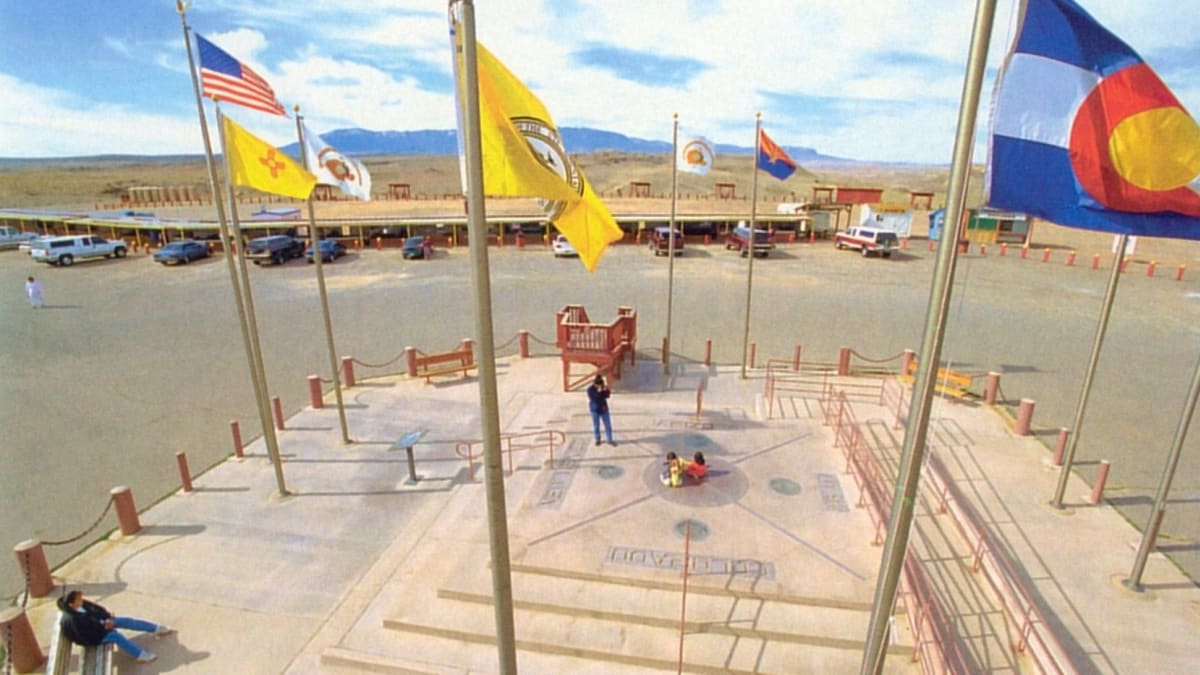
Four Corners Monument marks the only place in the United States where four states, New Mexico, Arizona, Colorado, and Utah, all come together at a single point. A granite and bronze disk set into the ground marks the spot, and visitors delight in the simple novelty of standing in four states at once, or striking a pose with a hand or foot in each. It sits in the high desert of the Colorado Plateau, on land of the Navajo Nation.
The monument is more than a quirky geographic footnote. It lies within the vast homeland of the Diné, the Navajo people, and near the lands of the Ute, and Native artisans gather here to sell handmade jewelry, pottery, and crafts. The surrounding country is enormous and open, a sweep of arid mesa and sky that gives the meeting of four states a fittingly grand setting.
What Travelers Love
- Standing in four states at once at the marker where the state lines meet
- Navajo and Ute craft vendors selling jewelry, pottery, and other handmade goods
- The classic photo with hands and feet in four different states
- The wide, empty grandeur of the Colorado Plateau desert all around
Worth Knowing
- The monument is on Navajo Nation land and is a ticketed tribal park, so bring cash and respect tribal rules
- It is remote and exposed, with little shade, so bring water and sun protection, especially in summer
- Services are limited, so fuel up and stock up before the long drives to reach it
- Support the Native vendors respectfully, and always ask before photographing people or their goods
Learn about Four Corners Monument
Where four states meet
Four Corners is unique in the country: the single point where the boundaries of four states converge. The lines were surveyed in the years after the Civil War as the territories of the Southwest were being organized, and the marker sits where those straight survey lines intersect. Later surveys and modern measurements have debated the exact position by small margins, but the monument stands as the officially recognized and legally accepted spot.
The appeal is partly the sheer novelty of it, the chance to be in four places at once, and partly the symbolism of standing at the crossroads of the Southwest. The marker is laid out so visitors can pose with each limb in a different state, a photo tradition that has drawn travelers for generations. Around the disk, the seals of the four states and the tribal nations are set into the plaza.
Navajo Nation land
The monument sits on the Navajo Nation, the largest Native reservation in the United States, whose lands sprawl across the Four Corners region. To the Diné, this is home, part of a homeland bounded by sacred mountains and rich with a living culture of language, ceremony, weaving, and silverwork. The Navajo Nation maintains the monument as a tribal park, and visiting it means visiting sovereign Native land.
Nearby lands are also home to the Ute Mountain Ute, and the wider region carries the deep heritage of the Ancestral Puebloan people who built the great centers of the Colorado Plateau. Understanding the monument as part of Native country, rather than merely a survey point, deepens the visit. Visitors are asked to respect tribal rules and to treat the land and its people with courtesy.
The vendors and their crafts
Ringing the monument plaza are stalls where Navajo and Ute artisans sell their work, from silver and turquoise jewelry to pottery, beadwork, and other handmade crafts. Buying directly from the makers supports Native families and offers a genuine connection to the living cultures of the region, far removed from mass-produced souvenirs.
The crafts reflect long artistic traditions, especially the celebrated Navajo silverwork and weaving that are prized around the world. Food vendors sometimes offer Navajo specialties like fry bread as well. Taking the time to talk with the artisans, and to ask before photographing anyone or their goods, turns a quick photo stop into a more meaningful encounter with the people whose land this is.
The setting, the drives, and the seasons
The monument sits in the heart of the Colorado Plateau, a landscape of red-rock mesas, buttes, and enormous skies, and the drives to reach it pass through some of the most iconic scenery in the West. It is far from any city, so a visit usually pairs with a broader Four Corners road trip taking in the region's parks, ruins, and tribal lands.
Spring and fall bring the most comfortable weather for the exposed high desert, with mild days and cool nights. Summer is hot and bright, so water and sun protection are essential, though afternoon monsoon clouds can bring dramatic skies. Winter is cold, clear, and quiet, with snow occasionally dusting the surrounding mesas. In every season the vast openness of the setting is the enduring impression.
Closest Boutels
The closest Boutel™ stays, so you can turn this stop into an overnight. Each is a place we chose through independent editorial review, never a paid placement.
Details
Teec Nos Pos, AZ
Frequently asked questions
What is the Four Corners Monument?
The Four Corners Monument marks the only spot in the United States where four states meet at a single point: New Mexico, Arizona, Colorado, and Utah. Located on Navajo Nation land in the remote high desert of the Four Corners region, the monument features a marker where visitors can famously stand or place a hand or foot in all four states at once, a fun and unique photo opportunity. Managed by the Navajo Nation, the site includes a plaza, the state seals, and stalls where Native American artisans sell handmade crafts and food. The Four Corners Monument offers a memorable and quirky stop celebrating this one-of-a-kind geographic point.
What can you do at the Four Corners Monument?
You can stand or pose at the marker where the four states meet, taking the classic photo of being in New Mexico, Arizona, Colorado, and Utah at the same time, browse and buy authentic handmade jewelry, crafts, and Navajo art from the Native American vendors, sample Navajo food like fry bread, and enjoy the unique novelty of the site. It is a fun, quick stop rather than a lengthy attraction. Supporting the Native artisans is a nice part of the visit. With its one-of-a-kind photo opportunity and Native crafts and food, the Four Corners Monument offers a memorable and quirky stop in the Four Corners region.
What should I know before visiting the Four Corners Monument?
The Four Corners Monument is on Navajo Nation land and charges an admission fee, and it is quite remote, so bring cash, plan for the drive, and be aware there are limited services, though Native vendors sell crafts and food on site. The high-desert location can be hot and exposed in summer and cold in winter, so dress accordingly and bring water. Hours can vary, so checking current information before you go is wise. Being prepared for the remote location, the fee, and the weather, and respecting that it is Navajo land, ensures a smooth visit to this unique spot.
When is the best time to visit the Four Corners Monument?
Spring and fall offer the most comfortable temperatures for the exposed, high-desert site, while summer can be hot, so bring water and sun protection, and winter is cold. Daytime is best for the visit and photos, and checking the current hours before you go is important since they can vary. Because it is a quick stop, it is easy to fit into a Four Corners road trip. For the most comfortable weather at this exposed monument, aim for the milder months of spring or fall when visiting the Four Corners Monument.
What is near the Four Corners Monument?
The Four Corners Monument is on Navajo Nation land in the remote Four Corners region where New Mexico, Arizona, Colorado, and Utah meet, within reach of the city of Farmington and the Aztec and Salmon ruins in New Mexico, Mesa Verde National Park in Colorado, Monument Valley in Arizona and Utah, and the scenic Navajo lands. That makes the Four Corners Monument a quirky and memorable stop to combine with the archaeological sites of northwestern New Mexico and the many scenic and cultural attractions of the wider Four Corners region on a Southwest road trip.
Nearby
Hovenweep National Monument
27 miles away
Ancient stone towers built long ago by the Ancestral Puebloan people stand here on the quiet Utah-Colorado line near Bluff, far from any city.
Mesa Verde Cliff Palace and Junior Ranger
34 miles away
Mesa Verde National Park's Junior Ranger program is one of the most substantive in the National Park System, with activity books covering Ancestral Puebloan daily life, architecture, and the mystery o...

Mesa Verde National Park
36 miles away
Cliff dwellings built into canyon walls by Ancestral Puebloans more than seven centuries ago.
San Juan Skyway
36 miles away
The San Juan Skyway (US-550, US-160, CO-62, CO-145) is a 236-mile loop through the San Juan Mountains, including the 25-mile Million Dollar Highway between Ouray and Silverton - a series of cliff-edge...
Canyons of the Ancients National Monument
43 miles away
Just west of Mesa Verde lies the densest concentration of archaeological sites in the country, over 8,500 Ancestral Puebloan ruins across 176,000 acres of quiet high desert.