
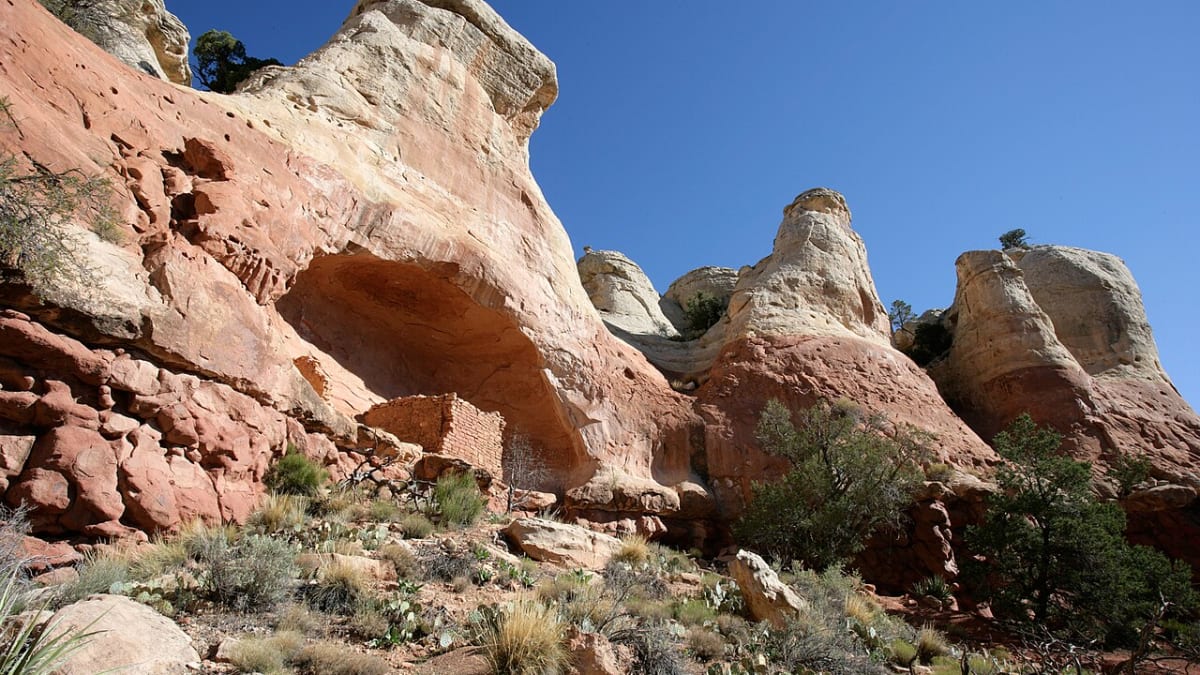
Canyons of the Ancients National Monument
27501 Hwy 184
Dolores, CO
The most crowded ancient landscape in America hides in plain sight, thousands of Ancestral Puebloan sites scattered across quiet canyons that almost nobody visits.
Everyone knows Mesa Verde, with its famous cliff dwellings and its crowds. Just to the west lies a place that holds far more of the same ancient world and sees a tiny fraction of the visitors. Canyons of the Ancients National Monument protects more than 176,000 acres of high desert that hold the densest concentration of archaeological sites anywhere in the United States, over 8,500 recorded so far, and in some spots more than 200 sites packed into a single square mile.
These are the remains of the Ancestral Puebloans, sometimes called the Anasazi, farming families who lived, built, and worshiped across these mesas and canyons for well over a thousand years before moving on around 1300. What makes this monument special is that it protects the whole lived-in landscape, the homes and villages and gathering places together, rather than a single showpiece ruin. You come here not to see one thing, but to feel an entire ancient community spread across the land.
What Travelers Love
- Standing among real Ancestral Puebloan ruins with almost no crowds, unlike the famous parks nearby
- The excellent museum, which holds millions of artifacts and makes sense of the whole landscape before you head out
- Walking up to Lowry Pueblo, a large stabilized great house you can explore on an easy, accessible path
- The feeling of a lived-in ancient world, farms and homes and gathering places spread across the mesas, not just a single cliff dwelling
Worth Knowing
- This is a working landscape, not a developed park, so start at the visitor center and museum for maps, directions, and current road conditions before driving out to any site
- Most sites are reached by unpaved back roads that can be rough, sandy, or impassable when wet, so a dry day and a look at your fuel gauge matter here
- The ruins are fragile and sacred, so look and photograph but never climb on walls, enter rooms, or pick up a single potsherd or artifact
- There are no services out among the canyons, so carry plenty of water, sun protection, and everything you need for the day
Learn about Canyons of the Ancients National Monument
An entire ancient world, not a single ruin
For at least a thousand years, Ancestral Puebloan families farmed corn, beans, and squash across these mesas, built stone-and-mud homes and villages, dug round underground ceremonial rooms called kivas, and traded across a wide region. At their height, thousands of people lived here. Then, around 1300, they gathered up their world and left, moving south to become the Pueblo peoples of today's New Mexico and Arizona, whose descendants still hold this land sacred.
When the monument was created in 2000, it was set up to protect that whole picture. Rather than fencing off one spectacular cliff dwelling, it guards the ordinary and the extraordinary together, the field houses and farm terraces, the shrines and the great houses, the springs and the trails, all across the open country where people actually lived. That is why walking here feels different from visiting a single famous ruin: you are moving through a real neighborhood, just one that emptied out seven hundred years ago.
The museum and Lowry Pueblo
The right place to begin is the Canyons of the Ancients Visitor Center and Museum, the monument's headquarters, set on a hill above the town of Dolores. It cares for millions of artifacts gathered from the surrounding region and uses them to tell the long story of the people who lived here, with exhibits, films, and programs that turn a scatter of rubble on a mesa into something you can understand. A short trail behind the museum leads to two small ruins right on the grounds.
The best-known site you can actually walk up to is Lowry Pueblo, out on the mesas to the northwest. Begun around 1060, it grew into a great house of roughly 40 rooms rising as high as three stories, with several kivas and one enormous great kiva where the community gathered. Today its walls are stabilized and open to visitors along an easy, accessible path, so you can stand inside a thousand-year-old town and look out over the same wide country its builders farmed.
Canyons made for quiet exploring
Beyond Lowry, the monument rewards travelers who like to slow down and look. Painted Hand Pueblo, reached by a short walk, takes its name from the small red handprints painted on a boulder near a standing stone tower. The Sand Canyon Trail winds down a shallow canyon past the tucked-away remains of cliff-sheltered rooms, letting you find ruins the way early explorers did, a little at a time, half-hidden in alcoves along the way.
This is deliberately not a place of paved loops and crowded overlooks. Many sites sit at the end of dirt roads and unmarked paths, and part of the reward is the hunt and the solitude, the sense that you have the ancient world to yourself. It asks a little more effort and care than a national park, and gives back a quieter, more personal encounter with one of the richest archaeological landscapes on the continent.
Visiting Canyons of the Ancients
Start at the visitor center and museum near Dolores, a short drive from Mancos and Cortez. The staff there can hand you a map, tell you which roads are passable, and point you toward the sites that fit your time and your vehicle, which matters because much of the monument is reached by unpaved back roads that turn to slick mud after rain and rough washboard when dry.
Everything out here is fragile and much of it is sacred to today's Pueblo peoples, so the rule is simple: look, photograph, and leave every wall, room, and potsherd exactly as you found it. Carry water, sun protection, and a full tank, since there are no services among the canyons. Give the museum an hour, add Lowry Pueblo, and then let the day open up into as much quiet canyon exploring as you have time and daylight for.
Closest Boutels
The closest Boutel™ stays, so you can turn this stop into an overnight. Each is a place we chose through independent editorial review, never a paid placement.
Details
Dolores, CO
Frequently asked questions
What is Canyons of the Ancients National Monument?
Canyons of the Ancients National Monument, in the Four Corners region of southwestern Colorado near Cortez, protects one of the highest densities of archaeological sites in the United States, with thousands of Ancestral Puebloan dwellings, villages, kivas, rock art, and artifacts scattered across its rugged canyon-and-mesa landscape. This vast monument preserves the rich heritage of the ancient peoples who lived here for thousands of years, offering visitors a chance to explore well-preserved sites like Lowry Pueblo, learn at the visitor center, and experience the profound history and beautiful high-desert scenery of this remarkable and culturally significant area.
What can you see at Canyons of the Ancients National Monument?
You can visit accessible archaeological sites like the Lowry Pueblo with its great kiva, explore the excellent visitor center and museum with its exhibits and artifacts, see rock art and dwelling remains, hike and drive to various sites across the monument, and take in the beautiful canyon-and-mesa scenery. Because many sites are remote and undeveloped, the visitor center is a great starting point for information. With its thousands of ancient sites, museum, and scenic landscape, Canyons of the Ancients offers a fascinating and profound journey into the Ancestral Puebloan world of the Four Corners region.
What should visitors keep in mind at Canyons of the Ancients?
The archaeological sites and artifacts are fragile, irreplaceable, and sacred to the descendants of the Ancestral Puebloans, so visitors must never touch, climb on, or remove anything, including pottery shards and artifacts, which is illegal, and should stay on designated paths and treat every site with respect. Many areas are remote with few facilities, so bring water, supplies, and a map, and check road conditions. Being respectful of the cultural significance and preservation rules, leaving everything undisturbed, and coming prepared for the remote high desert ensures a safe and considerate visit to this treasured monument.
When is the best time to visit Canyons of the Ancients National Monument?
Spring and fall offer the most pleasant temperatures for exploring the high-desert sites and hiking, avoiding the heat of summer and the cold of winter, making them the prime seasons, while summer can be hot, so early starts and plenty of water are needed then, and winter can be cold with possible snow. The visitor center provides year-round information. For the best combination of comfortable weather and full access to the sites and trails, aim for spring or fall, always preparing for the remote, high-desert conditions of this culturally rich monument.
What is near Canyons of the Ancients National Monument?
The monument is near Cortez and Dolores in the Four Corners region of southwestern Colorado, close to Mesa Verde National Park with its famous cliff dwellings, the town of Durango to the east, and within reach of the San Juan Mountains and the Four Corners area's other archaeological and scenic attractions. That makes Canyons of the Ancients National Monument a fascinating stop to combine with Mesa Verde National Park, Cortez, Durango, and the rich history and scenery of southwestern Colorado's Four Corners region on a visit to the state.
Nearby
Hovenweep National Monument
12 miles away
Ancient stone towers built long ago by the Ancestral Puebloan people stand here on the quiet Utah-Colorado line near Bluff, far from any city.
San Juan Skyway
18 miles away
The San Juan Skyway (US-550, US-160, CO-62, CO-145) is a 236-mile loop through the San Juan Mountains, including the 25-mile Million Dollar Highway between Ouray and Silverton - a series of cliff-edge...

Mesa Verde National Park
27 miles away
Cliff dwellings built into canyon walls by Ancestral Puebloans more than seven centuries ago.
Mesa Verde Cliff Palace and Junior Ranger
30 miles away
Mesa Verde National Park's Junior Ranger program is one of the most substantive in the National Park System, with activity books covering Ancestral Puebloan daily life, architecture, and the mystery o...

Four Corners Monument
33 miles away
Four Corners is exactly what it sounds like: a brass cap in the ground where four states touch. You straddle it, take the photo, and leave.