
Fort Sumter
340 Concord St, Charleston, SC
Charleston, SC
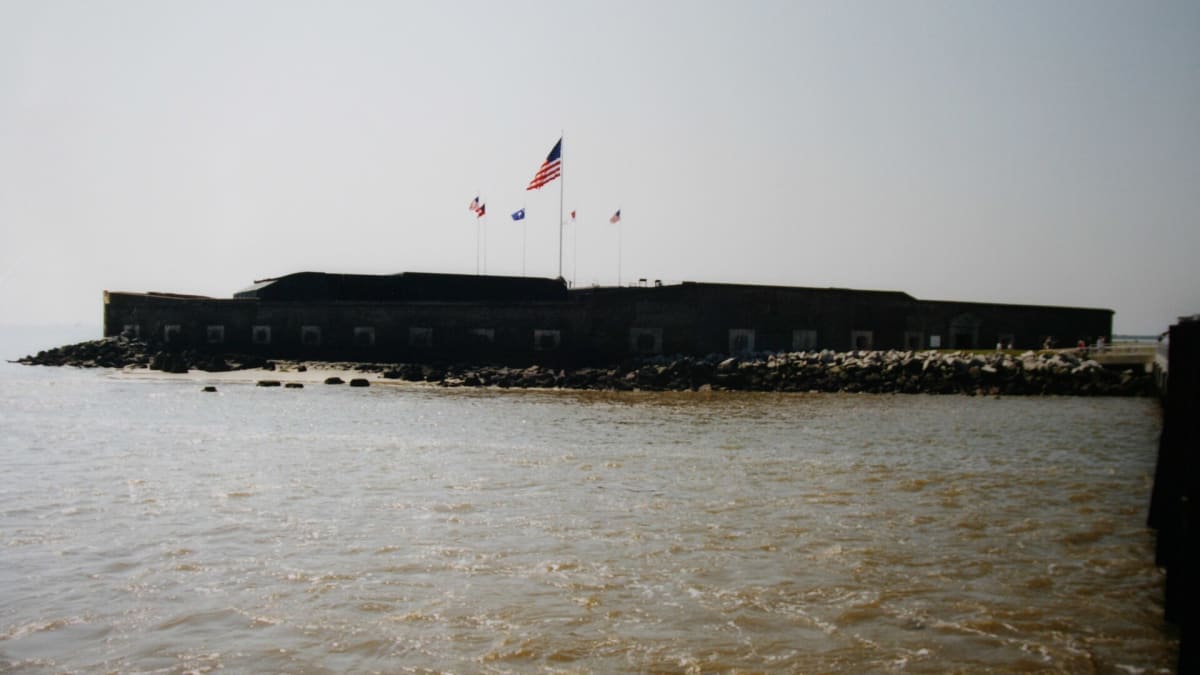
The brick sea fort on a Charleston Harbor island where the first shots of the Civil War rang out, reached by a ferry ride across the water.
Fort Sumter is the sea fort at the mouth of Charleston Harbor where the American Civil War began. On April 12, 1861, Confederate batteries ringing the harbor opened fire on the Union-held fort, and the bombardment that followed marked the opening shots of a war that would consume the nation for four years and end slavery in the United States. Because the fort can only be reached by boat, a visit begins with a ferry ride across the harbor, part of what makes it such a memorable place.
The fort sits on a man-made island, built up on a shoal in the decades before the war as part of a chain of coastal defenses. Today it is preserved as a National Park Service site, its brick walls and gun emplacements bearing the marks of the long siege that followed the war's outbreak. Standing on the island, with Charleston on one side and the open Atlantic on the other, visitors face the moment the country broke apart.
What Travelers Love
- Standing where the first shots of the Civil War were fired in April 1861
- The scenic ferry ride across Charleston Harbor to the island fort
- Ranger talks and exhibits that bring the fort's dramatic history to life
- Harbor views of Charleston, Fort Moultrie, and the passing ships
Worth Knowing
- The fort is reached only by ferry, so plan around the boat schedule
- The visit combines the ferry ride, the island, and time at the fort
- It is a National Park Service site preserving a solemn, layered history
- Pair it with the fort's mainland visitor center on the Charleston waterfront
Learn about Fort Sumter
The first shots of the Civil War
In December 1860, South Carolina became the first state to secede from the Union, and other Southern states soon followed. The small Union garrison in Charleston Harbor withdrew to Fort Sumter, the strongest of the harbor's defenses, and there the standoff came to a head. In the early morning of April 12, 1861, Confederate guns around the harbor opened fire on the fort, and after a bombardment lasting more than a day the outnumbered garrison surrendered and evacuated.
The attack on Fort Sumter galvanized both North and South and set the Civil War in motion. The war that began here would prove the deadliest in American history and would end the institution of slavery, the issue at the heart of the conflict. Charleston, a great center of the domestic slave trade, was in many ways the fitting place for that reckoning to begin.
Siege and survival
For most of the war, Confederate forces held Fort Sumter, and Union forces spent years trying to retake it. From 1863 onward, Union artillery and warships subjected the fort to some of the heaviest bombardment of the war, pounding its brick walls into rubble. The garrison dug in among the ruins and held on, and the fort became a symbol of endurance under fire.
By the war's end the fort was a shattered mound of brick and earth, yet it never fell to direct assault. What visitors see today is a fort marked by that long ordeal, its walls lowered and rebuilt over the years, with cannon and exhibits interpreting the siege. The battered masonry itself tells the story of how much punishment the place absorbed.
The ferry and the island visit
Reaching Fort Sumter is part of the experience. Ferries run to the island from the Charleston waterfront and from Patriots Point across the harbor in Mount Pleasant, carrying visitors on a scenic ride past the Battery, the harbor forts, and the busy shipping channel. The boat ride offers some of the best water-level views of Charleston and its historic skyline.
On the island, National Park Service rangers offer talks and the fort's exhibits interpret its history, from its construction through the war and beyond. A mainland education center on the Charleston waterfront rounds out the story. The whole visit, ferry and fort together, makes for a moving half-day rooted in one of the pivotal moments in American history.
Charleston Harbor and its history
Fort Sumter is one point in a harbor thick with history. Nearby Fort Moultrie on Sullivan's Island guarded Charleston across two centuries of conflict, from the Revolution to World War II, and the harbor's waters saw everything from Revolutionary battles to the first successful submarine attack in wartime, by the Confederate submarine Hunley. The city of Charleston itself, one of the oldest and most beautiful in America, spreads along the shore.
A visit to Fort Sumter pairs naturally with Charleston's historic peninsula, its churches, mansions, and cobbled streets, and with Patriots Point across the harbor, home to the aircraft carrier USS Yorktown. Together they make Charleston Harbor one of the richest stretches of American history anywhere on the coast.
Closest Boutels
The closest Boutel™ stays, so you can turn this stop into an overnight. Each is a place we chose through independent editorial review, never a paid placement.
Details
Charleston, SC
Frequently asked questions
What is Fort Sumter?
Fort Sumter, on an island in Charleston Harbor in South Carolina, is a historic sea fort of profound significance as the site where the American Civil War began. It was here in eighteen sixty-one that Confederate forces opened fire on the Union-held fort, marking the start of the war that would reshape the nation. Now a national monument reached by ferry, the fort preserves its history with the remaining fortifications, cannons, and a museum, offering visitors a moving connection to this pivotal moment and beautiful harbor views. With its Civil War history and harbor setting, Fort Sumter offers a fascinating destination in South Carolina.
How do you get to Fort Sumter?
Fort Sumter is on an island in Charleston Harbor and is reached only by ferry, which departs from tour boat facilities in the Charleston area, making the scenic harbor boat ride part of the experience. Because the ferry runs on a set schedule and tickets are needed, checking current departure times and booking ahead is important, especially in busy seasons. The ride offers lovely views of the harbor and city. Planning around the ferry schedule is essential, as it is the only way to reach Fort Sumter in Charleston, South Carolina.
Why is Fort Sumter historically important?
Fort Sumter is historically important as the place where the American Civil War began. In April eighteen sixty-one, following South Carolina's secession from the Union, Confederate forces bombarded the Union garrison holding the fort in Charleston Harbor, forcing its surrender and igniting the four-year war between North and South that ended slavery and reshaped the country. The fort changed hands during the war and endured heavy bombardment. This role as the opening flashpoint of the Civil War makes Fort Sumter one of the most significant historic sites in the nation, a moving destination in South Carolina.
What can you do at Fort Sumter?
You can take the ferry across Charleston Harbor to the island fort, explore the historic fortifications, cannons, and grounds, visit the museum with its exhibits on the fort's history and the start of the Civil War, learn from rangers and interpretation, and take in beautiful views of the harbor and Charleston skyline. The historic fort, the museum, and the harbor scenery are highlights, offering a moving and educational experience. With its Civil War history, fortifications, and harbor setting, Fort Sumter offers a rewarding visit in Charleston, South Carolina.
What is near Fort Sumter?
Fort Sumter is in Charleston Harbor in South Carolina, reached by ferry from the Charleston area, near Patriots Point and the USS Yorktown across the harbor in Mount Pleasant, within reach of the Charleston City Market, the historic city, and the Lowcountry plantations. That makes Fort Sumter a fascinating stop to combine with Patriots Point, the Charleston City Market, and the other attractions of the Charleston area on a visit to South Carolina.
Nearby

Patriots Point and the USS Yorktown
3.2 miles away
For kids who like big machines, this is the standout day in Charleston.

Charleston City Market
3.8 miles away
The market itself is touristy, but slow down for the sweetgrass basket makers and it becomes something else.

Boone Hall Plantation
7.2 miles away
The oak allee is the shot everyone knows, but the reason to stop is what stands at the end of it.

Angel Oak
12 miles away
One tree, and it stops people cold. The Angel Oak on Johns Island is a Southern live oak thought to be 400 to 500 years old, among the oldest living things east of the Mississippi.

Magnolia Plantation and Gardens
15 miles away
Everyone books Middleton or Boone Hall; fewer realize the oldest public garden in America is right next door.

Middleton Place
18 miles away
The gardens most people picture when they imagine a Southern estate are here, and they are older than the country.