
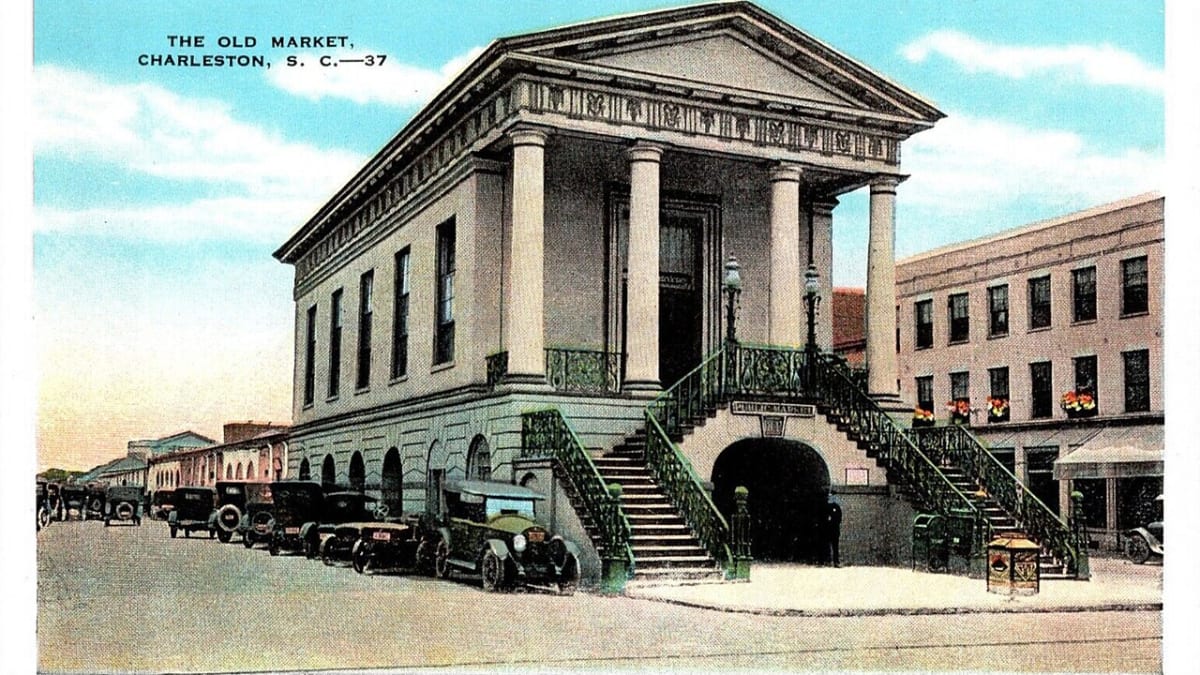
Charleston City Market
188 Meeting St, Charleston, SC
Charleston, SC
A long row of open market sheds in the heart of old Charleston, where Gullah artisans still coil sweetgrass baskets by hand as their ancestors did.
The Charleston City Market is a row of long, open-sided sheds running several blocks through the heart of the historic district, in continuous use as a public market since the early 1800s. Under its roofs, vendors sell local crafts, art, food, and Lowcountry goods, and it remains one of the liveliest gathering places in old Charleston.
Its greatest treasure is a living tradition. Along the market, Gullah Geechee artisans, descendants of enslaved Africans, sit coiling sweetgrass baskets by hand, a craft carried across the Atlantic centuries ago and preserved on the Carolina sea islands ever since. To watch a weaver at work here is to witness one of the oldest African-rooted art forms in America, still practiced where it took hold.
What Travelers Love
- Watching Gullah artisans weave sweetgrass baskets, a craft brought from West Africa
- Browsing local crafts, art, food, and Lowcountry goods in the open sheds
- The historic market buildings running through the heart of old Charleston
- An easy walk to the city's churches, waterfront, and antebellum streets
Worth Knowing
- The market welcomes browsers, and the historic Great Hall sometimes hosts evening markets
- Sweetgrass baskets are handmade heirlooms, so their prices reflect the labor and skill
- It sits in the walkable historic district, easy to combine with a stroll through the city
- Parking downtown is limited, so consider walking or a nearby garage
Learn about Charleston City Market
A market at the city's heart
The market has stood on this ground since the early nineteenth century, when the land was given to the city on the condition that it be used as a public market in perpetuity. Its long, columned Market Hall at the head and the open sheds stretching behind it are landmarks of Charleston's historic district, and they have witnessed two centuries of the city's daily life.
A persistent myth calls it a former slave market, but that is not its history. Enslaved people were bought and sold elsewhere in the city, and the sites of that trade are marked separately. The City Market was, and remains, a place where goods and provisions changed hands, and today it is a bustling stop for crafts, souvenirs, and Lowcountry flavors.
The sweetgrass basket tradition
The most important craft at the market is sweetgrass basketry. Brought to the Carolina coast by enslaved Africans from the rice-growing regions of West Africa, the technique of coiling bundles of sweetgrass and binding them with palmetto strips produced baskets first used to winnow rice, and later kept alive as an art form by the Gullah Geechee communities of the sea islands.
At the market, and along the Lowcountry roads north of the city, Gullah artisans, often women whose families have woven for generations, sit making and selling these baskets by hand. Each one takes many hours, and the intricate coiled forms are true heirlooms. Buying one supports the artisans directly and helps sustain a tradition that is among the most significant African art forms still practiced in the United States.
Charleston around the market
The market sits at the center of Charleston's historic district, one of the most beautifully preserved city centers in America. Just outside its doors lie cobblestone streets, church steeples, antebellum mansions, and the Battery along the harbor, all within an easy walk. The whole district rewards wandering, and the market makes a natural hub for it.
That beauty carries the weight of history. Charleston was a major port of the transatlantic slave trade, and much of its grandeur was built on enslaved labor and the wealth it generated. The city today interprets that past more fully than it once did, and a visit that includes the market's Gullah artisans, the historic streets, and the harder sites of the slave trade gives a truer picture of the place.
Visiting the market
The market welcomes browsers throughout the day, and in the warmer months an evening market sometimes fills the historic Great Hall with additional vendors after dark. It is a good place to find Lowcountry food, local art, and gifts, and above all to see the sweetgrass weavers at work.
Because it lies in the walkable heart of the city, the market fits easily into a day of exploring downtown Charleston on foot. Parking is tight in the district, so many visitors walk from a nearby garage or their lodging. Come with time to browse, to talk with the artisans, and to let the market be your entry into one of the country's most storied cities.
Closest Boutels
The closest Boutel™ stays, so you can turn this stop into an overnight. Each is a place we chose through independent editorial review, never a paid placement.
Details
Charleston, SC
Frequently asked questions
What is the Charleston City Market?
The Charleston City Market, in the heart of historic Charleston, South Carolina, is one of the oldest public markets in the country, a beloved landmark stretching for several blocks through a series of historic market buildings. Established in the early nineteenth century, the market today bustles with vendors selling crafts, art, food, souvenirs, and local goods, and it is especially known as a place to see the traditional sweetgrass baskets handwoven by Gullah artisans, a cherished Lowcountry craft with deep roots. A lively hub of shopping and culture, the market is a Charleston must-see. With its historic buildings and local crafts, the Charleston City Market offers a delightful destination in South Carolina.
What can you find at the Charleston City Market?
You can find a wide array of goods from vendors throughout the historic market buildings, including local crafts, art, jewelry, clothing, food, and souvenirs, and most notably the beautiful traditional sweetgrass baskets handwoven by Gullah artisans, a treasured Lowcountry art form. Browsing the stalls, watching basket weavers at work, and soaking up the lively atmosphere are the draws. The market blends shopping with a taste of Charleston's culture and history. With its many vendors, sweetgrass baskets, and historic setting, the Charleston City Market offers an enjoyable experience in South Carolina.
What are sweetgrass baskets?
Sweetgrass baskets are beautiful handwoven baskets made from local sweetgrass and other natural materials, a traditional craft brought to the Lowcountry by enslaved West Africans and carried on for generations by the Gullah people, descendants of enslaved Africans in the coastal Carolinas. The intricate, coiled baskets are prized as both functional art and a living cultural heritage, and Gullah artisans weave and sell them at the Charleston City Market, where you can watch the skilled craft in person. Appreciating and respectfully purchasing these baskets supports the artisans and honors a cherished tradition, a highlight of the Charleston City Market in South Carolina.
When is the best time to visit the Charleston City Market?
The Charleston City Market is open year-round, generally daily, so it can be enjoyed in any season, with spring and fall offering the most pleasant weather for strolling the market and historic Charleston, while summer is popular but hot and humid, so mornings are best then. The market has evening hours at certain times too. Checking current hours before you go is wise. For the most comfortable weather to enjoy the market and the historic city, aim for spring or fall at the Charleston City Market in South Carolina.
What is near the Charleston City Market?
The Charleston City Market is in the heart of historic Charleston, South Carolina, within reach of Fort Sumter reached by harbor ferry, Patriots Point and the USS Yorktown in Mount Pleasant, the historic city's streets and sights, and the Lowcountry plantations and Angel Oak. That makes the Charleston City Market a delightful stop to combine with Fort Sumter, Patriots Point, and the other attractions of the Charleston area on a visit to South Carolina.
Nearby

Patriots Point and the USS Yorktown
1.6 miles away
For kids who like big machines, this is the standout day in Charleston.

Fort Sumter
3.5 miles away
Half the fun for kids is getting there, because Fort Sumter can only be reached by boat.

Boone Hall Plantation
7.6 miles away
The oak allee is the shot everyone knows, but the reason to stop is what stands at the end of it.

Angel Oak
9.8 miles away
One tree, and it stops people cold. The Angel Oak on Johns Island is a Southern live oak thought to be 400 to 500 years old, among the oldest living things east of the Mississippi.

Magnolia Plantation and Gardens
11 miles away
Everyone books Middleton or Boone Hall; fewer realize the oldest public garden in America is right next door.

Middleton Place
15 miles away
The gardens most people picture when they imagine a Southern estate are here, and they are older than the country.

Cypress Gardens
19 miles away
This is the classic Lowcountry swamp made walkable, and paddleable.