
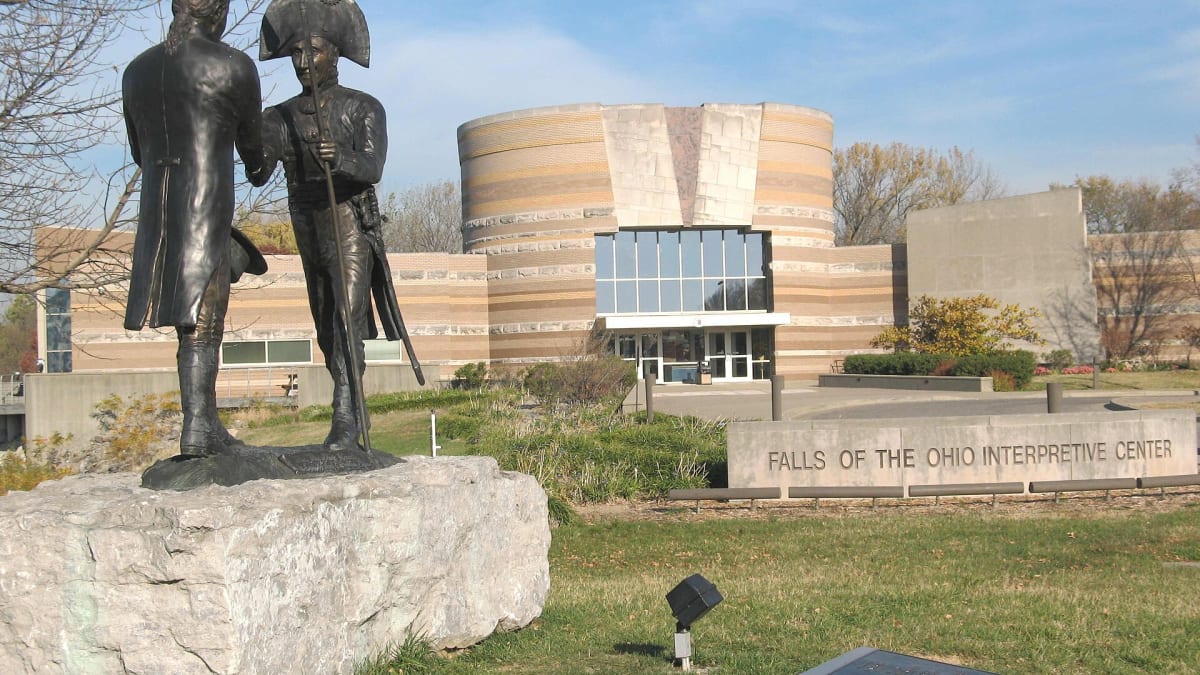
Falls of the Ohio State Park
201 W Riverside Dr #1, Clarksville, IN
Clarksville, IN
A great shelf of 380-million-year-old coral reef lies exposed along the Ohio River, one of the largest fossil beds you can walk across anywhere in the world.
Falls of the Ohio State Park protects one of the most extraordinary geological sites in the country, an immense expanse of 380-million-year-old fossil beds exposed along the Ohio River. When the water is low, visitors can walk out across acres of ancient limestone crowded with the fossilized remains of a coral reef that thrived here in the Devonian period, when this land lay beneath a warm, shallow tropical sea. It is among the largest exposed fossil beds accessible to the public anywhere on Earth.
The falls that give the park its name were once a stretch of rapids where the Ohio River dropped over the rocky shelf, the only major natural obstacle on the whole length of the river. That barrier shaped the history of the region, forcing river travelers to portage around it and giving rise to the cities that grew up on either side. Today a dam has calmed the rapids, but the fossil beds remain, a window into a world unimaginably old.
What Travelers Love
- Walking across acres of exposed fossil beds packed with ancient corals and shells
- The interpretive center's exhibits on the reef, the river, and its explorers
- Excellent birding, with herons, gulls, and migrating shorebirds on the beds
- Skyline views of Louisville and the wide Ohio River just across the water
Worth Knowing
- The fossil beds are only exposed when river levels are low, so check conditions before counting on walking them
- The rock is uneven and can be slick, so wear sturdy shoes and watch your footing
- Fossils are protected, so look and photograph but leave them where they lie
- Summer sun on the open beds is intense, so bring water and sun protection
Learn about Falls of the Ohio State Park
A tropical reef turned to stone
Around 380 million years ago, in the period geologists call the Devonian, the land that is now southern Indiana lay near the equator beneath a warm, shallow sea. In that sea grew a vast coral reef, teeming with corals, shellfish, sea lilies, and other creatures. When they died, their remains piled up and hardened, over immense stretches of time, into the limestone you see today. The fossil beds at the Falls are the exposed surface of that ancient reef.
Because the beds are so extensive and so richly fossiliferous, they have drawn scientists for two centuries and remain a place of active study. Walking across them, you can pick out the shapes of ancient corals and shells embedded in the rock, a direct encounter with life from a world that existed long before dinosaurs. The fossils are protected, so the rule is to look, photograph, and leave everything in place for the next visitor and for science.
The falls that shaped a river
The Falls of the Ohio were the only significant rapids on the entire Ohio River, a place where the water dropped over the hard fossil shelf. For river travelers, this was a real obstacle, one that often required unloading boats and carrying goods around the falls. That break in navigation is a large part of why cities grew up here on both banks, at the point where river traffic had to pause.
The falls also drew explorers and settlers. It was near here that the explorers Lewis and Clark met and began the journey that would carry them across the continent, a connection the park's interpretation highlights. In later years a dam and canal system tamed the rapids for navigation, quieting the falls but leaving the fossil beds and the river history for visitors to explore today.
The river, its first peoples, and wildlife
The Ohio River was a highway of travel and trade for Native nations long before Europeans arrived. This region is part of the homelands of the Miami, who call themselves Myaamia, along with the Shawnee, the Lenape or Delaware, and other peoples of the Ohio Valley, who lived and traveled along the great river for generations. These are living communities today, and the river remains central to the region's story.
The park is also one of the best birding spots in the area. The exposed beds and river shallows attract herons, gulls, terns, and a rich passage of migrating shorebirds and waterfowl, and the interpretive center overlooks it all. Between the fossils, the birds, and the river views, the park rewards a slow, watchful visit, and binoculars are as useful here as a fossil guide.
Visiting the beds
The key thing to know is that the fossil beds are only walkable when the river runs low, typically in the drier months, since higher water covers them. Checking current river conditions before a visit will save disappointment. When the beds are exposed, they open up acres of walkable ancient reef, an experience unlike anything else in the region.
The rock is uneven and can be slippery, so sturdy shoes and careful footing matter, and the open beds offer little shade, so sun protection and water are essential in warm weather. The interpretive center, set on the bluff above, makes a fine complement, with exhibits that put the fossils, the falls, and the river history in context. Together they make for a memorable half-day on the Ohio.
Closest Boutels
The closest Boutel™ stays, so you can turn this stop into an overnight. Each is a place we chose through independent editorial review, never a paid placement.
Details
Clarksville, IN
Frequently asked questions
What is Falls of the Ohio State Park?
Falls of the Ohio State Park, in Clarksville in southern Indiana along the Ohio River across from Louisville, is a remarkable park famous for its vast exposed beds of ancient fossils, one of the largest such fossil exposures in the world. The park protects extensive limestone shelves along the river that are packed with fossils of ancient sea creatures from a time hundreds of millions of years ago when a shallow sea covered the region, and it features an interpretive center with exhibits, along with trails, river views, and birdwatching. Its extraordinary fossil beds make it a fascinating destination. A remarkable and fossil-rich park, it fascinates visitors. With its fossil beds, the park offers a compelling destination in Indiana.
What can you do at Falls of the Ohio State Park?
You can explore the vast exposed fossil beds along the river, seeing fossils of ancient sea creatures embedded in the limestone, visit the interpretive center with its exhibits, hike the trails, watch for birds, and take in the Ohio River views toward Louisville. The extraordinary fossil beds, the interpretive center, the trails, and the river views are the draws, making it a fascinating destination for fossil and nature lovers. The ancient fossil beds are the highlight. With its fossils, Falls of the Ohio State Park offers a rewarding experience in Indiana.
What should I know before exploring the fossil beds at Falls of the Ohio State Park?
The fossil beds are on limestone shelves along the river, so wearing sturdy footwear and watching your footing on the uneven, sometimes slippery rock matter, and the beds are best explored when the river is low, as water levels change access, so checking current conditions before you go is wise. Collecting fossils is generally not allowed, so viewing and photographing them, and following all park rules, protect this remarkable resource. Watching your footing and leaving fossils in place ensure a rewarding visit to Falls of the Ohio State Park in Indiana.
When is the best time to visit Falls of the Ohio State Park?
The fossil beds are best explored when the river is low, which is often in late summer and fall, exposing more of the fossils, while the mild months of spring through fall are generally pleasant for the trails and interpretive center, with the fossil beds' access depending on water levels. Because access varies with the river, checking current conditions before you go is important. For the best fossil-bed access, aim for a low-water period, often late summer or fall, at Falls of the Ohio State Park in Indiana.
What is near Falls of the Ohio State Park?
Falls of the Ohio State Park is in Clarksville in southern Indiana along the Ohio River, within reach of the Howard Steamboat Museum in nearby Jeffersonville, Louisville across the river, Clifty Falls State Park to the west, and the other attractions of southern Indiana. That makes Falls of the Ohio State Park a compelling stop to combine with the Howard Steamboat Museum and the other attractions of the Ohio River area on a visit to Indiana.
Outside the Park
Muhammad Ali Center
1.3 miles away
Louisville's greatest son was not a horse or a bottle of bourbon but a boxer, and this is where the city tells his story.

Louisville Slugger Museum and Factory
1.3 miles away
You cannot miss it: a 120-foot baseball bat leaning against the building downtown.

Howard Steamboat Museum
1.5 miles away
This one surprises people twice over. The Howard Steamboat Museum at 1101 E Market St fills a 22-room Victorian mansion the Howard shipbuilding family raised beside their Jeffersonville shipyard, whic...

Big Four Bridge
1.7 miles away
For a quick, free stretch of the legs with a big view, walk out onto the Big Four Bridge at Waterfront Park.
Conrad-Caldwell House Museum
3.0 miles away
Most Derby visitors never wander into Old Louisville, which is exactly why this stop feels like a secret. The Conrad-Caldwell House at 1402 St.

Colonel Sanders Grave
3.1 miles away
Follow the yellow line. Cave Hill Cemetery on Baxter Avenue is a lush 296-acre garden cemetery and arboretum, and its most-visited resident is Colonel Harland Sanders, the white-suited founder of KFC,...

Cherokee Park
4.7 miles away
Cherokee Park is one of the finest surviving works of Frederick Law Olmsted, the father of American landscape architecture, who shaped New York's Central Park before laying out Louisville's park syste...

Kentucky Derby Museum at Churchill Downs
5.0 miles away
Even kids who know nothing about horse racing get swept up here.
Louisville Mega Cavern
6.4 miles away
There is a whole hidden world under Louisville, and you can zip line through it.