

Big Four Bridge
1101 River Rd, Louisville, KY
Louisville, KY
An old steel railroad bridge reborn as a walkway across the Ohio, its towers lit in shifting colors after dark, carrying walkers and cyclists from Kentucky to Indiana.
The Big Four Bridge is one of Louisville's most beloved landmarks, a former railroad bridge that has been given a graceful second life as a pedestrian and bicycle crossing over the Ohio River. Its great steel spans, first built for trains in the 1890s, now carry a steady flow of walkers, joggers, and cyclists between Kentucky and Indiana, high above the water.
For decades after the trains stopped running, the bridge stood abandoned, missing its approach ramps and nicknamed the Bridge That Goes Nowhere. In the 2010s, new spiral ramps were built on both banks, and the old span reopened as a walkway, its towers now lit in shifting colors that make it glow across the river each night.
What Travelers Love
- Walking or biking all the way across the Ohio to Indiana and back
- The towers lit in changing colors after dark, a Louisville landmark
- Sweeping views of the river, the falls, and the downtown skyline
- The easy connection to Waterfront Park at the Kentucky end
Worth Knowing
- The bridge is for walkers and cyclists only, no cars, and welcomes visitors all day
- The long spiral ramp makes it accessible, though it adds distance to the crossing
- It links Louisville's Waterfront Park with the historic district of Jeffersonville, Indiana
- The colored lighting is best seen after dark; the whole span is well worth an evening stroll
Learn about Big Four Bridge
From railroad to ruin to rebirth
The bridge takes its name from the Cleveland, Cincinnati, Chicago and St. Louis Railway, known as the Big Four, which built it to carry trains across the Ohio. The first crossing here opened in the 1890s, and the great steel truss spans that survive today date from a rebuilding in the early 1900s that made the bridge stronger for heavier trains.
Rail traffic ended in the decades after, and the approach ramps on each bank were dismantled for scrap, leaving the main spans stranded high over the river with no way up or down. For years Louisvillians called it the Bridge That Goes Nowhere, a rusting relic that framed the skyline but served no one. That changed when the city and its Indiana neighbor set out to reconnect it to solid ground.
The walk across the Ohio
A long spiral ramp now climbs from Louisville's Waterfront Park to the deck of the bridge, and a matching ramp descends on the Indiana side into Jeffersonville. The crossing is a favorite for a stroll, a run, or a bike ride, and the height gives sweeping views up and down the Ohio, toward the Falls of the Ohio and back over downtown Louisville.
The bridge is for people on foot and on wheels only, no cars, which gives it an unhurried, sociable feel. On a fine evening it fills with couples, families, and cyclists moving between two states, and the ability to walk from Kentucky to Indiana and back over open water is a simple pleasure that never quite gets old.
The lights and the waterfront
After dark the bridge becomes a light show. Its towers and spans are strung with color-changing LEDs that shift through the night and glow across the river, making the Big Four one of the defining images of the Louisville waterfront. Special colors often mark holidays and local causes.
At the Kentucky end, the bridge flows straight into Waterfront Park, a long ribbon of lawns, fountains, playgrounds, and event spaces along the Ohio. The pairing of the park and the bridge has become the social heart of the riverfront, a place Louisvillians and visitors alike return to again and again. The land along this river was long the home of the Shawnee and other nations whose descendants continue today, largely in Oklahoma.
Season by season
Spring brings mild weather and green to Waterfront Park, an ideal time to walk the bridge before the summer heat.
Summer is warm and lively, with festivals and events filling the waterfront and long evenings for a sunset crossing.
Fall offers crisp air and clear light, some of the best conditions of the year for the walk across the river.
Winter is cold but often quiet and beautiful, and the colored lights stand out most vividly against the long dark evenings.
Closest Boutels
The closest Boutel™ stays, so you can turn this stop into an overnight. Each is a place we chose through independent editorial review, never a paid placement.
Details
Louisville, KY
Frequently asked questions
What is the Big Four Bridge?
The Big Four Bridge, in Louisville, Kentucky, is a historic former railroad bridge spanning the Ohio River, beautifully converted into a popular pedestrian and bicycle bridge connecting Louisville with southern Indiana. The grand old steel truss bridge, once a busy rail crossing, now carries walkers, runners, and cyclists high above the river, offering sweeping views of the Ohio River and the Louisville skyline, along with spiral ramps at each end and colorful nighttime lighting. A beloved recreational landmark and a scenic way to stroll across the river, it delights visitors and locals alike. With its river crossing and views, the Big Four Bridge offers a delightful destination in Kentucky.
What can you do at the Big Four Bridge?
You can walk, run, or bike across the historic bridge high above the Ohio River, take in sweeping views of the river and the Louisville skyline, enjoy the colorful nighttime lighting, access the riverfront parks at each end, and cross between Kentucky and Indiana on foot. The scenic river crossing, the skyline views, the nighttime lights, and the connection to riverfront parks are the draws, making it a favorite for a stroll, a jog, or a bike ride. It is especially lovely at sunset and after dark. With its river crossing and views, the Big Four Bridge offers a rewarding experience in Louisville, Kentucky.
When is the best time to visit the Big Four Bridge?
The mild months of spring through fall offer the most pleasant weather for walking or biking the bridge and enjoying the riverfront, with evenings especially lovely for sunset over the river and the colorful nighttime lighting of the bridge. Summer can be warm and busy, so mornings and evenings are pleasant. The bridge is scenic year-round in fair weather. For the most pleasant weather and lovely evening light, aim for spring through fall, especially around sunset, at the Big Four Bridge in Louisville, Kentucky.
Is the Big Four Bridge good for families?
Yes, the Big Four Bridge is a wonderful family destination, offering a car-free, accessible walk or bike ride across the Ohio River with gentle spiral ramps, sweeping views, riverfront parks and playgrounds at each end, and colorful nighttime lights that delight children. Families enjoy the easy stroll, the scenery, and the connected parks, making it a relaxed and scenic outing. Bringing water and sun protection helps in warm weather. With its accessible river crossing, views, and riverfront parks, the Big Four Bridge makes a great family destination in Kentucky.
What is near the Big Four Bridge?
The Big Four Bridge is in Louisville, Kentucky, spanning the Ohio River to southern Indiana, within reach of Louisville's Waterfront Park, the Muhammad Ali Center, the Louisville Slugger Museum, the Kentucky Derby Museum at Churchill Downs, and downtown Louisville. That makes the Big Four Bridge a delightful stop to combine with the Louisville waterfront, the Muhammad Ali Center, and the other attractions of Louisville on a visit to Kentucky.
Nearby

Louisville Slugger Museum and Factory
1.2 miles away
You cannot miss it: a 120-foot baseball bat leaning against the building downtown.
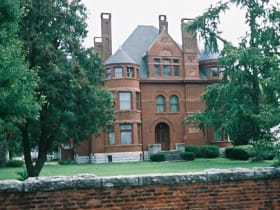
Howard Steamboat Museum
1.3 miles away
This one surprises people twice over. The Howard Steamboat Museum at 1101 E Market St fills a 22-room Victorian mansion the Howard shipbuilding family raised beside their Jeffersonville shipyard, whic...

Colonel Sanders Grave
1.4 miles away
Follow the yellow line. Cave Hill Cemetery on Baxter Avenue is a lush 296-acre garden cemetery and arboretum, and its most-visited resident is Colonel Harland Sanders, the white-suited founder of KFC,...
Muhammad Ali Center
1.6 miles away
Louisville's greatest son was not a horse or a bottle of bourbon but a boxer, and this is where the city tells his story.

Falls of the Ohio State Park
1.7 miles away
This is deep time you can walk on. At the Falls of the Ohio in Clarksville, the river has stripped bare a 380-million-year-old fossil coral reef, one of the largest exposed Devonian fossil beds in the...
Conrad-Caldwell House Museum
2.6 miles away
Most Derby visitors never wander into Old Louisville, which is exactly why this stop feels like a secret. The Conrad-Caldwell House at 1402 St.

Cherokee Park
3.0 miles away
Cherokee Park is one of the finest surviving works of Frederick Law Olmsted, the father of American landscape architecture, who shaped New York's Central Park before laying out Louisville's park syste...

Kentucky Derby Museum at Churchill Downs
4.5 miles away
Even kids who know nothing about horse racing get swept up here.
Louisville Mega Cavern
4.9 miles away
There is a whole hidden world under Louisville, and you can zip line through it.