
Cherokee Park
1802 Cherokee Rd, Louisville, KY
Louisville, KY
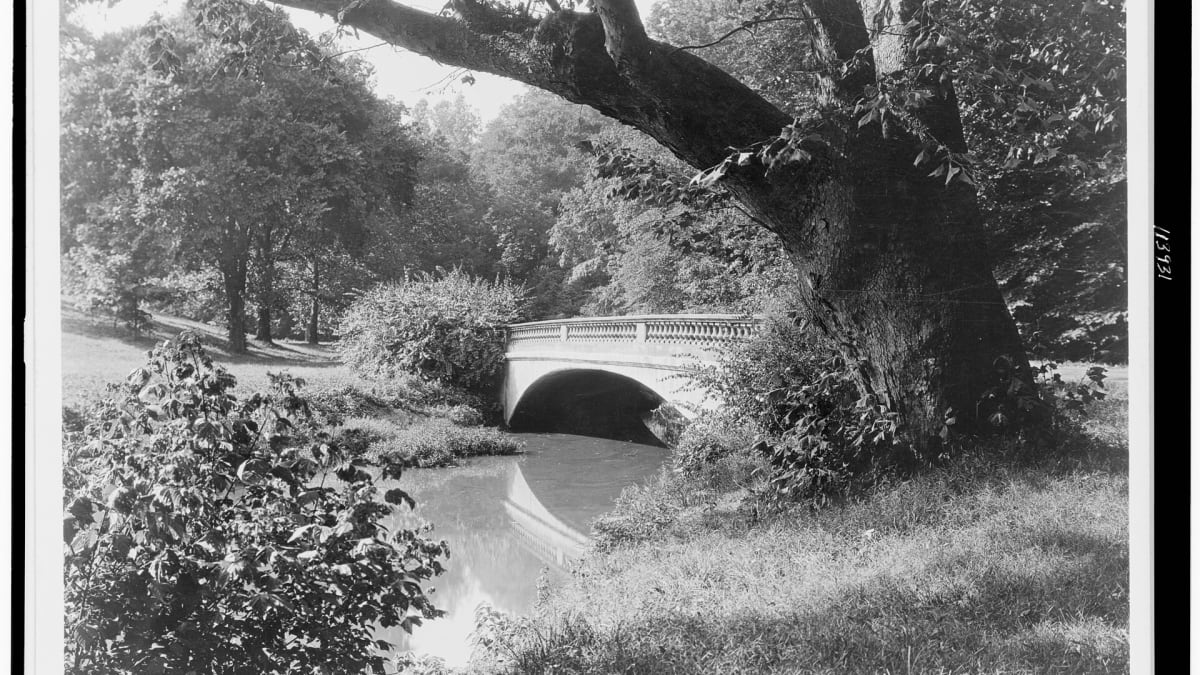
A rolling, wooded park designed by Frederick Law Olmsted, where a scenic loop road winds past meadows, old trees, and the banks of Beargrass Creek.
Cherokee Park is one of the crown jewels of Louisville's park system, a rolling, wooded landscape designed by Frederick Law Olmsted, the visionary behind New York's Central Park and the father of American landscape architecture. He laid it out in the 1890s not as a formal garden but as a piece of idealized countryside brought into the city, all meandering roads, open meadows, and groves of trees along Beargrass Creek.
The park's beloved centerpiece is its Scenic Loop, a winding road a little under two and a half miles around that carries a steady, cheerful flow of walkers, runners, and cyclists on their own separated lane, with cars moving one way alongside. It is the outdoor living room of Louisville's east side, busy in every season with people out enjoying the rise and fall of the land.
What Travelers Love
- The 2.4-mile Scenic Loop, shared by walkers, runners, cyclists, and cars in one direction
- Wide open meadows and rolling hills dotted with grand old trees
- Beargrass Creek winding through the park's low ground
- The design of Frederick Law Olmsted, the father of American landscape architecture
Worth Knowing
- The Scenic Loop road runs one way, with separated lanes for people and for cars
- This is one park in Louisville's larger Olmsted-designed system
- The park recovered and replanted after a devastating tornado in the 1970s
- It connects to the Beargrass Creek greenway and nearby Seneca Park
Learn about Cherokee Park
Olmsted's vision for Louisville
In the 1890s, Louisville hired Frederick Law Olmsted, then the most famous landscape architect in America, to design a system of parks and connecting parkways for the growing city. Rather than one grand park, he created a network, and Cherokee Park was to be his pastoral masterpiece, a place meant to feel like open, rolling country where city dwellers could escape the streets.
Olmsted disliked stiff, formal design. He shaped Cherokee Park to unfold gradually, with curving roads that reveal one gentle scene after another: a meadow, a wooded slope, a bend of the creek, a stand of great trees. That artful naturalism, so subtle that many visitors assume the landscape was simply always this way, is exactly the effect he intended, and it makes the park feel timeless.
The Scenic Loop and the land
The heart of a visit is the Scenic Loop, the winding road that circles the park in a bit under two and a half miles. It has become a democratic, well-loved space where walkers, joggers, stroller-pushers, and cyclists share a dedicated lane while cars roll one direction alongside, so the whole loop hums with people out moving and greeting one another. It is one of the great everyday pleasures of Louisville life.
Off the loop, the park's rolling meadows invite picnics and play, and Beargrass Creek threads through the low ground, crossed by old stone bridges. Big old trees, including some grand survivors, spread over the hillsides. The land was long part of the ancestral hunting country of the Shawnee and other nations whose descendants continue today, largely in Oklahoma, before it became farmland and then this pastoral park.
The tornado and the park's recovery
In 1974 a catastrophic tornado, part of a huge outbreak that struck the region, tore directly through Cherokee Park and destroyed thousands of its trees in minutes, leaving the beloved landscape shattered. It was one of the darkest days in the park's history and changed the look of the place overnight.
The response became a story of civic devotion. Louisvillians rallied to clean up and replant, and over the decades the park's tree canopy was rebuilt, so that today the damage is hard for a visitor to imagine. The recovery, aided by the Louisville Olmsted Parks Conservancy in later years, restored Olmsted's vision and renewed the community's bond with the park.
Season by season
Spring fills the meadows and woods with green and blossom, one of the loveliest times to walk or ride the Scenic Loop.
Summer is warm and busy, with picnickers on the meadows and a steady crowd out on the loop through the long evenings.
Fall sets the park's many hardwoods ablaze in gold and red, drawing crowds for the color along the loop and the creek.
Winter strips the trees and quiets the park, revealing the sculpted lay of the land Olmsted shaped, a peaceful time for a cold-weather walk.
Closest Boutels
The closest Boutel™ stays, so you can turn this stop into an overnight. Each is a place we chose through independent editorial review, never a paid placement.
Details
Louisville, KY
Frequently asked questions
What is Cherokee Park?
Cherokee Park, in Louisville, Kentucky, is a beautiful and beloved urban park designed by the famed landscape architect Frederick Law Olmsted, the designer of New York's Central Park, and a jewel of Louisville's celebrated Olmsted park system. The lovely park features rolling meadows, woodlands, a winding creek, and a popular scenic loop road shared by walkers, runners, cyclists, and drivers, along with trails, picnic areas, and mature trees. A green oasis in the city offering natural beauty and recreation in the graceful Olmsted style, it is a favorite of Louisville residents and visitors. With its scenic grounds and loop, Cherokee Park offers a delightful destination in Kentucky.
What can you do at Cherokee Park?
You can walk, run, or bike the popular scenic loop road and the trails through the woodlands and meadows, picnic, enjoy the creek and natural scenery, and take in the graceful Olmsted-designed landscape. The scenic loop, the trails, the rolling meadows and woods, and the peaceful natural beauty are the draws, making it a favorite for outdoor recreation and relaxation in the heart of Louisville. Its Olmsted design gives it a timeless, naturalistic charm. With its scenic grounds and trails, Cherokee Park offers a rewarding experience in Kentucky.
Who designed Cherokee Park?
Cherokee Park was designed by Frederick Law Olmsted, the celebrated landscape architect widely regarded as the father of American landscape architecture and the designer of New York's Central Park and many other famous parks. Olmsted designed Cherokee Park as part of a broader park and parkway system for Louisville, shaping its rolling meadows, woodlands, and winding drives in his signature naturalistic style. This Olmsted heritage gives the park its graceful, timeless design and makes Cherokee Park a distinguished green space in Louisville, Kentucky.
When is the best time to visit Cherokee Park?
The mild months of spring through fall offer the most pleasant weather for enjoying the trails, loop, and grounds, with spring bringing blooms and green, and fall bringing beautiful autumn color to the park's mature trees, a lovely time, though the park is open and scenic year-round. Mornings are peaceful for a walk or run. For the most pleasant weather and, in fall, colorful foliage, aim for spring through fall at Cherokee Park in Louisville, Kentucky.
What is near Cherokee Park?
Cherokee Park is in Louisville, Kentucky, part of the Olmsted park system, within reach of the Conrad-Caldwell House Museum, downtown Louisville with the Muhammad Ali Center and Louisville Slugger Museum, the Kentucky Derby Museum at Churchill Downs, and Colonel Sanders' grave at Cave Hill Cemetery. That makes Cherokee Park a delightful stop to combine with the Conrad-Caldwell House Museum and the other attractions of Louisville on a visit to Kentucky.
Nearby

Colonel Sanders Grave
1.6 miles away
Follow the yellow line. Cave Hill Cemetery on Baxter Avenue is a lush 296-acre garden cemetery and arboretum, and its most-visited resident is Colonel Harland Sanders, the white-suited founder of KFC,...
Louisville Mega Cavern
2.6 miles away
There is a whole hidden world under Louisville, and you can zip line through it.

Big Four Bridge
3.2 miles away
For a quick, free stretch of the legs with a big view, walk out onto the Big Four Bridge at Waterfront Park.
Howard Steamboat Museum
3.8 miles away
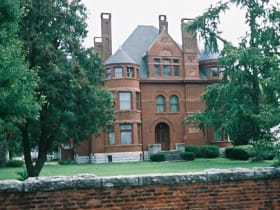
This one surprises people twice over. The Howard Steamboat Museum at 1101 E Market St fills a 22-room Victorian mansion the Howard shipbuilding family raised beside their Jeffersonville shipyard, whic...

Louisville Slugger Museum and Factory
3.8 miles away
You cannot miss it: a 120-foot baseball bat leaning against the building downtown.
Conrad-Caldwell House Museum
3.9 miles away
Most Derby visitors never wander into Old Louisville, which is exactly why this stop feels like a secret. The Conrad-Caldwell House at 1402 St.
Muhammad Ali Center
4.2 miles away
Louisville's greatest son was not a horse or a bottle of bourbon but a boxer, and this is where the city tells his story.

Falls of the Ohio State Park
4.7 miles away
This is deep time you can walk on. At the Falls of the Ohio in Clarksville, the river has stripped bare a 380-million-year-old fossil coral reef, one of the largest exposed Devonian fossil beds in the...

Kentucky Derby Museum at Churchill Downs
4.8 miles away
Even kids who know nothing about horse racing get swept up here.