
Cincinnati Museum Center at Union Terminal
1301 Western Ave, Cincinnati, OH
Cincinnati, OH
A soaring Art Deco train station, its half-dome rotunda glowing with mosaics, now home to a cluster of museums under one monumental roof.
The Cincinnati Museum Center is housed in one of the great buildings of American railroading: Union Terminal, a 1933 Art Deco masterpiece whose sweeping half-dome facade and cascading fountain are among the most recognizable sights in the city. Where trains once poured passengers into a soaring rotunda, visitors now fan out into a cluster of museums covering natural history, regional history, and hands-on science, all under one monumental roof.
The rotunda itself is the showpiece, an enormous curved hall ringed with mosaic murals that trace Cincinnati's story and the industries that built it. That the building survives at all, saved from demolition and lovingly restored, is part of its appeal, and the terminal now functions as both a cathedral of Art Deco design and a living museum complex for the whole region.
What Travelers Love
- The vast Art Deco rotunda, one of the largest half-dome interiors in the country
- The huge mosaic murals depicting Cincinnati's history and industry
- Several museums in one building, from natural history to local history
- A reconstructed limestone cave and Ice Age exhibits kids love
Worth Knowing
- It is a multi-museum complex, so plan for a longer visit if you want to see it all
- The building is an active regional rail stop as well, so trains still call here
- It is fully indoors, an ideal choice for a hot or rainy day
- The grand rotunda and its mosaics are worth pausing for even before you enter the exhibits
Learn about Cincinnati Museum Center at Union Terminal
The last great train station
Union Terminal opened in 1933, near the very end of the golden age of American passenger rail, built to consolidate the trains of many competing railroads into one grand station. Its architects gave it a bold Art Deco design crowned by an enormous half-dome, and in its early decades it handled the crush of wartime troop movements and everyday travelers passing through the river city.
The decline of passenger rail nearly killed it. As train travel faded, the terminal fell largely idle and was threatened with demolition, and for a time part of it was even converted into a shopping mall. The building was rescued and, in the 1990s, reborn as the Museum Center, a use grand enough to match the architecture, though trains on a long-distance route still stop here.
The rotunda and its mosaics
Stepping inside, visitors are met by the rotunda, a vast curved half-dome that is among the largest such interiors in the Western Hemisphere, its curve amplifying sound so that whispers carry across the hall. It is a genuine Art Deco landmark, its scale meant to impress travelers arriving in a booming industrial city.
Ringing the rotunda are enormous mosaic murals made of countless small glass tiles, depicting the history of Cincinnati and the nation and the workers and industries that powered the region. Additional mosaics from the terminal's old concourse were salvaged when that section was demolished and relocated elsewhere in the city, a rescue that saved some of the finest public art of its era.
Museums under one roof
Today the terminal holds several institutions in one complex. A natural history museum walks visitors through the geology and prehistory of the region, including a reconstructed limestone cave and exhibits on the Ice Age glaciers that shaped Ohio, and a large-format theater screens documentary films on a towering screen.
A history museum tells Cincinnati's own story, from its river-port beginnings to its industrial boom, often with immersive recreated streetscapes, and a dedicated children's museum gives younger visitors a hands-on world of their own. Rotating traveling exhibitions round out a complex that can fill the better part of a day.
The river city around it
The terminal sits just west of downtown Cincinnati, a hilly city that grew up on the north bank of the Ohio River as a booming nineteenth-century port and manufacturing center once nicknamed the Queen City. Its steep hillsides, historic neighborhoods, and inclined-plane heritage give it a character unlike any other Ohio city.
This ground is part of the ancestral homeland of the Shawnee, Miami, and Lenape (Delaware) peoples, who lived across the Ohio Valley before being forced westward in the early nineteenth century, and whose descendant nations continue today, largely in Oklahoma. From the terminal it is a short trip to the riverfront, the historic Over-the-Rhine district, and the city's museums and markets.
Closest Boutels
The closest Boutel™ stays, so you can turn this stop into an overnight. Each is a place we chose through independent editorial review, never a paid placement.
Details
Cincinnati, OH
Frequently asked questions
What is the Cincinnati Museum Center at Union Terminal?
The Cincinnati Museum Center at Union Terminal, in Cincinnati, Ohio, is a magnificent complex of museums housed in a stunning historic Art Deco train station, one of the finest examples of Art Deco architecture in the country. The beautifully restored terminal, with its grand rotunda and murals, is home to several museums under one roof, including a natural history and science museum, a history museum with a recreated historic streetscape, a children's museum, and a giant-screen theater, along with the historic building itself as an attraction. Its architecture and museums make it a wonderful destination. A magnificent and family-friendly museum complex, it delights visitors. With its museums and architecture, it offers a compelling destination in Ohio.
What can you see at the Cincinnati Museum Center at Union Terminal?
You can explore several museums under one roof, including a natural history and science museum with fossils and a cave, a history museum with a recreated historic Cincinnati streetscape, a children's museum, and a giant-screen theater, all within the stunning Art Deco terminal with its grand rotunda and murals. The multiple museums, the historic streetscape, the children's museum, and the magnificent architecture are the draws, making it a rich and varied visit. The Art Deco building itself is a highlight. With its museums, the center offers a rewarding visit in Cincinnati, Ohio.
Is the Cincinnati Museum Center good for families?
Yes, the Cincinnati Museum Center is wonderful for families, with a natural history and science museum, a children's museum, a recreated historic streetscape, a giant-screen theater, and the grand building itself offering plenty for children and adults to explore together. The variety of museums and the hands-on exhibits especially delight kids, making it a top family destination. Its all-under-one-roof format offers a full day. Its family appeal makes the Cincinnati Museum Center a delightful destination in Ohio.
When is the best time to visit the Cincinnati Museum Center at Union Terminal?
As an indoor museum complex, the Cincinnati Museum Center is enjoyable year-round in any weather, making it a great stop in any season, with weekdays generally less crowded than busy weekends and school holidays. Because hours and special exhibitions can vary, checking the current schedule before you go is wise. Because it is indoors, the Cincinnati Museum Center makes a rewarding stop any time of year in Cincinnati, Ohio.
What is near the Cincinnati Museum Center at Union Terminal?
The Cincinnati Museum Center at Union Terminal is in Cincinnati, Ohio, within reach of downtown Cincinnati, the Cincinnati Zoo and Botanical Garden, the American Sign Museum, and the other attractions of the Cincinnati area. That makes the Cincinnati Museum Center a compelling stop to combine with the other attractions of Cincinnati on a visit to Ohio.
Nearby

MainStrasse Village
1.7 miles away
Cross the river from Cincinnati and you can wander a slice of 19th-century Germany.

Roebling Suspension Bridge
1.9 miles away
For a quick walk into engineering history with a skyline view, step out onto the Roebling Suspension Bridge at the Covington riverfront.
Devou Park City Overlook
2.2 miles away
For the best free view of the Cincinnati skyline, cross to the Kentucky side and drive up into Devou Park.
BB Riverboats
2.4 miles away
Getting out on the Ohio River is a treat for kids, and BB Riverboats makes it easy from the Newport riverfront.
Newport Aquarium
2.4 miles away
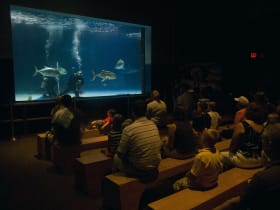
The Newport Aquarium turns a fish tank into an adventure for kids.
World Peace Bell
2.7 miles away
In the last seconds of the 20th century, a 33-ton bronze bell in Newport swung for the first time to ring in the year 2000, and for years afterward it was the largest free-swinging bell in the world.

Cincinnati Zoo and Botanical Garden
2.9 miles away
Few zoo animals have a fan base like Fiona the hippo, and kids come to Cincinnati just to see her.
American Sign Museum
3.2 miles away
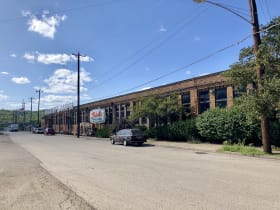
Most visitors to Cincinnati never make it to Camp Washington, which is where this glowing wonder hides.
Pyramid Hill Sculpture Park and Museum
18 miles away
This one rewards travelers who like their art with a hike. Pyramid Hill spreads more than 70 giant sculptures across 470 acres of rolling Butler County hills and forest, so you experience the work the...

Big Bone Lick State Historic Site
19 miles away
Big Bone Lick earns its odd name honestly. For thousands of years, ice-age giants, woolly mammoths, mastodons, giant ground sloths, and ancient bison, were drawn to the salt and sulfur springs bubblin...
Hillforest Victorian House Museum
20 miles away
People drive through Aurora without knowing a steamboat in the shape of a house sits on the hill above them.