

American Sign Museum
1330 Monmouth Ave, Cincinnati, OH
Cincinnati, OH
A whole indoor Main Street lit up in neon, from gas-station porcelain to spinning motel signs, all buzzing to life under one roof.
The American Sign Museum is exactly what it sounds like and far more magical than that description suggests: a warehouse in Cincinnati packed with the neon and painted signs that once lit up American roadsides. Inside, the collection is arranged as a walkable indoor street, with fake storefronts and facades so that you feel like you are strolling a Main Street where every business kept its best sign forever.
The lights are the point. Towering motel signs, spinning arrows, glowing bottle caps, and gas-station porcelain fill the space, much of it still wired and buzzing. It is a rare museum that hums, and it captures a slice of twentieth-century America that mostly vanished when the interstates rerouted traffic and the old roadside businesses came down.
What Travelers Love
- An indoor recreated street of storefronts lined with glowing vintage signs
- Standing under towering neon that once loomed over highways and motels
- Watching a real neon artisan bend and light glass tubes in the on-site shop
- Signs organized by era, from early gold-leaf and porcelain to mid-century neon and plastic
Worth Knowing
- This is an indoor museum, comfortable in any weather and good for a rainy afternoon
- The building is a former factory with high ceilings and long sightlines, so give yourself time to wander
- Photography is encouraged, and the glowing signs make the space especially fun after your eyes adjust
- It sits in a working industrial neighborhood, so plan your route in and note where you park
Learn about American Sign Museum
How a sign painter built a museum
The museum grew out of one man's obsession. Tod Swormstedt, whose family had long published a trade magazine for the sign industry, began collecting signs and eventually left the magazine to build a place to keep them. What started as a personal hoard of American roadside advertising became a nonprofit museum, first in a smaller space and later in the larger Camp Washington factory that houses it today.
The building itself has a past. It was once a parachute and raincoat factory, a long brick industrial hall with the ceiling height a giant neon motel sign needs. Restoring old signs is painstaking work, since neon tubes crack, transformers fail, and porcelain chips, so part of the mission has always been not just to display signs but to keep them lit and alive.
A walk through a century of American signs
The collection is loosely a timeline. Early sections show hand-painted and gold-leaf work, the careful lettering of a time when a sign was a craftsman's job, along with porcelain-enameled panels and early electric bulbs spelling out a shop's name. As you move along the indoor street the signs grow bolder and brighter.
The heart of the museum is the mid-century neon era, when roadside America competed for the attention of drivers with color, motion, and light. Motel signs promise a pool and a vacancy, a genie beckons, arrows point and blink, and letters glow in colors that plain daylight can never match. It is both a design history and a nostalgia trip, the visual language of a country built around the automobile.
The living craft of neon
One of the best parts of a visit is the working neon shop inside the museum, where an artisan bends glass tubing over flame, fills it with gas, and lights it, the same way roadside signs have been made for a century. Watching a straight rod of glass become a glowing script letter shows you why these signs were as much handwork as advertising.
Neon is a genuinely endangered craft. As backlit plastic and LED took over, the number of people who can bend and fill glass tubing dwindled, and museums like this one help keep the skill and its tools from disappearing. The shop makes clear that every curving line of light in the collection was once shaped by hand.
Camp Washington and river-city Cincinnati
The museum sits in Camp Washington, an old working neighborhood on Cincinnati's west side named for a militia encampment from the era of the Mexican-American War. It is classic industrial river-city ground, more warehouses and rail lines than tourist polish, and it is home to a beloved round-the-clock chili parlor that has been feeding the neighborhood for generations.
The land here is part of the ancestral homeland of the Shawnee, Miami, and Lenape (Delaware) peoples, who lived and hunted across the Ohio Valley before being forcibly removed westward in the early nineteenth century. Their descendant nations continue today, largely in Oklahoma. Cincinnati grew up just south of here on the Ohio River, a booming nineteenth-century port once nicknamed the Queen City.
Closest Boutels
The closest Boutel™ stays, so you can turn this stop into an overnight. Each is a place we chose through independent editorial review, never a paid placement.
Details
Cincinnati, OH
Frequently asked questions
What is the American Sign Museum?
The American Sign Museum, in Cincinnati, Ohio, is a delightful and dazzling museum devoted to the history and art of American signs, especially the glowing neon signs of the twentieth century. The museum houses a remarkable collection of vintage signs, from early painted and gold-leaf signs to brilliant neon and electric signs, many restored to their glowing glory, recreating the vibrant streetscapes of decades past. Walking among the illuminated signs is a nostalgic and colorful experience celebrating a beloved and vanishing American art form. A dazzling and nostalgic museum, it delights visitors. With its glowing signs, the American Sign Museum offers a compelling destination in Ohio.
What can you see at the American Sign Museum?
You can see a remarkable collection of vintage American signs, from early painted and gold-leaf signs to brilliant restored neon and electric signs, many glowing, arranged to recreate the vibrant streetscapes and storefronts of decades past. The dazzling neon signs, the vintage advertising art, the recreated streetscapes, and the nostalgic atmosphere are the draws, making it a colorful and memorable visit. Walking among the glowing signs is the highlight. With its signs, the American Sign Museum offers a rewarding experience in Cincinnati, Ohio.
Is the American Sign Museum good for families?
Yes, the American Sign Museum is a fun stop for families, with its dazzling glowing neon signs, colorful vintage advertising, and recreated streetscapes that delight and fascinate children and adults alike. The bright, glowing signs especially captivate kids, and the nostalgic atmosphere charms grown-ups. Its indoor setting is comfortable in any weather. Its family appeal makes the American Sign Museum a delightful destination in Ohio.
When is the best time to visit the American Sign Museum?
As an indoor museum, the American Sign Museum is enjoyable year-round in any weather, making it a great stop in any season, with the glowing signs dazzling regardless of the weather outside. Because hours can vary, checking the current schedule before you go is wise. Because it is indoors, the American Sign Museum makes a rewarding stop any time of year in Cincinnati, Ohio.
What is near the American Sign Museum?
The American Sign Museum is in Cincinnati, Ohio, within reach of downtown Cincinnati, the Cincinnati Museum Center at Union Terminal, the Cincinnati Zoo and Botanical Garden, and the other attractions of the Cincinnati area. That makes the American Sign Museum a compelling stop to combine with the other attractions of Cincinnati on a visit to Ohio.
Nearby

Cincinnati Zoo and Botanical Garden
1.7 miles away
Few zoo animals have a fan base like Fiona the hippo, and kids come to Cincinnati just to see her.
Cincinnati Museum Center at Union Terminal
3.2 miles away
The building alone is the reason to come. Union Terminal is one of the finest Art Deco structures in America, its sweeping curved facade and half-dome rotunda so striking that they inspired the look o...

MainStrasse Village
4.6 miles away
Cross the river from Cincinnati and you can wander a slice of 19th-century Germany.

Roebling Suspension Bridge
4.6 miles away
For a quick walk into engineering history with a skyline view, step out onto the Roebling Suspension Bridge at the Covington riverfront.
Newport Aquarium
4.7 miles away
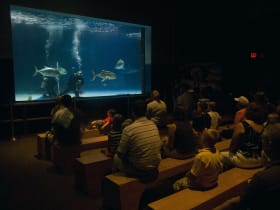
The Newport Aquarium turns a fish tank into an adventure for kids.
BB Riverboats
4.8 miles away
Getting out on the Ohio River is a treat for kids, and BB Riverboats makes it easy from the Newport riverfront.
World Peace Bell
5.0 miles away
In the last seconds of the 20th century, a 33-ton bronze bell in Newport swung for the first time to ring in the year 2000, and for years afterward it was the largest free-swinging bell in the world.
Devou Park City Overlook
5.4 miles away
For the best free view of the Cincinnati skyline, cross to the Kentucky side and drive up into Devou Park.
Pyramid Hill Sculpture Park and Museum
15 miles away
This one rewards travelers who like their art with a hike. Pyramid Hill spreads more than 70 giant sculptures across 470 acres of rolling Butler County hills and forest, so you experience the work the...

Kings Island
19 miles away
Kings Island splits neatly for families: big kids and teens chase the coasters while younger ones have one of the largest kiddie-ride areas in the country.