

Big Bone Lick State Historic Site
3453 Beaver Rd, Union, KY
Union, KY
A salt-and-sulfur marsh where Ice Age mammoths and mastodons came to lick the minerals and sometimes died, the ground that gave rise to American paleontology.
Big Bone Lick takes its plain, remarkable name from exactly what it is: a place of salt-and-sulfur springs where, thousands of years ago, enormous Ice Age animals came to lick the minerals from the mud, and where many of them died and left their giant bones behind. Mammoths, mastodons, ground sloths, and ancient bison were drawn to the salty seeps, and over the ages their remains piled up in the marshy ground.
When early explorers and scientists began digging out those bones in the 1700s, they helped launch the entire study of prehistoric life in North America, which is why the site is often called the birthplace of American paleontology. Today a museum, an interpretive trail, and a living herd of bison bring that deep-time story to a landscape that still smells faintly of sulfur.
What Travelers Love
- Standing over the marshy salt licks where mammoths and mastodons once mired
- Seeing the resident herd of American bison in their pasture
- The museum's Ice Age fossils and the story of the great creatures found here
- Quiet trails through the woods and around the springs
Worth Knowing
- This is called the birthplace of American paleontology for the fossils dug here
- A herd of bison lives on site, a nod to the animals that once used the licks
- The interpretive trail loops past the marshy licks with life-size figures of the beasts
- The museum inside the visitor center holds the fossils and tells the fuller story
Learn about Big Bone Lick State Historic Site
The great salt lick
For countless generations the salt-and-sulfur springs here drew animals from miles around, the way a natural salt lick still draws deer today. During and after the last Ice Age, that meant the megafauna of North America: woolly mammoths, American mastodons, giant ground sloths, ancient bison, and more. Many became mired in the soft, marshy ground around the seeps and died there, and their bones accumulated in the mud over thousands of years.
Long before scientists arrived, Native peoples knew the lick well. The Shawnee and other nations, whose ancestral homelands took in this stretch of the Ohio valley before their removal westward, hunted the game the springs attracted and carried away the strange giant bones. Their descendant nations continue today, largely in Oklahoma and beyond. When early European explorers came, Native guides led them to the bone-strewn ground.
The birthplace of American paleontology
In the 1700s, explorers, soldiers, and naturalists began carrying mammoth and mastodon bones away from Big Bone Lick, and the strange fossils stirred debate among the leading scientists of Europe and America over what kind of creatures they had come from. Thomas Jefferson took a deep interest in the bones and, as president, sent an expedition to collect specimens from the lick, some of which he studied at the White House.
Because the fossils here were among the first great collections of extinct animals studied in North America, and because they helped scientists grasp that whole kinds of creatures had vanished from the earth, Big Bone Lick earned its lasting nickname as the birthplace of American paleontology. The digging that began at these springs helped open an entirely new understanding of the ancient world.
The bison, the museum, and the trails
A living herd of American bison grazes a pasture on the grounds, a fitting echo of the ancient bison that once used the licks. Visitors can see the herd from viewing areas, a reminder of the great grazing animals that shaped this land. The site's museum, inside the visitor center, displays real Ice Age fossils and tells the layered story of the lick, from the animals to the scientists.
An interpretive trail loops out to the marshy licks themselves, passing life-size figures of mammoths and mastodons positioned as if mired in the mud, which brings the scene vividly to life. Longer trails and a campground extend the visit for those who want to linger in the wooded hills, and the springs still bubble up salty and sulfurous as they always have.
Season by season
Spring greens the pastures and woods, and the bison are active as the weather warms, a fine time for the interpretive trail.
Summer is warm and full, the busiest season, with families walking the trails and picnicking on the grounds.
Fall brings cool air and turning leaves across the wooded hills, one of the prettiest times to visit.
Winter is quiet and stark, the bare woods opening up the views, with the salt springs still steaming faintly on cold mornings.
Closest Boutels
The closest Boutel™ stays, so you can turn this stop into an overnight. Each is a place we chose through independent editorial review, never a paid placement.
Details
Union, KY
Frequently asked questions
What is the Big Bone Lick State Historic Site?
The Big Bone Lick State Historic Site, near Union in northern Kentucky, is a fascinating site often called the birthplace of American paleontology, where the bones of Ice Age megafauna were discovered around ancient salt springs. Thousands of years ago, mammoths, mastodons, giant ground sloths, and ancient bison were drawn to the salt licks here, and many perished and left their bones, which early discoveries made famous in the history of science. Today the site features a museum with fossils and exhibits, the historic salt springs, nature trails, and a herd of live bison, connecting visitors to the deep prehistoric past. With its fossil heritage and bison, the Big Bone Lick State Historic Site offers a fascinating destination in Kentucky.
Why is Big Bone Lick called the birthplace of American paleontology?
Big Bone Lick is called the birthplace of American paleontology because the remarkable discoveries of Ice Age megafauna bones around its salt springs in the eighteenth century were among the earliest and most important vertebrate fossil finds studied in America, drawing the attention of leading thinkers, including President Thomas Jefferson, who took a keen interest and had specimens collected. These discoveries helped launch the scientific study of prehistoric life in the young nation. This pioneering role in the science gives the site its famous nickname, making Big Bone Lick a significant destination in Kentucky.
What can you do at the Big Bone Lick State Historic Site?
You can visit the museum with its fossils and exhibits on the Ice Age megafauna and the site's role in early paleontology, see the historic salt springs where prehistoric animals gathered and perished, walk the nature trails, and view the herd of live bison that recall the ancient animals once drawn here. The fossil museum, the historic salt springs, the nature trails, and the live bison are the draws, offering an engaging blend of science, history, and nature. Seeing living bison connects past and present. With its fossils, springs, and bison, the Big Bone Lick State Historic Site offers a rewarding experience in Kentucky.
When is the best time to visit the Big Bone Lick State Historic Site?
The mild months of spring through fall offer the most pleasant weather for the outdoor trails, salt springs, and bison viewing, while the indoor museum offers an option in various weather. The bison can be viewed year-round from a safe distance. Because hours can vary, checking the current schedule before you go is wise. For the fullest experience with the trails and bison, aim for spring through fall at the Big Bone Lick State Historic Site in Kentucky.
What is near the Big Bone Lick State Historic Site?
The Big Bone Lick State Historic Site is near Union in northern Kentucky, within reach of the northern Kentucky riverfront with the Newport Aquarium and MainStrasse Village, the Cincinnati area, and the northern Kentucky countryside. That makes the Big Bone Lick State Historic Site a fascinating stop to combine with the northern Kentucky riverfront attractions and the other sights of the region on a visit to Kentucky.
Nearby
Hillforest Victorian House Museum
15 miles away
People drive through Aurora without knowing a steamboat in the shape of a house sits on the hill above them.
Devou Park City Overlook
18 miles away
For the best free view of the Cincinnati skyline, cross to the Kentucky side and drive up into Devou Park.

MainStrasse Village
19 miles away
Cross the river from Cincinnati and you can wander a slice of 19th-century Germany.
Cincinnati Museum Center at Union Terminal
19 miles away
The building alone is the reason to come. Union Terminal is one of the finest Art Deco structures in America, its sweeping curved facade and half-dome rotunda so striking that they inspired the look o...

Roebling Suspension Bridge
19 miles away
For a quick walk into engineering history with a skyline view, step out onto the Roebling Suspension Bridge at the Covington riverfront.
World Peace Bell
20 miles away
In the last seconds of the 20th century, a 33-ton bronze bell in Newport swung for the first time to ring in the year 2000, and for years afterward it was the largest free-swinging bell in the world.
BB Riverboats
20 miles away
Getting out on the Ohio River is a treat for kids, and BB Riverboats makes it easy from the Newport riverfront.
Newport Aquarium
20 miles away
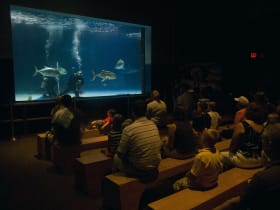
The Newport Aquarium turns a fish tank into an adventure for kids.