

Chesapeake Beach Railway Museum
4017 15th St, Chesapeake Beach, MD
Chesapeake Beach, MD
A little depot-turned-museum that keeps alive the story of the railroad and the boardwalk resort it built on the shores of the Chesapeake.
The Chesapeake Beach Railway Museum preserves the memory of a remarkable venture: a railroad built at the turn of the twentieth century for the sole purpose of carrying pleasure-seekers from Washington, D.C., out to a brand-new resort on the shores of the Chesapeake Bay. The town of Chesapeake Beach was essentially conjured into being by that railroad, complete with a grand boardwalk, an amusement pier, a dance pavilion, and even a small roller coaster over the water.
The museum makes its home in the town's original railroad station, a fitting keeper of the story. Through photographs, artifacts, and exhibits, it recalls the heyday of the Chesapeake Beach Railway and the lively resort it served, a place where city crowds came by the trainload to swim, ride, dance, and escape the summer heat. It is a small, charming stop that opens a window onto a vanished world of American seaside leisure.
What Travelers Love
- The story of a whole seaside resort built and reached by its own railroad
- The setting in the original, restored station house
- A window into an era of amusement piers, boardwalks, and day-trippers from Washington
- A quick, charming stop that pairs with the bayside beaches and boardwalk
Worth Knowing
- This is a small, community-run museum, so it is a short and easy visit rather than an all-day one
- It welcomes visitors and generally operates on a seasonal schedule, so check before a special trip
- It sits right in town near the waterfront, easy to combine with a beach and boardwalk day
- Its focus is local history, so history buffs and railfans get the most from it
Learn about Chesapeake Beach Railway Museum
A railroad that built a resort
At the end of the nineteenth century, entrepreneurs saw a chance to create a bayside playground within reach of Washington, and the key to it was a railroad. The Chesapeake Beach Railway was constructed to carry passengers from the edge of the capital across Southern Maryland to the shore of the Chesapeake, where a whole resort town rose to greet them.
The resort that grew at the end of the line was a marvel of its day, with a long boardwalk out over the water, an amusement pier, carnival rides, a dance hall, a carousel, and games and attractions to fill a summer day. Excursion trains brought crowds of day-trippers and vacationers, and for a few decades Chesapeake Beach was one of the liveliest destinations on the western shore of the bay.
The station and the museum
The museum occupies the original Chesapeake Beach railway station, the very building where those trainloads of visitors once arrived and departed. Preserving and interpreting the station keeps a tangible piece of the story standing, and stepping inside gives a sense of the bustle that once filled the platform on a hot summer weekend.
Inside, the exhibits gather photographs, memorabilia, and artifacts that bring the railway and the resort back to life, from images of the boardwalk and amusement pier to relics of the trains themselves. Run with clear local affection, the museum is the town's memory made visible, and it rewards anyone curious about how a stretch of quiet shoreline once buzzed as a mass-transit seaside escape.
The rise and fall of the bayside resort
The Chesapeake Beach resort thrived in an age when railroads and steamboats, not automobiles, carried Americans to their leisure. As cars became common and tastes changed, the crowds that had once poured off the excursion trains thinned, and the railway that had built the town eventually ceased operating, taking much of the resort's grandeur with it.
The amusement pier and the great attractions of the boardwalk era are gone, but their story survives in the museum, and the town itself has carried on as a small bayside community. Understanding that arc, from boomtown resort to quiet beach town, is much of what makes a visit here rewarding, a lesson in how transportation shapes the places we play.
The bay towns today
Chesapeake Beach and its neighbor North Beach remain relaxed western-shore communities where people come for the water, the sunsets, and the easygoing pace. A modern boardwalk, a water park, fishing, and bayside dining give the towns a gentle resort feeling that echoes, in a quieter key, their livelier past.
The museum sits right in the middle of this, an easy stop to fold into a day at the beach. Combined with a walk along the water and a meal with a bay view, it makes a pleasant half-day in a corner of Southern Maryland that most travelers pass right by.
Closest Boutels
The closest Boutel™ stays, so you can turn this stop into an overnight. Each is a place we chose through independent editorial review, never a paid placement.
Details
Chesapeake Beach, MD
Frequently asked questions
What is the Chesapeake Beach Railway Museum?
The Chesapeake Beach Railway Museum, in the town of Chesapeake Beach in Calvert County, tells the story of the early-twentieth-century railway that once carried vacationers from the Washington, D.C., area to a bustling bayside resort here. Housed in a historic former station, the small museum preserves artifacts, photographs, and memories of the resort era, when the railway brought crowds to the beach, amusement park, and boardwalk. It is a charming, free window into a colorful chapter of Chesapeake Bay history.
What can you see at the Chesapeake Beach Railway Museum?
The museum displays artifacts, photographs, and memorabilia from the days of the Chesapeake Beach Railway and the popular bayside resort it served, including exhibits on the trains, the amusement park, and the excursion crowds who once flocked to the shore. Housed in a historic station building, it evokes the golden age of railway resorts. It is a compact museum, so a visit is short but rich with local nostalgia and history.
When is the best time to visit the Chesapeake Beach Railway Museum?
The museum is generally most accessible in the warmer months, so spring through fall is a good time to visit, and it pairs well with enjoying the Chesapeake Beach waterfront. Because it is a small, often volunteer-run museum, its hours can be limited and seasonal, so checking the current schedule before you go is wise. A visit takes only a short time, making it an easy add-on to a day at the bay.
Is the Chesapeake Beach Railway Museum free?
Yes, the museum is typically free to visit, with donations welcomed to support it, making it an easy and budget-friendly stop. Its modest size and free admission make it simple to drop in for a quick dose of local history while exploring the Chesapeake Beach area. For those interested in railway or resort history, it offers a rewarding glimpse into the region's past at no cost.
What is near the Chesapeake Beach Railway Museum?
The museum is in Chesapeake Beach, a bayside town in Calvert County on Maryland's western shore of the Chesapeake, near the waterfront, a water park, and the neighboring town of North Beach with its boardwalk and pier. The broader southern Maryland region, with the Calvert Marine Museum and Calvert Cliffs fossil beach, is within reach. That makes the railway museum an easy, quick stop on a day exploring the Chesapeake Beach area and Calvert County.
Nearby

Chesapeake Bay Maritime Museum
18 miles away
Many visitors treat St Michaels as a shopping stroll and skip the museum at the end of the harbor, which is the mistake.
Calvert Cliffs State Park
21 miles away
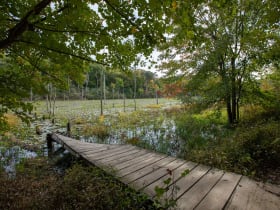
These Chesapeake cliffs are a window straight into the Miocene, 10 to 20 million years ago, when a warm sea covered southern Maryland.

Sotterley Plantation
22 miles away
Most colonial plantation houses in tidewater Maryland are long gone, which makes Sotterley on the Patuxent rare and worth the detour.