
Book Cliffs Viewpoint
16 Rimrock Dr, Fruita, CO
Fruita, CO
A sweeping desert overlook of banded sandstone cliffs that run in an unbroken wall for hundreds of miles across the horizon.
The Book Cliffs are one of the longest continuous escarpments on earth, a great stepped wall of sandstone and shale that runs for hundreds of miles from western Colorado deep into Utah. From the viewpoints above Fruita and Grand Junction, the cliffs rise in banded ranks along the northern horizon, so long that they simply run out of sight in both directions.
They earned their name from their look: the layered rock, seen from a distance, resembles a shelf of enormous books standing on end, each cliff a spine and each bench a page. That layering is also the key to their story, a record of an ancient shoreline preserved in stone and slowly carved back into cliffs by erosion over millions of years.
What Travelers Love
- The scale of the cliffs, a banded wall that seems to run on forever
- Big, uncluttered high-desert light at sunrise and sunset
- A quiet, wide-open overlook away from the crowds
- The layered geology written plainly across the rock face
Worth Knowing
- This is high desert with little shade, so carry water and sun protection
- Summer afternoons can be very hot and bring sudden thunderstorms
- The cliffs are stark and beautiful in low, angled morning and evening light
- Much of the surrounding land is remote public land, so know where you are before wandering off-route
Learn about Book Cliffs Viewpoint
How the cliffs were made
The Book Cliffs are built from layers of sandstone, siltstone, and shale that were laid down tens of millions of years ago along the edge of a vast inland sea that once covered much of the interior West. Sand from ancient beaches and river deltas hardened into the resistant ledges, while finer mud settled into the softer, crumblier shale between them.
As the land later rose and the climate dried, water and weather went to work, wearing back the soft shale faster than the hard sandstone and leaving the stepped, book-shelf profile that gives the cliffs their name. The face keeps retreating grain by grain, so the escarpment is still slowly moving, and the debris slopes at its base are part of that ongoing erosion.
The high desert at your feet
The country below the cliffs is classic Colorado Plateau high desert, a mosaic of sagebrush flats, juniper, and pinyon pine broken by dry washes and low sandstone benches. It looks spare from a distance, but it holds more life than it lets on, especially in the cooler hours of morning and evening.
Mule deer move through the draws, jackrabbits and cottontails bolt from the brush, and the country is known for desert bighorn and for wild horses that range the public lands nearby. Overhead, hawks and golden eagles ride the updrafts along the cliff face, hunting the open ground below.
Light, distance, and the view
The Book Cliffs are a study in scale and light. Under a flat midday sun they can look pale and washed out, but in the low, angled light of early morning or late evening the banded layers stand out sharply, glowing warm and casting long shadows down the face. That is when photographers and quiet travelers come.
Because the escarpment is so long and unbroken, the view has an unusual, almost oceanic quality, the cliffs receding into haze along the horizon in both directions. From the overlook you can trace the same wall running toward Utah, a reminder of just how vast the Colorado Plateau really is.
Season by season
Spring brings mild days, the first desert wildflowers, and good light, one of the most comfortable times to be out on the Western Slope.
Summer is hot and bright with little shade, best enjoyed early or late in the day, and afternoons can bring quick, heavy thunderstorms that turn washes to running water.
Fall returns cool, clear air and long golden evenings, ideal for photographing the cliffs, with the river cottonwoods in the valley turning yellow.
Winter is cold and quiet, sometimes dusting the cliff tops with snow, and the low sun keeps the banded rock lit and dramatic for much of the short day.
Closest Boutels
The closest Boutel™ stays, so you can turn this stop into an overnight. Each is a place we chose through independent editorial review, never a paid placement.
Details
Fruita, CO
Frequently asked questions
What is the Book Cliffs Viewpoint?
The Book Cliffs Viewpoint offers views of the Book Cliffs, a long, dramatic escarpment of cliffs stretching for many miles across western Colorado and into Utah near Grand Junction. Named for the way the sheer cliff faces resemble the pages or spines of books standing on a shelf, this striking geological formation rises above the desert valley, forming a distinctive backdrop to the region. From the viewpoint, visitors can take in the sweeping expanse of the layered cliffs and the surrounding high-desert landscape. A scenic feature of the Grand Junction area, the Book Cliffs Viewpoint showcases the rugged beauty of western Colorado's canyon and cliff country.
Why are they called the Book Cliffs?
The Book Cliffs get their name from their distinctive appearance, as the series of steep, layered cliff faces and the rounded formations along the escarpment resemble the spines or pages of books lined up on a shelf, an evocative comparison that early observers made. Stretching for many miles as one of the longest continuous escarpments in the world, the cliffs' banded, bookish profile inspired the fitting name. This striking and memorable formation is a notable landmark of the western Colorado and eastern Utah landscape, and its name captures the unique, orderly appearance of the layered sedimentary rock.
What can you do at the Book Cliffs Viewpoint?
You can take in scenic views of the long, dramatic Book Cliffs escarpment and the surrounding high-desert valley, photograph the striking layered cliffs, especially in the beautiful light of morning or evening, and appreciate the geology and scale of this notable formation. The viewpoint offers a scenic stop to enjoy the rugged landscape of the Grand Junction area. The nearby Little Book Cliffs Wild Horse Range offers the chance to see wild mustangs in the canyons of the cliffs. With its sweeping cliff views, the Book Cliffs Viewpoint is a scenic pause while exploring western Colorado's canyon country.
When is the best time to visit the Book Cliffs Viewpoint?
Spring and fall offer the most comfortable temperatures for enjoying the viewpoint in the high desert, with beautiful light on the cliffs, while summer can be hot, so early morning or evening visits are best then when the light is also loveliest on the layered rock, and winter is cooler and quieter. Clear days offer the best views of the expansive cliffs. Sunrise and sunset light dramatizes the formation. For the best combination of comfortable weather and beautiful light, aim for spring, fall, or the cooler hours of a summer day at the Book Cliffs Viewpoint.
What is near the Book Cliffs Viewpoint?
The Book Cliffs Viewpoint is near Grand Junction in western Colorado, close to the Little Book Cliffs Wild Horse Range where wild mustangs roam, the stunning Colorado National Monument, the Palisade wine country, and the Grand Mesa, within reach of the region's dinosaur attractions and outdoor recreation. That makes the Book Cliffs Viewpoint a scenic stop to combine with the wild horse range, Colorado National Monument, Palisade, and the attractions of western Colorado on a visit to the state.
Nearby
Mike the Headless Chicken Statue
5.8 miles away
In the middle of downtown Fruita stands a metal rooster honoring a chicken that lived a year and a half without a head.

Dinosaur Journey Museum
6.0 miles away
Dinosaur Journey Museum in Fruita, operated by the Museum of Western Colorado, covers the Western Slope's exceptional fossil record with full-scale mounted dinosaur skeletons, an active paleontology l...
Colorado National Monument
12 miles away
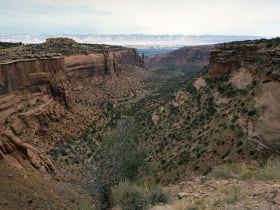
Colorado National Monument covers 32 square miles of canyon country directly west of Grand Junction, but most visitors rushing between Denver and Utah on I-70 pass within 5 miles without stopping.
Little Book Cliffs Wild Horse Range
18 miles away
One of only three protected wild horse ranges in America, more than 36,000 acres of red canyons and juniper plateaus northeast of Palisade where free-roaming mustangs run.
UT-128 Colorado River Scenic Byway
42 miles away
UT-128 follows the Colorado River from Moab northeast through Professor Valley, past Fisher Towers, Castle Valley, and the Rose Ranch ruins.

Arches National Park
66 miles away
More than 2,000 natural stone arches, including the iconic Delicate Arch, carved from red Entrada sandstone.