
Little Book Cliffs Wild Horse Range
Coal Canyon Trailhead, Cameo
Palisade, CO
Free-roaming mustangs in a maze of red canyons and juniper plateaus, one of just three wild horse ranges the country set aside by law.
Somewhere in the folded canyons northeast of Palisade, a band of mustangs is moving along a ridgeline: a paint mare, a couple of bays, a pale palomino, a foal keeping close. This is the Little Book Cliffs Wild Horse Range, more than thirty-six thousand acres of rough canyon and plateau country set aside for one purpose, to let wild horses live wild. It is one of only three ranges in the entire United States created specifically to protect free-roaming mustangs.
The horses here are not a novelty herd trucked in for tourists. Their line is said to reach back centuries on this ground, descended from the horses of Spanish colonists and Native peoples, and the band that runs the range today shows it in a remarkable spread of colors: palominos and paints, grays and blacks, bays and sorrels, blue and red roans, even a few appaloosas. Come at dawn or dusk, walk in quietly, and you may get to watch them the way people have watched horses on the open range for generations.
What Travelers Love
- Watching genuinely wild horses in open country, not a ranch or a paddock
- The rugged beauty of the Book Cliffs canyons, plateaus, and long river views
- Quiet hiking on a network of trails with a real chance of a mustang sighting
- The rare feeling of a place set aside by law just so wild horses can be wild
Worth Knowing
- This is remote public land with no services, so bring plenty of water, fuel up first, and tell someone your plan
- The horses are wild and can kick or bite, so keep a very large distance, never feed or approach them, and use a zoom lens
- The Coal Canyon trailhead closes to motor vehicles from early winter into spring, so check current access before you go
- Early morning and late afternoon give the best chance to see active bands, and summer days on the exposed range get very hot
Learn about Little Book Cliffs Wild Horse Range
A range set aside by law
For most of American history wild horses had no protection at all, and by the mid-twentieth century they were being rounded up and hauled off by the thousands. The tide turned largely because of one woman, Velma Bronn Johnston, known as Wild Horse Annie, whose campaign led Congress to pass the Wild Free-Roaming Horses and Burros Act in 1971. That law recognized wild horses and burros as living symbols of the West and gave them a legal right to the public lands where they were found.
Little Book Cliffs was designated under that act and became one of just three ranges in the country established specifically to protect wild horses. The Bureau of Land Management manages it today, and a dedicated volunteer group, the Friends of the Mustangs, works alongside the agency to improve springs and range conditions and to track the individual horses. That partnership is part of why the herd here is so well known and so watchable.
The horses and the country they run
The range covers four major canyon systems that drop from high, gently sloping plateaus down toward the Colorado River, a landscape of sagebrush and bunchgrass, pinyon and juniper, with water always in short supply. That dryness is why the range can only support a limited band of horses, and it shapes how the animals move, drifting between water sources and grazing across a lot of ground.
What draws people is the variety and the wildness of the herd. Unlike many mustang populations that trend toward one or two colors, the Little Book Cliffs horses run the whole palette, which makes a band moving across a red-rock slope a genuinely striking sight. They live in family groups led by a stallion, and patient watchers who learn the trails can come to recognize particular bands from one visit to the next.
Seeing them the right way
There is no guarantee with wild animals, but the odds are real. The most reliable way in is the Main Canyon Trail from the Coal Canyon trailhead near Cameo, reached off Interstate 70 east of Grand Junction and Palisade. From there a network of nine or so trails, ranging from short walks to hikes of several miles, spreads into the range, and early morning and late afternoon are when the horses are most active and most likely to be out.
The single most important thing is distance. These are wild horses, not petting-zoo animals, and they can kick, bite, and bolt. Keep well back, never feed or try to approach them, let them set the terms, and carry a zoom lens if you want photos. Watched that way, from a respectful remove, a wild band on its own ground is one of the most memorable things you can see on Colorado's Western Slope.
Visiting from Palisade
The range sits just up the valley from Palisade, the fruit-and-wine town along the Colorado River, which makes an easy base. Fuel up, fill your water bottles, and pack for a self-sufficient outing, because there are no services once you leave the highway and the canyon country gets hot and exposed in summer.
Time your trip for the shoulders of the day and, ideally, the warmer months when the trailhead is open to vehicles, since the Coal Canyon access closes to motor traffic through the winter and into late spring. Give yourself a slow morning to walk in, scan the ridgelines, and wait. Even on a day the horses stay hidden, the canyons and the big river views make the trip worthwhile.
Closest Boutels
The closest Boutel™ stays, so you can turn this stop into an overnight. Each is a place we chose through independent editorial review, never a paid placement.
Details
Palisade, CO
Frequently asked questions
What is the Little Book Cliffs Wild Horse Range?
The Little Book Cliffs Wild Horse Range, northeast of Grand Junction in western Colorado, is one of only a few areas in the United States set aside to protect wild horses, home to a herd of free-roaming mustangs living amid rugged canyons, plateaus, and desert terrain in the Book Cliffs area. Covering tens of thousands of acres of remote, scenic country, the range offers the chance to hike and explore in search of the wild horses, along with beautiful canyon scenery and solitude. A special place for those hoping to glimpse wild mustangs in their natural habitat, it is a unique and rewarding destination in western Colorado.
Can you see wild horses at the Little Book Cliffs Wild Horse Range?
Yes, the range is home to a herd of wild mustangs, and visitors who hike or explore the canyons and plateaus may spot them roaming freely, though the horses range across a large, rugged area, so sightings require patience, effort, and some luck, and are never guaranteed. Bringing binoculars, going early, and exploring the trails and canyons improve your chances. It is important to observe the wild horses from a distance and never approach, feed, or disturb them, as they are wild animals. The thrill of glimpsing wild mustangs in their natural setting makes the effort rewarding.
What safety precautions should I take at the Little Book Cliffs Wild Horse Range?
The range is remote, rugged terrain with limited services, trails, water, and possibly spotty cell coverage, so come prepared with plenty of water, sun protection, sturdy footwear, a map, and supplies, and tell someone your plans. The high-desert heat can be intense in summer, so hike early and avoid the midday heat. Watch for rattlesnakes and difficult terrain, and observe any wild horses from a safe distance without approaching them. Being self-sufficient, prepared for the remote desert conditions, and respectful of the wild horses ensures a safe and rewarding visit.
When is the best time to visit the Little Book Cliffs Wild Horse Range?
Spring and fall offer the most comfortable temperatures for hiking and exploring the rugged high-desert terrain in search of the wild horses, avoiding the heat of summer and cold of winter, making them the prime seasons, with spring bringing green terrain and possible foals in the herd. Summer can be very hot, so early starts are essential then, and winter is cold. Morning and evening are best for wildlife activity and cooler temperatures. For the best combination of comfortable weather and good chances of spotting the mustangs, aim for spring or fall.
What is near the Little Book Cliffs Wild Horse Range?
The wild horse range is northeast of Grand Junction in western Colorado, in the Book Cliffs area near the Book Cliffs Viewpoint, and within reach of the Palisade wine country, the stunning Colorado National Monument, the Grand Mesa, and the region's dinosaur attractions and outdoor recreation. That makes the Little Book Cliffs Wild Horse Range a unique wildlife-viewing stop to combine with the Book Cliffs, Palisade, Colorado National Monument, and the attractions of western Colorado on a visit to the state.
Nearby

Palisade Wine Country
16 miles away
Palisade produces the largest commercial peach crop in Colorado from an agricultural valley that benefits from reflected heat off the Book Cliffs and a growing season 50 days longer than Denver.
Book Cliffs Viewpoint
18 miles away
The Book Cliffs - a 200-mile escarpment of near-vertical sandstone walls running from Grand Junction into Utah - are best seen from D Road north of Fruita, where the cliffs fill the northern horizon f...
Mike the Headless Chicken Statue
22 miles away
In the middle of downtown Fruita stands a metal rooster honoring a chicken that lived a year and a half without a head.
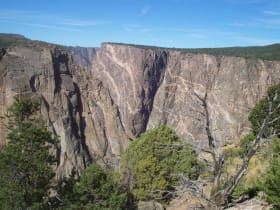
Black Canyon of the Gunnison National Park
63 miles away
A gorge so narrow and deep that parts of its walls get only 33 minutes of sunlight a day.