

Dinosaur Journey Museum
208 S Maple St, Fruita, CO
Fruita, CO
A hands-on dinosaur museum in one of the richest fossil corners of the American West, where the bones in the cases were dug out of the ground just up the road.
Dinosaur Journey is the paleontology museum of the Museum of Western Colorado, and it sits in a part of the country that turns out to be one of the best places on Earth to find dinosaur bones. The Morrison Formation, a band of Jurassic rock that runs through the mesas and canyons around Fruita and Grand Junction, has produced skeletons of Apatosaurus, Allosaurus, Stegosaurus, and more, and many of them were dug up within a short drive of the museum's front door.
Inside, the museum leans into the fun of it. Robotic dinosaurs move and roar, a real working fossil-preparation lab lets you watch scientists free bones from the rock, and hands-on stations invite kids and adults alike to touch casts, sift for fossils, and see how a skeleton comes together. It manages to be both a serious research collection and one of the most kid-friendly stops on the Western Slope.
What Travelers Love
- The robotic, roaring dinosaurs that move and blink at eye level
- A working fossil lab where you can watch real bones being cleaned
- Hands-on quarry stations and casts kids are allowed to touch
- The sense that everything here came out of the ground nearby
Worth Knowing
- It is an easy stop off Interstate 70 and a good rainy-day or midday plan
- Plan extra time if you want to do a guided fossil dig trip in season
- The Grand Valley gets hot in high summer, so this makes a cool break
- Fruita is small and walkable, with cafes a short stroll from the door
Learn about Dinosaur Journey Museum
A museum built on the ground beneath it
The reason Fruita has a dinosaur museum at all is the rock. The Grand Valley cuts through the Morrison Formation, a layer of mudstone and sandstone laid down about 150 million years ago, in the late Jurassic, when this region was a broad floodplain crossed by rivers and dotted with ferns and cycads. When those rivers flooded, they buried the bodies of dinosaurs in sediment, and over the ages that sediment hardened into the rock the museum's scientists still quarry today.
That makes Dinosaur Journey unusual among museums. Its collections are not shipped in from far away. Many of the fossils on display, and many more in the research collections behind the scenes, were excavated from quarries the museum works itself, in places like Rabbit Valley and the Fruita Paleontological Area west of town. Visitors can even join guided digs in season, working alongside the staff at real sites.
The dinosaurs of the Morrison
The Jurassic of western Colorado was a world of giants. The long-necked sauropods, Apatosaurus, Camarasaurus, Diplodocus, and Brachiosaurus among them, browsed the treetops, some of them stretching longer than a school bus. Plated Stegosaurus grazed the ferns, and the sharp-toothed predator Allosaurus hunted across the floodplain. All of these animals have been found in the Morrison rock of the region, and the museum tells their story with mounted skeletons, casts, and the robotic reconstructions that make them feel alive.
The area has also yielded some smaller surprises. Fruita is the namesake of Fruitachampsa, a small crocodile relative, and the Fruita Paleontological Area has produced early mammals, lizards, and other tiny creatures that lived in the shadow of the giants. Those small fossils are harder to find and just as important, filling in the picture of a whole Jurassic ecosystem rather than only its biggest residents.
Watching science happen
One of the best things about Dinosaur Journey is that it does not hide the work. A glass-walled fossil-preparation lab lets visitors look in on the slow, patient craft of freeing bone from stone, done with tiny picks, brushes, and air scribes. A single specimen can take months to clean, and seeing it in progress makes the finished skeletons in the halls feel earned.
The museum is designed to be handled, not just looked at. There are quarry-style dig pits, fossils you are meant to touch, and displays pitched at curious kids without talking down to the adults with them. It is the rare science museum where a five-year-old and a serious fossil enthusiast can both spend a happy afternoon.
The Grand Valley around it
Fruita sits in the Grand Valley, a high-desert basin carved by the Colorado River between the Book Cliffs and the sheer red walls of the Colorado National Monument. It is a landscape of orchards and vineyards on the valley floor and slickrock and canyon above, and the same erosion that exposes the fossils gives the country its dramatic shape.
The town has become a hub for mountain biking, thanks to the trails at nearby 18 Road and Kokopelli, and it keeps an easygoing small-town feel. Between the museum, the monument, the river, and the wineries, the Grand Valley rewards a slower visit than most people give it on the drive across Interstate 70.
Closest Boutels
The closest Boutel™ stays, so you can turn this stop into an overnight. Each is a place we chose through independent editorial review, never a paid placement.
Details
Fruita, CO
Frequently asked questions
What is the Dinosaur Journey Museum?
The Dinosaur Journey Museum, in Fruita near Grand Junction in western Colorado, is a fascinating natural history museum dedicated to dinosaurs and the region's rich fossil heritage. Part of the Museums of Western Colorado, it features impressive dinosaur skeletons, real fossils, animatronic robotic dinosaurs that move and roar, a working paleontology lab, and interactive, hands-on exhibits that delight visitors of all ages. Located in an area famous for its dinosaur discoveries, the museum offers an engaging and educational look at prehistoric life. With its lifelike robotic dinosaurs, genuine fossils, and family-friendly displays, the Dinosaur Journey Museum is a beloved and entertaining destination in Colorado's dinosaur country.
What can you see at the Dinosaur Journey Museum?
You can see impressive dinosaur skeletons and fossils, watch lifelike animatronic robotic dinosaurs that move and roar, explore interactive and hands-on exhibits, view a working paleontology lab where fossils are prepared, learn about the dinosaurs and prehistoric life of western Colorado, and enjoy displays geared to engage children and adults alike. The robotic dinosaurs are an especially popular highlight. The museum's mix of real science and fun, immersive exhibits makes it captivating. With its skeletons, robotic dinosaurs, fossils, and interactive displays, the Dinosaur Journey Museum offers an engaging and educational outing for families and dinosaur enthusiasts.
Is the Dinosaur Journey Museum good for kids?
Yes, the Dinosaur Journey Museum is an excellent family destination, with children captivated by the roaring animatronic dinosaurs, impressive skeletons, hands-on interactive exhibits, and the chance to see fossils and learn about dinosaurs in a fun, engaging way. The mix of education and entertainment keeps kids of various ages interested while teaching them about prehistoric life. Its manageable size makes it easy to enjoy with children. With its kid-friendly robotic dinosaurs and interactive displays, the museum is one of the best family attractions in the Grand Junction area, delighting young dinosaur lovers and their families alike.
When is the best time to visit the Dinosaur Journey Museum?
As an indoor museum, it is enjoyable year-round and a great option in any weather, including a perfect choice on a hot summer day or during cooler or rainy weather. Weekdays and mornings tend to be less crowded than busy weekends and school holidays. Checking current hours before you go is wise. Allowing a couple of hours lets you enjoy the exhibits. The indoor setting means almost any time works for a visit, making the Dinosaur Journey Museum a reliable and enjoyable stop year-round in the Grand Junction area.
What is near the Dinosaur Journey Museum?
The museum is in Fruita near Grand Junction in western Colorado, close to the stunning Colorado National Monument with its red rock canyons, the wine country and orchards of Palisade, the world's largest flat-top mountain at Grand Mesa, and within reach of the region's dinosaur fossil sites and outdoor recreation. That makes the Dinosaur Journey Museum a fun family stop to combine with Colorado National Monument, Palisade wine country, Grand Mesa, and the attractions of western Colorado on a visit to the state.
Nearby
Mike the Headless Chicken Statue
0.1 miles away
In the middle of downtown Fruita stands a metal rooster honoring a chicken that lived a year and a half without a head.
Book Cliffs Viewpoint
6.0 miles away
The Book Cliffs - a 200-mile escarpment of near-vertical sandstone walls running from Grand Junction into Utah - are best seen from D Road north of Fruita, where the cliffs fill the northern horizon f...
Colorado National Monument
6.4 miles away
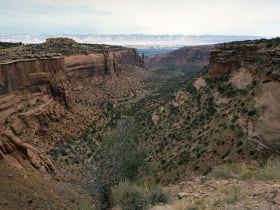
Colorado National Monument covers 32 square miles of canyon country directly west of Grand Junction, but most visitors rushing between Denver and Utah on I-70 pass within 5 miles without stopping.
UT-128 Colorado River Scenic Byway
37 miles away
UT-128 follows the Colorado River from Moab northeast through Professor Valley, past Fisher Towers, Castle Valley, and the Rose Ranch ruins.

Arches National Park
61 miles away
More than 2,000 natural stone arches, including the iconic Delicate Arch, carved from red Entrada sandstone.