
Big Sur Kelp Forest and Marine Protected Area
Big Sur coast
Big Sur, CA
Just offshore of Big Sur's cliffs grow towering underwater forests of giant kelp, home to sea otters, and protected as some of California's most important marine sanctuary.
Some of Big Sur's most remarkable scenery is the part you cannot see from the road. Just offshore of the cliffs, in the cold, nutrient-rich water, grow towering underwater forests of giant kelp, one of the fastest-growing and most productive ecosystems on earth, and a nursery for an astonishing web of ocean life.
Much of this coast is protected, folded into the Monterey Bay National Marine Sanctuary and a network of state marine protected areas. That protection, and the recovery of the sea otters that live in the kelp, is one of the great conservation stories on the California coast, and it plays out within sight of the Highway 1 turnouts.
What Travelers Love
- Spotting sea otters wrapped in kelp, floating on their backs just offshore
- The rich cold-water life of one of the planet's great kelp-forest ecosystems
- Cliff-top turnouts and coves for watching whales, otters, and seabirds
- Knowing the water is protected as marine sanctuary and reserve
Worth Knowing
- This is a place to observe wildlife from a distance; keep well back from otters and seals so you do not disturb them
- Binoculars make all the difference for spotting otters, whales, and rafts of sea life offshore
- Marine protected areas have rules on fishing and collecting; know the regulations for any spot you visit
- The water is cold and the surf and currents are strong, so respect the ocean from the shore
Learn about Big Sur Kelp Forest and Marine Protected Area
A forest that grows underwater
Giant kelp is not a plant but a large brown alga, and in the cool, clear water off Big Sur it forms true forests, anchored to the rocky seafloor and rising toward the surface where its fronds spread into a floating canopy. In good conditions it can grow astonishingly fast, adding significant length in a single day.
Like a forest on land, a kelp forest is layered, with a canopy, a midwater, and a floor, and each layer shelters different life. The kelp turns sunlight and cold, upwelled, nutrient-rich water into the base of a food web that supports fish, invertebrates, marine mammals, and birds, which is why these forests are considered among the most valuable habitats in the sea.
The otter that holds it together
The southern sea otter is the emblem of this coast, and it is more than charming. Otters eat sea urchins, and unchecked urchins can mow down a kelp forest, so a healthy otter population helps keep the kelp standing. That makes the otter a keystone species, one whose presence shapes the whole ecosystem.
Their story here is a comeback. Southern sea otters were hunted almost to extinction in the fur trade, and for decades were thought gone from California entirely, until a small surviving group was found along the Big Sur coast in the early twentieth century. Their slow recovery from that remnant, aided by protection, is why you can watch otters float in the kelp today, and why keeping a respectful distance matters so much.
Life in the cold, protected water
The kelp forests and reefs off Big Sur teem with life: rockfish and lingcod among the fronds, abalone and sea stars on the bottom, harbor seals and California sea lions hauling out on the rocks, and gray whales passing close to shore on their long migration. Seabirds work the surface, and the whole coast pulses with the productivity of cold upwelled water.
Protecting it has been a deliberate effort. Monterey Bay National Marine Sanctuary safeguards a vast stretch of this ocean, and California has layered on a network of marine protected areas, some closed to fishing and collecting, that let depleted species recover. The rules vary from place to place, so it is worth knowing them, but the payoff is water that is genuinely rebounding.
How to experience it from shore
Most visitors meet the kelp forest from above, at the cliff-top pullouts and small coves along Highway 1, where a patient eye and a pair of binoculars can pick out otters wrapped in kelp, seals on the rocks, and the spouts of passing whales. Calm, clear days after the wind lays down are best for spotting life offshore.
For those who dive or snorkel in the region's protected coves farther north, the kelp forest opens into a swaying green cathedral, but even from dry land the message is clear. Watching wildlife responsibly, keeping a good distance and never crowding an otter or a seal, is what lets this recovering ecosystem keep recovering.
Closest Boutels
The closest Boutel™ stays, so you can turn this stop into an overnight. Each is a place we chose through independent editorial review, never a paid placement.
Tradewinds Carmel
BoutelMission Street at 3rd Avenue, Carmel-by-the-Sea, CA
31 miles away|Learn More ›
Details
Big Sur, CA
Frequently asked questions
What is the Big Sur kelp forest and marine protected area?
The Big Sur kelp forest and marine protected area encompasses the rich underwater world along the dramatic Big Sur coast of California, where towering forests of giant kelp thrive in the cold, nutrient-rich waters offshore. Protected as part of California's network of marine protected areas and within the Monterey Bay National Marine Sanctuary, these vibrant kelp forests shelter an abundance of marine life, including sea otters, seals, fish, and countless invertebrates. The kelp forests are vital ecosystems and a highlight of the Big Sur coast's natural richness, viewable from shore, by kayak, or beneath the surface by diving in this protected marine environment.
What lives in the Big Sur kelp forests?
The Big Sur kelp forests teem with life, providing food and shelter for a remarkable diversity of marine creatures, including the beloved sea otters that float among the kelp and feed on sea urchins and shellfish, harbor seals and sea lions, many species of fish, colorful invertebrates like sea stars, anemones, and crabs, and abundant birdlife above. The kelp itself, growing rapidly in the cold water, forms an underwater forest that anchors the whole ecosystem. This rich concentration of wildlife makes the kelp forests one of the most biologically vibrant and important habitats along the Big Sur coast.
How can you experience the Big Sur kelp forest?
You can experience the kelp forest in several ways: from shore at coves and overlooks where sea otters and marine life are visible among the kelp, by kayaking on the water for a closer look (best with guides given the challenging conditions), or by scuba diving or snorkeling in the cold water for those with proper skills and equipment. Wildlife watching from land is the easiest and safest way for most visitors. Because the Big Sur waters are cold, powerful, and remote, on-water and underwater activities require caution, experience, and preparation for the demanding coastal conditions.
What should I know about the marine protected area rules?
As a marine protected area, the Big Sur kelp forest region has rules designed to conserve its rich marine life, which can include restrictions on fishing and the taking of marine organisms in certain zones, so it is important to know and follow the current regulations for the specific area, since protections vary by location. Observing wildlife like sea otters from a respectful distance without disturbing them is also important. Checking the current marine protected area rules and respecting the wildlife and habitat helps preserve this vital ecosystem while you enjoy its beauty responsibly.
What is near the Big Sur kelp forest and marine protected area?
The Big Sur kelp forests lie along the Big Sur coast, near the coastal overlooks, beaches, and parks of Highway 1 including Julia Pfeiffer Burns State Park with McWay Falls, Pfeiffer Beach, and Point Lobos, with the Monterey Peninsula and its famous aquarium to the north. That makes the Big Sur kelp forest and marine protected area a natural highlight to combine with Big Sur's beaches, waterfalls, and coastal parks, and the Monterey Bay Aquarium, on a Central Coast California road trip celebrating the region's marine richness.
Nearby

Julia Pfeiffer Burns State Park
0.1 miles away
McWay Falls in Julia Pfeiffer Burns State Park drops 80 feet from a redwood canyon into an isolated cove that cannot be accessed from any direction on land.
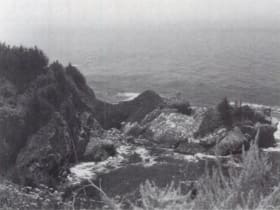
Big Sur Coast from McWay Falls
0.1 miles away
McWay Falls in Julia Pfeiffer Burns State Park is an 80-foot waterfall that drops directly onto a cove beach, an unusual configuration created by the uplift of the Santa Lucia Range that left the cany...

Pfeiffer Big Sur State Park
8.9 miles away
A thousand-acre canyon of old-growth coast redwoods along the Big Sur River, a cool green pocket right off Highway 1 in the heart of Big Sur.

Pfeiffer Beach
9.7 miles away
Pfeiffer Beach is one of the most distinctive beaches on the Big Sur coast and one of the few that charges only a small parking fee rather than a state park day-use fee.

Bixby Creek Bridge Viewpoint
20 miles away
Bixby Creek Bridge is a 714-foot concrete open-spandrel arch bridge completed in 1932, built as part of the original Highway 1 coastal road project.

Pinnacles National Park
37 miles away
Volcanic spires and talus caves, one of the best places to watch California condors soar.