
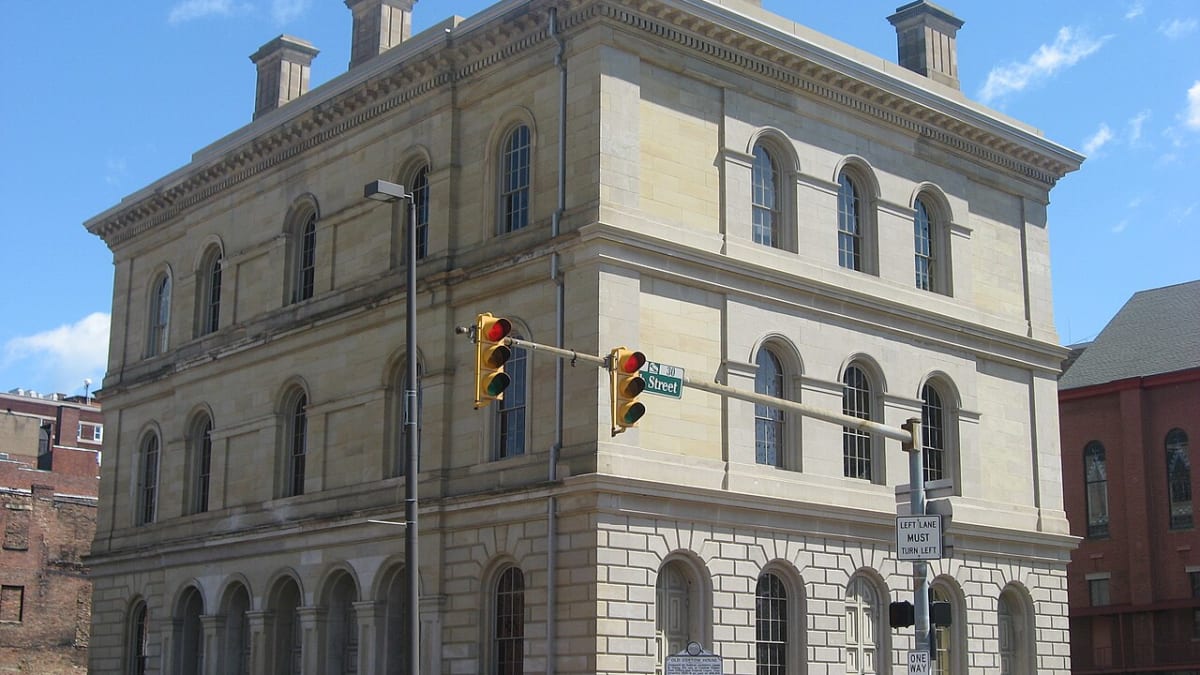
West Virginia Independence Hall
1500 Main St, Wheeling, WV
Wheeling, WV
The handsome Wheeling building where delegates chose to break from Virginia during the Civil War and set a brand new state in motion.
West Virginia Independence Hall in Wheeling is the building where the state of West Virginia was born. When Virginia voted to secede from the Union at the start of the Civil War, delegates from the mountainous northwestern counties, who opposed secession, gathered in this Italianate structure to chart a different course, ultimately setting in motion the creation of a separate, pro-Union state.
Originally built as a federal custom house, the handsome building became the stage for a series of conventions in the early 1860s that led, in 1863, to West Virginia entering the Union as the thirty-fifth state, the only state to break away from another during the Civil War. Restored to its period appearance, it now serves as a museum telling that remarkable story of a state carved out of conflict.
What Travelers Love
- Standing in the very rooms where West Virginia's statehood was set in motion
- The beautifully restored Italianate architecture and period courtroom
- A clear, well-told account of a state born from the Civil War divide
- Its place in the historic riverfront district of an old capital city
Worth Knowing
- The building is a preserved historic site with exhibits and restored period rooms to tour
- It sits in downtown Wheeling, easy to pair with the city's historic district
- Exhibits and programs vary, so check ahead for special events and displays
- The story it tells is closely tied to the Civil War, which shapes the interpretation
Learn about West Virginia Independence Hall
A state born of the Civil War
When Virginia's convention voted to secede from the Union in 1861, the delegates from its western counties, whose economy and loyalties differed sharply from the plantation east, refused to go along. They gathered in Wheeling and, through a series of conventions held largely in this building, formed a restored government of Virginia loyal to the Union and then set about creating an entirely new state from the western counties.
That process reached its conclusion in 1863, when West Virginia was admitted to the Union as the thirty-fifth state, the only state ever formed by breaking away from another during the war. Wheeling served as the new state's first capital, and Independence Hall stood at the center of it all, earning its name as the birthplace of West Virginia.
From custom house to statehouse
The building was constructed in the late 1850s as a United States custom house, post office, and federal court, an elegant Italianate structure meant to project the dignity of the federal government in a busy river city. Its fine masonry, ornamental ironwork, and restored courtroom reflect the ambitions of Wheeling at the height of its commercial power.
It was precisely because it was a federal building, and Wheeling a Union-leaning city, that the statehood conventions gathered here. Over the decades that followed, the structure served various government uses before falling into decline, then was carefully restored to its Civil War-era appearance to serve as a museum and monument to the events that unfolded within its walls.
Wheeling, the old river capital
Wheeling grew into a major industrial and transportation hub on the Ohio River, a gateway between the eastern states and the frontier. The National Road reached it, steamboats and later railroads served it, and its factories turned out iron, steel, glass, and countless other goods. That wealth built the grand downtown, the suspension bridge across the Ohio, and the mansions and public buildings that still stand.
As the state's first capital, Wheeling held the seat of government in its early years before it moved elsewhere and finally settled in Charleston. The city's historic district, with Independence Hall at its heart, preserves the look and feel of that prosperous nineteenth-century era, making a walk through downtown a walk through the state's founding decades.
The land and the river
The Ohio River valley around Wheeling was ancestral homeland and shared hunting ground of the Lenape, the Shawnee, and the Haudenosaunee, who traveled and hunted the river corridor long before the frontier settlements rose. None of those nations is federally recognized in West Virginia today, and their descendant nations continue in other states, but the river valley they knew still shapes the city and its history.
Wheeling's whole story flows from that river. It brought the traders and settlers, powered the mills, carried the goods, and made the city a crossroads important enough to become a capital. Standing in Independence Hall today, a visitor stands at the meeting point of that geography and history, in the rooms where a new state chose its own path.
Closest Boutels
The closest Boutel™ stays, so you can turn this stop into an overnight. Each is a place we chose through independent editorial review, never a paid placement.
The Roscoe Boutique Motel
Honorable Mention421 S Whitewoman St, Coshocton, OH
63 miles away|Learn More ›
Details
Wheeling, WV
Frequently asked questions
What is West Virginia Independence Hall?
West Virginia Independence Hall, in the city of Wheeling, is a historic building of great significance to the state, the place where West Virginia was born during the Civil War. It was here that conventions met and delegates from the western counties of Virginia decided to break away from Virginia after it seceded from the Union, leading to the creation of the new state of West Virginia in eighteen sixty-three. The beautifully restored historic building, once a federal customs house, now serves as a museum interpreting this pivotal history and the state's founding. With its statehood history and restored interiors, West Virginia Independence Hall offers a fascinating destination in West Virginia.
Why is West Virginia Independence Hall historically important?
West Virginia Independence Hall is historically important because it is where the state of West Virginia was founded during the Civil War. When Virginia seceded from the Union, delegates from its western counties, which remained loyal to the Union and had long felt divided from eastern Virginia, met in this building and set in motion the creation of a separate state, leading to West Virginia's admission to the Union in eighteen sixty-three. This makes the hall the birthplace of the state. This pivotal role in the nation's only such statehood story makes West Virginia Independence Hall a deeply significant site in Wheeling.
What can you see at West Virginia Independence Hall?
You can tour the beautifully restored historic building, see the courtroom and rooms where the statehood conventions met and delegates decided to form West Virginia, view exhibits and artifacts on the founding of the state, the Civil War, and the building's history as a federal customs house, and learn how West Virginia came to be. The restored historic interiors and the statehood story are highlights, offering a meaningful look at the state's unique founding. With its restored rooms, exhibits, and history, West Virginia Independence Hall offers an engaging visit in Wheeling.
When is the best time to visit West Virginia Independence Hall?
As an indoor historic site and museum, West Virginia Independence Hall is enjoyable year-round in any weather, though checking current days and hours before you go is wise, as they can vary. Late spring through fall offers pleasant weather for combining a visit with Wheeling's other attractions like Centre Market and Oglebay Park. The site is especially meaningful around West Virginia's statehood anniversary. Because it is indoors and historic, West Virginia Independence Hall makes a reliable and rewarding stop any time of year in Wheeling.
What is near West Virginia Independence Hall?
West Virginia Independence Hall is in Wheeling in West Virginia's northern panhandle, near Centre Market, within reach of Oglebay Park with its zoo, the Ohio River, and the Grave Creek Mound at Moundsville. That makes West Virginia Independence Hall a fascinating stop to combine with Centre Market, Oglebay Park, and the other attractions of the Wheeling area on a visit to West Virginia.
Nearby
Centre Market
0.6 miles away
Most visitors head straight for the suspension bridge and miss this pocket of old Wheeling a few blocks south.

Oglebay Park
2.6 miles away
Oglebay is a rare thing, a 1,700-acre resort and nature park owned by the city and open to everyone, spread across the wooded hills above Wheeling.
Oglebays Good Zoo
2.7 miles away
A right-sized zoo for families, tucked inside Oglebay Park. The Good Zoo focuses on North American and endangered animals, including red pandas, otters, and sloths, along walkable wooded paths that do...
Delf Norona Museum at Grave Creek Mound
10 miles away
Kids can actually climb a giant ancient monument here. The Grave Creek Mound in Moundsville is one of the largest burial mounds ever built by the Adena people, and a spiral path winds to the flat top...

Palace of Gold
16 miles away
Almost nobody expects a gilded palace in the hills above Moundsville, which is exactly why it is worth the drive.