
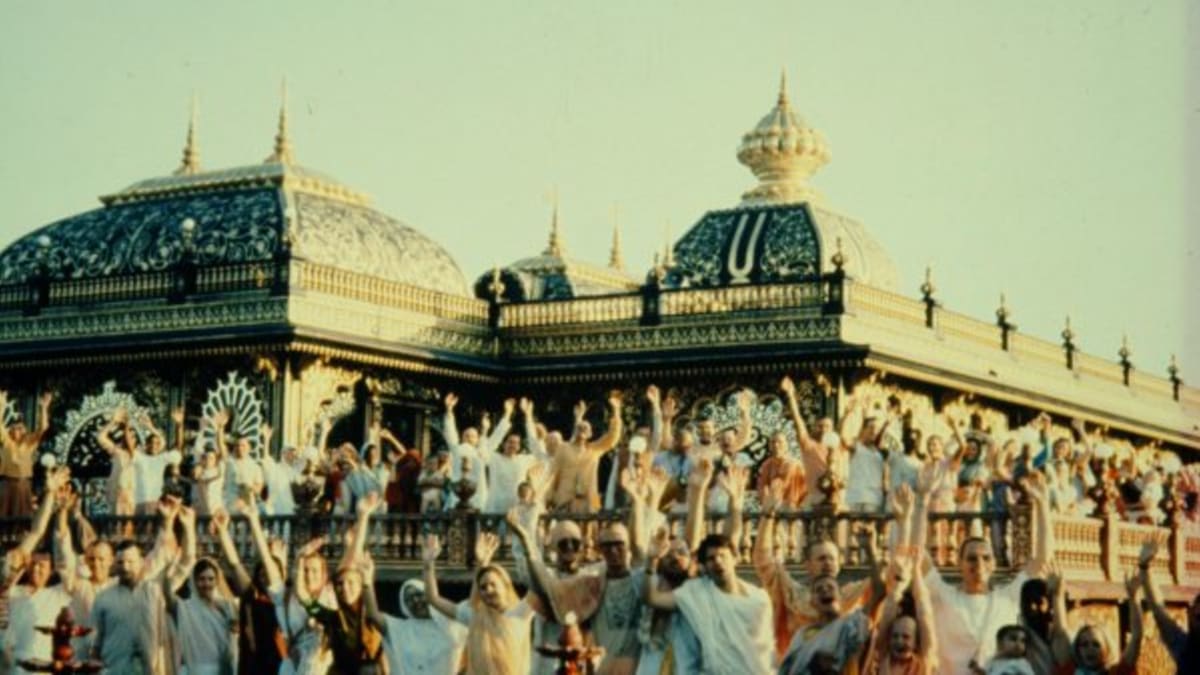
Palace of Gold
1082 Gosney Hill, Cameron, WV
Moundsville, WV
A gleaming marble-and-gold palace rising from the West Virginia hills, built almost entirely by hand by devotees who taught themselves the crafts as they went.
The Palace of Gold is one of the most surprising sights in West Virginia: an ornate palace of marble, gold leaf, stained glass, and carved detail rising from a ridge in the rural hills near Moundsville. Built as a residence and memorial for the founder of the Hare Krishna movement, it has become the centerpiece of New Vrindaban, a Krishna community set deep in the Appalachian countryside.
What makes the palace especially remarkable is how it was made. In the 1970s, devotees who had little building experience taught themselves stonework, marble-laying, wood carving, gilding, and stained glass, and constructed the palace largely by hand. The result, once dubbed a piece of heaven come to earth, stands in vivid and unexpected contrast to the hills and hollows all around it.
What Travelers Love
- The astonishing sight of a gold-and-marble palace rising from Appalachian hills
- Intricate hand-laid marble, stained glass, and gilded detail throughout
- Formal gardens, a rose garden, and a lotus lake on the grounds
- The story of devotees who taught themselves the crafts to build it
Worth Knowing
- This is an active religious community, so dress modestly and follow posted etiquette for the temple
- The palace has weathered over the years and undergoes ongoing restoration, so parts may be under work
- The grounds are hilly and spread out; comfortable shoes help
- A vegetarian meal is often available on the grounds, in keeping with the community's practice
Learn about Palace of Gold
New Vrindaban in the hills
The land around Moundsville sits in the Northern Panhandle, in country that was for thousands of years part of the ancestral homeland and hunting ground of the Shawnee, the Lenape, and other nations whose descendants continue elsewhere today. Nearby Moundsville takes its name from the great prehistoric Grave Creek Mound, one of the largest ancient earthworks in the country, a reminder of how long people have lived in this valley.
In the late 1960s and 1970s, followers of the Hare Krishna movement established a rural community here called New Vrindaban, named for a holy town in India. On these forested ridges they sought to build a self-sufficient spiritual community, farming the land and raising temples, with the Palace of Gold as their crowning project.
A palace built by hand
The palace was conceived as a home for the movement's founder, but he died before it was finished, and it became instead a memorial to him. Devotees who had come to New Vrindaban with little construction background threw themselves into learning the trades required, teaching themselves to cut and lay marble, carve wood, apply gold leaf, and craft stained glass.
The finished palace glitters with those hand-made details: floors and columns of imported marble, ceilings and trim covered in gold leaf, elaborate stained-glass windows, and carved and painted ornament in every room. That it was built by self-taught hands, on a remote Appalachian ridge, only deepens the sense of wonder visitors feel when they first see it.
The gardens and the grounds
Around the palace spread formal gardens, including a well-known rose garden, along with a lotus lake and landscaped grounds that make the site as much a place to wander as to tour. In warm months the flowers and greenery frame the gold and marble, and peacocks are often seen strolling the grounds.
Because New Vrindaban is a living community, visitors may encounter devotees, temple ceremonies, and the daily rhythms of religious life. A vegetarian meal is often available in keeping with the community's practice, and the whole visit carries a quiet, welcoming, and slightly otherworldly feel.
Weather, restoration, and the visit
Decades of West Virginia weather have taken a toll on the palace, and it has gone through cycles of decline and careful restoration as the community works to preserve it. Visitors may find parts of the structure under repair, part of an ongoing effort to keep this extraordinary building standing.
For travelers exploring the Northern Panhandle, the Palace of Gold is an unforgettable and unlikely stop, easily combined with the ancient Grave Creek Mound and the historic town of Moundsville below. Few places in America bring together Appalachian hills and gilded Eastern splendor quite like this ridge.
Closest Boutels
The closest Boutel™ stays, so you can turn this stop into an overnight. Each is a place we chose through independent editorial review, never a paid placement.
The Roscoe Boutique Motel
Honorable Mention421 S Whitewoman St, Coshocton, OH
74 miles away|Learn More ›
Details
Moundsville, WV
Frequently asked questions
What is the Palace of Gold?
The Palace of Gold, near Moundsville in West Virginia's northern panhandle, is a stunning and opulent temple and shrine, part of the New Vrindaban community, a Hare Krishna spiritual community in the West Virginia hills. Built by devotees as a tribute to their spiritual teacher, the palace is an extraordinary structure adorned with gold leaf, marble, intricate carvings, stained glass, and crystal, surrounded by beautiful gardens including a celebrated rose garden and reflecting pools. Often called a taste of India in the Appalachian mountains, it is a surprising and beautiful destination. With its opulent temple and gardens, the Palace of Gold offers a fascinating destination in West Virginia.
What can you see at the Palace of Gold?
You can tour the opulent Palace of Gold, admiring its gold-leaf ornamentation, marble, intricate carvings, stained glass, crystal chandeliers, and lavish decoration, stroll the beautiful surrounding gardens including a renowned rose garden with hundreds of varieties, reflecting pools, and grounds, and learn about the New Vrindaban community and its spiritual traditions. The stunning palace and the gorgeous gardens are the highlights, offering an unexpected and beautiful experience in the Appalachian hills. With its ornate temple, gardens, and serene setting, the Palace of Gold offers an engaging visit near Moundsville, West Virginia.
How should I visit the Palace of Gold respectfully?
Because the Palace of Gold is part of an active spiritual community and place of worship, please visit respectfully, dressing modestly, following any guidance about removing shoes or appropriate behavior in sacred areas, being quiet and courteous, and honoring the community's customs and any ceremonies taking place. Tours help visitors experience the palace and gardens appropriately. Approaching the site with the respect due a religious place enriches the experience. Visiting thoughtfully and honoring the community's traditions ensures a respectful visit to the Palace of Gold in West Virginia.
When is the best time to visit the Palace of Gold?
Late spring through fall offers the most pleasant weather to tour the palace and enjoy the gardens, with the celebrated rose garden and grounds at their most beautiful in the warm growing season, typically summer, when hundreds of roses bloom, a spectacular time. Checking current tour hours and any events before you go is wise, as they can be seasonal. The gardens are a special highlight when in bloom. For the palace and the gardens at their finest, aim for late spring through fall, with summer best for the roses, at the Palace of Gold in West Virginia.
What is near the Palace of Gold?
The Palace of Gold is near Moundsville in West Virginia's northern panhandle, within reach of the Grave Creek Mound and Delf Norona Museum in Moundsville, Wheeling with West Virginia Independence Hall and Oglebay Park, and the Ohio River. That makes the Palace of Gold a fascinating stop to combine with the Grave Creek Mound, the Wheeling attractions, and the other sights of the northern panhandle on a visit to West Virginia.
Nearby
Delf Norona Museum at Grave Creek Mound
9.4 miles away
Kids can actually climb a giant ancient monument here. The Grave Creek Mound in Moundsville is one of the largest burial mounds ever built by the Adena people, and a spiral path winds to the flat top...
Centre Market
16 miles away
Most visitors head straight for the suspension bridge and miss this pocket of old Wheeling a few blocks south.

West Virginia Independence Hall
16 miles away
West Virginia is the only state born by breaking away from another state during the Civil War, and this is where it happened.
Oglebays Good Zoo
16 miles away
A right-sized zoo for families, tucked inside Oglebay Park. The Good Zoo focuses on North American and endangered animals, including red pandas, otters, and sloths, along walkable wooded paths that do...

Oglebay Park
17 miles away
Oglebay is a rare thing, a 1,700-acre resort and nature park owned by the city and open to everyone, spread across the wooded hills above Wheeling.