
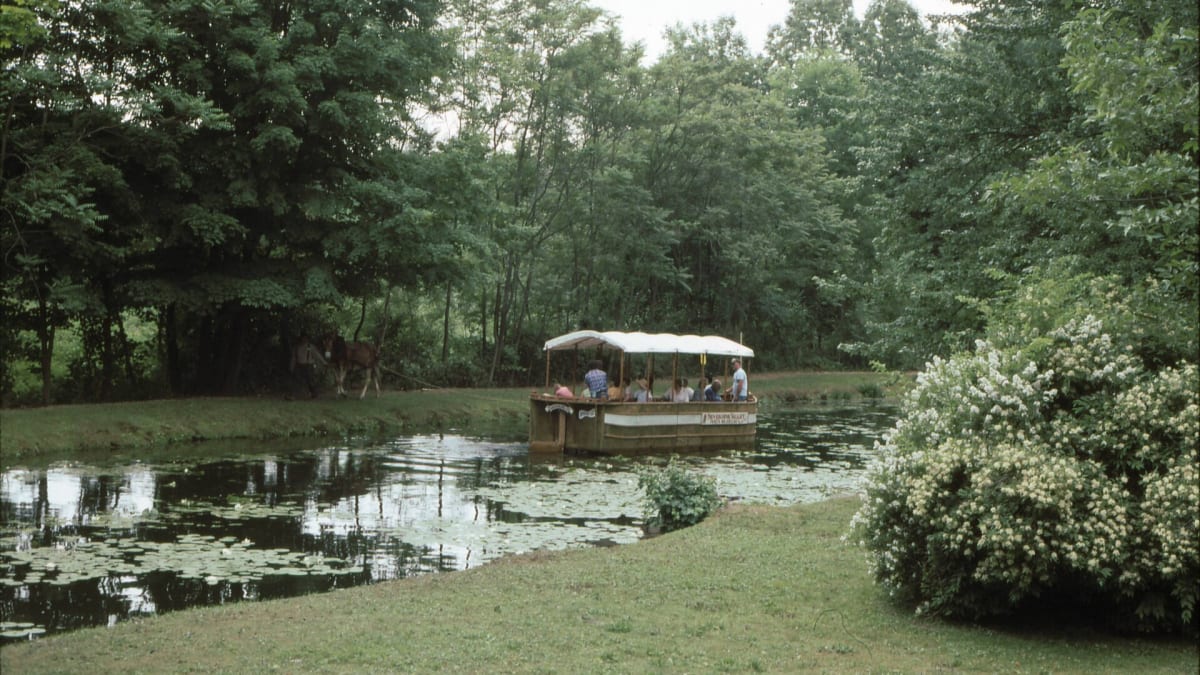
Waterloo Village
525 Waterloo Rd, Stanhope, NJ
Stanhope, NJ
A whole nineteenth-century canal town frozen in time on the Morris Canal, from its working lock and mills back to the iron-forge era and the Lenape who came before.
Waterloo Village is a remarkably complete nineteenth-century village preserved on the banks of the Musconetcong River and the old Morris Canal in the hills of northwestern New Jersey. Once a thriving stop where canal boats loaded and unloaded, it holds a whole townscape of the canal era, homes, a general store, a church, an inn, gristmills and sawmills, and a restored canal lock, all set in a green river valley.
But the village's story runs deeper than the canal. Long before the boats came, this was the site of a colonial iron forge, and long before that, home to the Lenape people. Today a re-created Lenape village stands nearby to tell that older story, so that Waterloo layers three chapters of New Jersey history in one place: the ancient Lenape presence, the colonial iron industry, and the golden age of the canal that once carried the state's coal and iron.
What Travelers Love
- A restored canal-era village with historic homes, a church, a store, and working mills
- A restored lock and inclined-plane site from the once-vital Morris Canal
- A re-created Lenape village that tells the story of the region's first people
- A peaceful river-valley setting with trails, ideal for combining history and a walk
Worth Knowing
- The village opens seasonally with events and living-history days; check the state park pages before a visit
- Buildings may be open only during scheduled programs, so time a visit to catch them
- The grounds are large and spread out, so wear comfortable shoes for walking
- It sits within a state park with trails, so allow time for the natural setting as well as the village
Learn about Waterloo Village
From Lenape land to iron forge to canal town
The Musconetcong valley is part of the ancestral homeland of the Lenape people, who lived, hunted, and fished along the river for thousands of years, following its course through the highlands. Their descendants remain a living part of New Jersey today, among them the state-recognized communities that carry the Lenape heritage forward, and a re-created Lenape village at Waterloo helps tell that long story.
In colonial times the site became an iron-making center. Rich ore in the New Jersey highlands fed a forge here, where bog and rock iron was worked, and the settlement grew up around that early industry. During the Revolution the region's iron was of real strategic value, and forges like this one supplied the war effort. The place was known by other names before it took the name Waterloo.
Waterloo's greatest era came with the Morris Canal. Completed across northern New Jersey in the 1830s, the canal was an engineering marvel built to haul coal from Pennsylvania and iron from the highlands across the state to the industrial cities and ports. It climbed and descended the hilly terrain not only with locks but with ingenious inclined planes that hauled boats up and over ridges on rail-borne cradles. Waterloo, sitting on the canal, boomed as a busy transfer point, and the village of homes, mills, stores, and inns that survives today grew up to serve it.
The canal's prosperity faded as railroads took over the freight, and the Morris Canal was abandoned in the twentieth century, most of it drained and filled. Waterloo, bypassed by the modern world, was left as a near-intact ghost of the canal age. In the twentieth century it was restored as a living-history village, and today it stands, within a state park, as one of the finest surviving windows onto the canal era anywhere in the region.
The Morris Canal and its lock
The Morris Canal was one of the boldest engineering projects of its day, crossing the rugged northern New Jersey highlands with a system of locks and, uniquely, water-powered inclined planes that carried whole canal boats up and over the ridges on wheeled cradles. It rose and fell hundreds of feet along its length, a feat that astonished visitors and made possible the movement of heavy coal and iron across a landscape that defied ordinary canals.
At Waterloo, a restored lock and the trace of the canal let visitors see how the whole system worked, how boats were raised and lowered from one water level to the next. Standing beside the lock, with the mills and village buildings close by, you can picture the village in its heyday, loud with the traffic of canal boats, mules, and mill wheels, a busy inland port in the New Jersey hills.
The village and the re-created Lenape settlement
The restored village gathers a full range of nineteenth-century buildings, a gristmill and sawmill powered by the river, a general store, a church, homes, and an inn, many furnished to their period and brought to life on living-history days by costumed interpreters demonstrating the trades and daily routines of canal-era life. Wandering the village is like walking into a small New Jersey town of the 1800s.
Set apart from the historic village is a re-created Lenape settlement, built to honor and interpret the people who lived in this valley long before the forge or the canal. With its wigwams and interpretive displays, it tells the story of Lenape life in the region and reminds visitors that the human history of this river valley stretches back thousands of years before the canal boats ever arrived. Together the two parts of Waterloo span the full sweep of the region's past.
The river valley, wildlife, and seasons
Waterloo lies within Allamuchy Mountain State Park, in a green river valley of forest, meadow, and water, so a visit combines history with genuine natural beauty. The Musconetcong River and the old canal bed draw herons, kingfishers, and ducks, and the surrounding woods and trails hold deer, foxes, wild turkeys, and songbirds. Trails through the park make it easy to pair the village with a walk in the highlands.
Spring wakes the valley with wildflowers, birdsong, and the reopening of the village for the season. Summer is green and warm, the busiest time for festivals and living-history events. Fall is the loveliest season here, when the highland forests turn brilliant color over the old buildings and the river, and the crowds ease. Winter usually finds the village quiet, the canal bed and river edged with ice, though the snowy valley has a stark beauty and the park trails stay open to walkers.
Closest Boutels
The closest Boutel™ stays, so you can turn this stop into an overnight. Each is a place we chose through independent editorial review, never a paid placement.
Details
Stanhope, NJ
Frequently asked questions
What is Waterloo Village?
Waterloo Village, in Byram Township in northwestern New Jersey, is a restored historic village that preserves the story of a nineteenth-century canal town along the historic Morris Canal, as well as a recreated Lenape village. Once a bustling port on the Morris Canal, Waterloo Village has been preserved with its historic buildings, mill, church, homes, and canal features, offering a window into life in the canal era, while a separate area recreates a village of the Lenape, the Native people of the region, honoring their heritage. Its blend of canal-era and Native history amid scenic surroundings makes it a fascinating destination. A charming and historic village, it educates visitors. With its history, Waterloo Village offers a compelling destination in New Jersey.
What can you see at Waterloo Village?
You can explore the restored historic buildings of the canal-era village, including a mill, church, and homes, see features of the historic Morris Canal, and visit a recreated Lenape village that honors the Native people of the region. The canal-era historic village, the Morris Canal features, and the recreated Lenape village are the draws, offering a rich look at both nineteenth-century canal life and Native heritage. The two chapters of history together make it distinctive. With its history, Waterloo Village offers a rewarding visit in New Jersey.
What is the Lenape connection at Waterloo Village?
Waterloo Village includes a recreated village of the Lenape, the Native people who lived in this region long before European settlement, honoring their heritage and helping visitors learn about their traditional way of life. The Lenape are the indigenous people of the area, and the recreated village offers a respectful window into their culture and history. Approaching this part of the site with respect for Lenape heritage enriches the experience. Understanding this history deepens a visit to Waterloo Village in New Jersey.
When is the best time to visit Waterloo Village?
Waterloo Village is generally open on a seasonal schedule in the warmer months, often with special events and programs, so late spring through early fall is the time to visit, when the historic buildings and grounds are most accessible and the scenic setting is at its best. Because it is seasonal and access can vary, checking the current schedule and open days before you go is important. For the fullest access, aim for the warmer months and check current hours at Waterloo Village in New Jersey.
What is near Waterloo Village?
Waterloo Village is in Byram Township in northwestern New Jersey, within reach of the Land of Make Believe, the Delaware Water Gap, the Franklin Mineral Museum, and the New Jersey Skylands region. That makes Waterloo Village a compelling stop to combine with the other attractions of the New Jersey Skylands on a visit to the state.
Nearby
Land of Make Believe
11 miles away
This is the amusement park for the younger set, not the teenage-thrill crowd.

Morristown National Historical Park: Jockey Hollow
16 miles away
History lands better when kids can walk into it, and Jockey Hollow lets them.
Franklin Mineral Museum
17 miles away
Rockhounds know this place; most travelers have no idea it exists.

Bushkill Falls
18 miles away
For a quick, dramatic waterfall stop near the Delaware Water Gap, Bushkill Falls has been drawing travelers since 1904 and calls itself the Niagara of Pennsylvania.