
Morristown National Historical Park: Jockey Hollow
599 Tempe Wick Rd, Morristown, NJ
Morristown, NJ
The wooded hills where Washington's army endured the hardest winter of the Revolution, now quiet trails past reconstructed log huts and the fields where the Continental Army once shivered.
Morristown National Historical Park preserves the ground where the Continental Army endured some of the darkest days of the American Revolution. Its centerpiece, Jockey Hollow, is the wooded hill country south of Morristown where Washington's soldiers built a log-hut city and suffered through the brutal winter of 1779 and 1780, a winter so severe it surpassed even the famous hardship of Valley Forge.
Established in 1933 as the first national historical park in the United States, the park protects several sites tied to the army's winter encampments here, including Jockey Hollow, the Ford Mansion where Washington kept his headquarters, and Fort Nonsense above the town. Together they tell the story not of a battle but of survival, discipline, and endurance, the quieter labor that kept the Revolution alive.
What Travelers Love
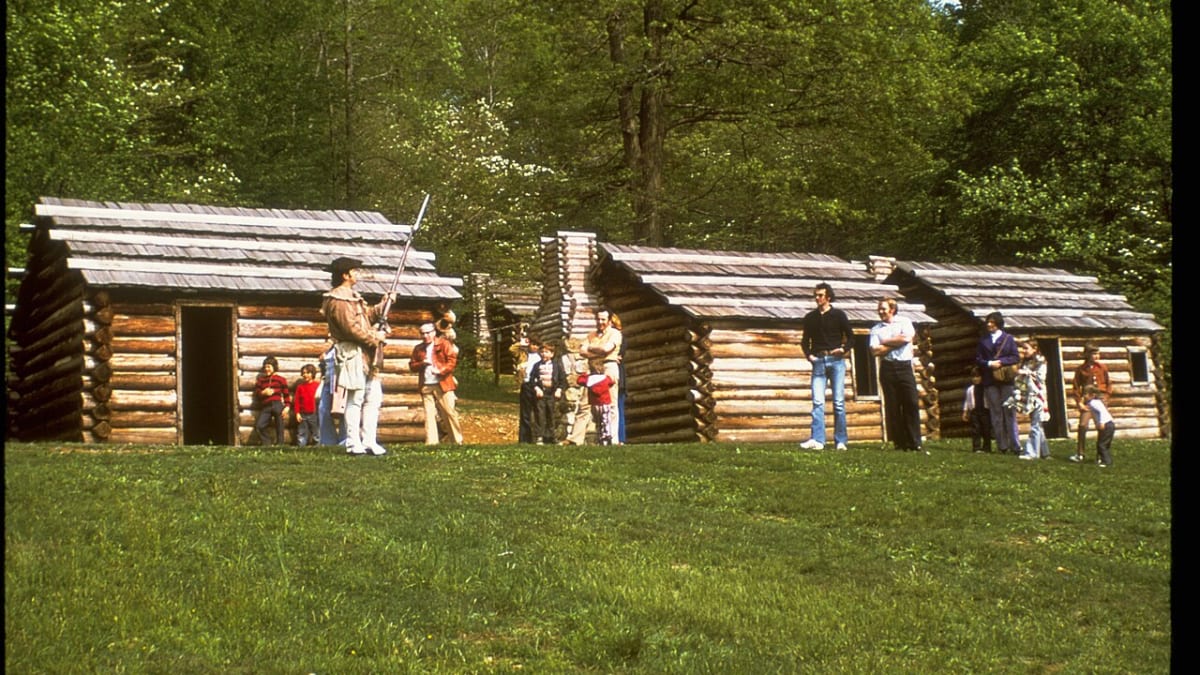
- Standing in the reconstructed log huts where soldiers wintered
- Quiet, wooded trails through the hills where the army camped
- The story of the army's hardest winter, harsher even than Valley Forge
- The nearby Ford Mansion, where Washington made his headquarters
Worth Knowing
- The park spreads across several sites, so decide whether to visit Jockey Hollow, the Ford Mansion, or both
- Miles of trails wind through the hills, so wear good shoes and bring water
- It is a working landscape of woods and fields, so dress for the weather and the season
- A visitor center helps orient the history, so start there if the story is new to you
Learn about Morristown National Historical Park: Jockey Hollow
The army's hardest winter
In the winter of 1779 and 1780 General George Washington chose the hills around Morristown as the winter quarters for the main body of the Continental Army, a defensible position within striking distance of the British in New York yet sheltered by the surrounding terrain. Thousands of soldiers marched into Jockey Hollow and set about building a city of log huts to survive the cold months.
That winter proved one of the worst on record, with storm after storm burying the camp in deep snow and temperatures plunging far below what the ill-clothed, poorly supplied soldiers could easily bear. Food ran desperately short, men went hungry and cold, and morale sank, testing the endurance of the army as severely as any battle. That the army held together through such misery is one of the quiet triumphs of the Revolution, and it happened here.
Jockey Hollow and the soldier huts
At Jockey Hollow the soldiers felled the surrounding forest to build row upon row of small log huts, each meant to shelter a dozen men, laid out in an orderly camp along the hillsides. Today several of these huts have been reconstructed on the original ground, letting visitors step inside the cramped, smoky quarters where soldiers slept, ate, and waited out the winter, and imagine the hardship of that season.
The park's trails wind through the hills and fields where the camp once stood, past the hut sites and the restored Wick farmhouse, whose family lived here through the encampment. Walking these quiet woods, it can be hard to picture the crowded, suffering army that once filled them, which is part of what makes the place so moving.
Washington's headquarters and the town
While the soldiers wintered at Jockey Hollow, Washington himself lodged in Morristown at the Ford Mansion, a fine home whose owner had died and whose widow shared it with the general and his staff. From these rooms Washington directed the army, corresponded with Congress and his officers, and weathered the crises of that grim winter, and the mansion is preserved much as it was, a window into his daily life at war.
Above the town rises Fort Nonsense, a hilltop earthwork built by the army, its odd name attached by a later generation who doubted its purpose. Together with the mansion and Jockey Hollow, it completes the picture of Morristown as a military capital in miniature, chosen for its safety and its command of the roads between the Hudson and the Delaware.
Season by season
Winter carries the deepest meaning here, for it was in the cold and snow that the army suffered most, and a visit in the snow brings the history vividly to life, even as it demands warm clothing and careful footing on the trails.
Spring brings wildflowers and fresh green to the hills, an easy and pleasant time to walk the trails and tour the huts. Summer is full and leafy, with the forest at its densest, though the woods can be warm and buggy. Fall may be the loveliest season, when the hills of Morris County blaze with color and crisp air makes the trails a joy to walk.
Closest Boutels
The closest Boutel™ stays, so you can turn this stop into an overnight. Each is a place we chose through independent editorial review, never a paid placement.
Details
Morristown, NJ
Frequently asked questions
What is Morristown National Historical Park?
Morristown National Historical Park, in and around Morristown, New Jersey, preserves the sites where George Washington and the Continental Army endured pivotal winter encampments during the American Revolution. Morristown served as a crucial military headquarters and winter quarters for the American army, including a famously brutal winter, and the park protects the Ford Mansion, where Washington stayed, the Jockey Hollow encampment area where soldiers built and suffered in log huts, a museum, and historic grounds. It tells the story of the army's hardship, endurance, and perseverance in the fight for independence. A meaningful window into the Revolution, it educates and inspires visitors. With its Revolutionary history, Morristown offers a compelling destination in New Jersey.
Why is Morristown important to the American Revolution?
Morristown was important to the American Revolution because its strategic location made it a key military headquarters and winter quarters for George Washington and the Continental Army, where the army rested, regrouped, and endured, including through one of the harshest winters of the war. The soldiers' suffering and perseverance at Morristown, especially at the Jockey Hollow encampment, became a symbol of the army's endurance in the struggle for independence. The park preserves this pivotal chapter. Understanding this history enriches a visit to Morristown National Historical Park in New Jersey.
What can you see at Morristown National Historical Park?
You can visit the Ford Mansion, where Washington had his headquarters, tour the Jockey Hollow area where soldiers built and endured winter in log huts, explore a museum with exhibits and artifacts, and walk the historic grounds and trails. The Washington headquarters, the encampment site, the museum, and the historic grounds are the draws, offering a rich look at the Revolution and the army's hardship. The story of the brutal winter encampment is especially moving. With its history, Morristown offers a rewarding visit in New Jersey.
When is the best time to visit Morristown National Historical Park?
The mild months of spring through fall are the most pleasant for exploring the outdoor encampment sites, grounds, and trails, while the museum and Ford Mansion can be enjoyed year-round, and a winter visit offers a sense of the harsh conditions the soldiers endured. Because hours and tours can vary by season, checking the current schedule before you go is wise. For pleasant weather and full access to the grounds, aim for spring through fall at Morristown National Historical Park in New Jersey.
What is near Morristown National Historical Park?
Morristown National Historical Park is in and around Morristown, New Jersey, within reach of historic Morristown, the Montclair Art Museum to the east, and the routes toward the New Jersey Skylands and the New York City area. That makes Morristown National Historical Park a compelling stop to combine with the other attractions of northern New Jersey on a visit to the state.
Nearby
Waterloo Village
16 miles away
Most people racing along Route 80 never learn there is a preserved canal port tucked in the woods beside it.

Montclair Art Museum
18 miles away
Tucked in the leafy suburb of Montclair, this is a quietly excellent art museum most out-of-towners never hear about.
Newark Museum of Art
20 miles away
Many people are surprised the largest and one of the finest art museums in New Jersey sits in downtown Newark.

Branch Brook Park Cherry Blossoms
20 miles away
In cherry-blossom season this is one of the prettiest outdoor stops in the region, and the scale amazes kids: more than 5,000 flowering trees, the largest such collection in the country, larger than W...