
Franklin Mineral Museum
32 Evans St, Franklin, NJ
Franklin, NJ
Rocks that blaze in impossible colors under ultraviolet light, in a small-town museum in the place miners call the fluorescent mineral capital of the world.
The Franklin Mineral Museum sits in a small former mining town in the hills of northwestern New Jersey, in a place so rich in glowing minerals that collectors call it the fluorescent mineral capital of the world. Its signature exhibit is a darkened room where ordinary gray rocks blaze into brilliant reds, greens, and oranges the moment ultraviolet light hits them, an unforgettable trick of chemistry.
Franklin and its neighbor Ogdensburg sat atop one of the strangest and richest zinc deposits on Earth, a deposit that produced an astonishing variety of minerals, many found nowhere else. The mines are closed now, but the museum preserves their legacy with a deep collection, a replica mine tunnel, and an outdoor pile where visitors can dig for their own specimens to keep.
What Travelers Love
- A dark room where ordinary-looking rocks glow in brilliant reds and greens under ultraviolet light
- The chance to hunt for minerals in an outdoor collecting area and keep what you find
- A replica mine tunnel that shows what the old zinc mines were like underground
- A deep, well-organized collection of local and worldwide minerals and fossils
Worth Knowing
- The museum welcomes visitors on a seasonal schedule, so check ahead before an off-season trip
- The outdoor collecting area is a working rock pile, so wear sturdy shoes and bring gloves and a bucket
- The fluorescent room is the highlight, so leave time to let your eyes adjust to the glow
- It is a favorite with rock hounds and families alike, and a nearby second museum shares the local mining story
Learn about Franklin Mineral Museum
The fluorescent capital of the world
The zinc ore mined at Franklin held an unusual mix of minerals that glow, or fluoresce, under ultraviolet light, and in a remarkable range of colors. The reason lies in trace elements locked in the crystals: when ultraviolet light strikes them, they absorb the invisible energy and give it back as visible, glowing color, so a drab rock can suddenly shine bright red or green.
Franklin and nearby Ogdensburg produced more different kinds of minerals than almost any place of comparable size on Earth, including a number found nowhere else in the world. That richness made the district legendary among mineralogists and collectors, and the glowing displays at the museum are the reason it earns its famous nickname.
A mining town's story
These hills were long part of the homeland of the Lenape people, whose descendants today include the Ramapough Lenape Nation of northern New Jersey. As the region was settled, the extraordinary ore deposits at Franklin were discovered and mined, and zinc mining became the engine of the local economy for generations.
The mines drew miners and their families and built the town around them, and they ran for many decades before the ore finally played out and the mines closed in the mid-1900s. The museum keeps that history alive, and it is complemented by a second museum in neighboring Ogdensburg built around an actual old mine that visitors can go into.
Inside the museum
The museum's collection ranges from the famous local minerals to specimens and fossils gathered from around the world, laid out in well-organized galleries. A replica mine tunnel recreates the look and feel of the underground workings, complete with mining equipment, giving a sense of the hard labor that pulled the ore from the ground.
The undisputed highlight is the fluorescent room, where visitors step into the dark and watch the staff switch on ultraviolet lamps to make the wall of rocks explode into color. Many visitors describe it as one of the most surprising and delightful museum exhibits they have seen, especially children encountering it for the first time.
Digging for your own
Out behind the museum sits a collecting area, a pile of mine rock where visitors are welcome to hunt for their own fluorescent specimens and keep what they find. Armed with gloves and a bucket, and sometimes a portable ultraviolet lamp to test their finds, rock hounds sift through the pile for stones that will glow at home.
The museum and its collecting pile run on a seasonal schedule, generally through the warmer months, so a check ahead avoids disappointment. Between the galleries, the glowing room, and the dig, it makes a full and unusual outing, a favorite of families and serious collectors alike.
Closest Boutels
The closest Boutel™ stays, so you can turn this stop into an overnight. Each is a place we chose through independent editorial review, never a paid placement.
Details
Franklin, NJ
Frequently asked questions
What is the Franklin Mineral Museum?
The Franklin Mineral Museum, in Franklin, New Jersey, celebrates the area's remarkable mineral heritage, famous worldwide for its dazzling fluorescent minerals that glow in brilliant colors under ultraviolet light. The Franklin area was one of the great mining districts, renowned for an extraordinary variety of minerals, and the museum displays stunning collections, including a fluorescent room where rocks blaze with vivid colors under special light, along with mining history, fossils, and a replica mine. Visitors can even collect their own minerals at a nearby dump. A fascinating and dazzling museum, it delights rock lovers and families. With its glowing minerals, the Franklin Mineral Museum offers a compelling destination in New Jersey.
What are the fluorescent minerals at the Franklin Mineral Museum?
The Franklin area is world-famous for its fluorescent minerals, rocks that glow in brilliant, vivid colors when viewed under ultraviolet light, even though they look ordinary in normal light. The museum's fluorescent room displays these remarkable minerals blazing in reds, greens, and other colors under special lighting, a dazzling and unforgettable sight. Franklin's unusual geology produced an extraordinary concentration of these glowing minerals. Seeing the fluorescent display is a highlight of a visit to the Franklin Mineral Museum in New Jersey.
What can you do at the Franklin Mineral Museum?
You can marvel at the fluorescent minerals glowing under ultraviolet light, view extensive mineral and fossil collections, learn about the area's rich mining history, walk through a replica mine, and even hunt for your own minerals to keep at a nearby collecting site. The dazzling fluorescent room, the mineral and fossil collections, the mining history, and the mineral collecting are the draws, making it a fascinating and hands-on visit. Collecting your own glowing rocks is a highlight for families. With its minerals, the Franklin Mineral Museum offers a rewarding experience in New Jersey.
When is the best time to visit the Franklin Mineral Museum?
The museum generally operates on a seasonal schedule with the warmer months as its main season, so late spring through early fall is often the best time to visit, when the museum and the outdoor mineral collecting are most accessible. Because hours can be seasonal, checking the current schedule before you go is wise. For the fullest access including outdoor collecting, aim for the warmer months and check current hours at the Franklin Mineral Museum in New Jersey.
What is near the Franklin Mineral Museum?
The Franklin Mineral Museum is in Franklin, New Jersey, within reach of High Point State Park to the northwest, the Delaware Water Gap, Waterloo Village, and the New Jersey Skylands region. That makes the Franklin Mineral Museum a compelling stop to combine with High Point State Park and the other attractions of the New Jersey Skylands on a visit to the state.
Nearby
High Point State Park
15 miles away
It is exactly what the name says: the highest point in New Jersey, 1,803 feet up on the Kittatinny Ridge, and on a clear day it feels like it.
Waterloo Village
17 miles away
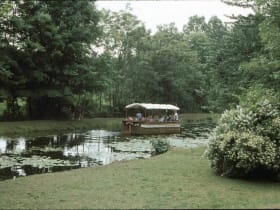
Most people racing along Route 80 never learn there is a preserved canal port tucked in the woods beside it.

Grey Towers National Historic Site
19 miles away
This is where American conservation grew up, and hardly anyone outside forestry knows it. Grey Towers above Milford was the summer home of Gifford Pinchot, the first chief of the U.S.