
Grey Towers National Historic Site
1 Pine Alley, Milford, PA
Milford, PA
A French-inspired stone château on a Pocono hillside, the family home of the man who founded the U.S. Forest Service and gave American conservation its name.
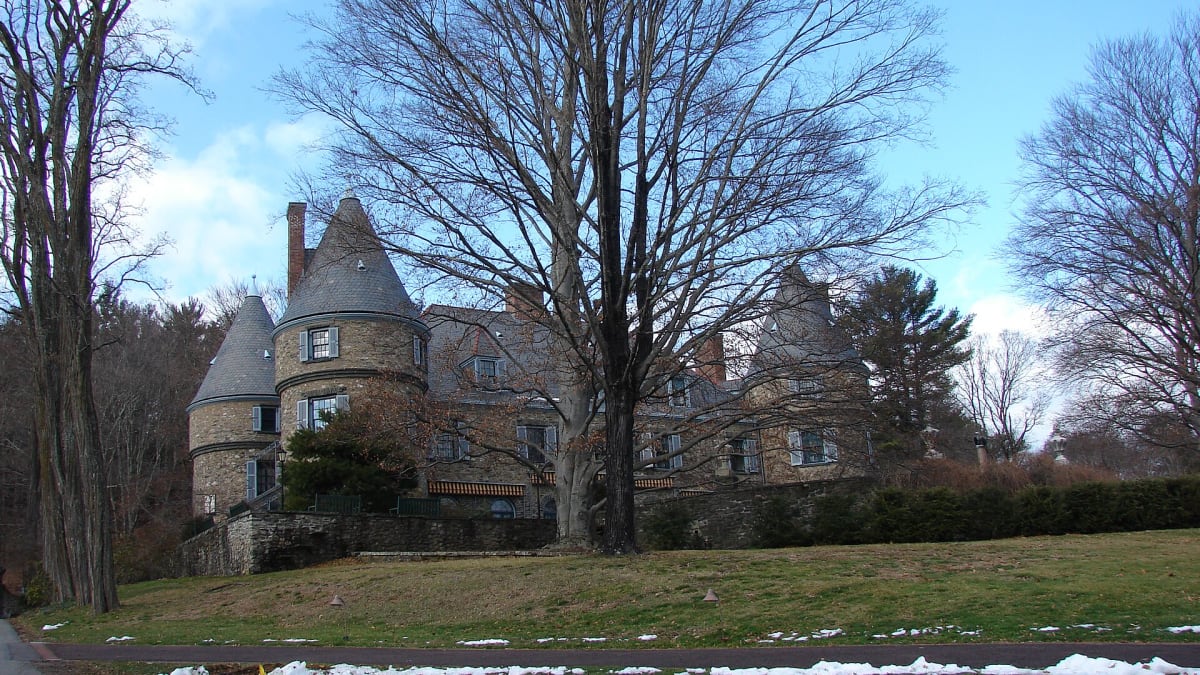
Grey Towers is the family home of Gifford Pinchot, the man who did more than almost anyone to invent American conservation. Built in 1886 as a summer estate for his father, the wealthy merchant James Pinchot, the house was modeled on a French château, with three round stone towers, steep slate roofs, and terraced gardens stepping down the Pocono hillside above Milford. It looks like a piece of the Loire Valley set down in the Pennsylvania woods.
But its importance is not architectural. Gifford Pinchot grew up here shaped by his father's belief in forestry, went on to become the first chief of the United States Forest Service under Theodore Roosevelt, coined the very word conservation as a national cause, and later served two terms as governor of Pennsylvania. In 1963 his family gave the estate to the Forest Service, and President Kennedy came to Milford to dedicate it, making the house a kind of birthplace and shrine of the movement to use the land wisely and keep it for the future.
What Travelers Love
- The storybook French château architecture, all round towers and steep slate roofs, on its hillside above Milford
- The famous Finger Bowl, an outdoor dining table with a moat of water where guests floated food across in bowls
- Walking the terraced gardens, reflecting pools, and hemlock-shaded grounds
- The story of Gifford Pinchot and the birth of the conservation movement, told room by room
Worth Knowing
- The house interior is seen by guided tour, while the gardens and grounds are open for self-guided walks
- The grounds are terraced and hilly with stone steps and paths, so wear comfortable shoes
- The gardens are at their fullest in late spring and summer, though the fall color on the hillside is striking
- Milford itself is worth a stroll, an easy add-on to a visit up the hill
Learn about Grey Towers National Historic Site
The Pinchots and the birth of conservation
James Pinchot had made a fortune, in part from cutting timber, and came to regret the waste and destruction that unregulated logging left across nineteenth-century America. He steered his son Gifford toward the young European science of forestry, a field almost unknown in the United States, and Gifford took up the cause with a lifelong intensity, studying abroad and returning determined to prove that forests could be harvested and renewed rather than simply stripped. In 1905 President Theodore Roosevelt made Pinchot the first chief of the new United States Forest Service, and together they placed vast tracts of western forest under federal protection and management. Pinchot argued that natural resources belonged to all the people and should be used for the greatest good of the greatest number over the longest time, a philosophy he pressed into national policy and popularized under the single word conservation. After his years in Washington he returned to Pennsylvania and served two terms as its governor in the 1920s and 1930s, bringing his conservation ideals home.
Grey Towers remained the family's heart throughout, and after his death his descendants gave the estate to the Forest Service, which now runs it as a national historic site and a center for conservation study, keeping alive the ideas that were nurtured in these rooms.
The house and its gardens
The mansion itself is a striking piece of Gilded Age fantasy, its three round towers and steep roofs drawn from the châteaux of France, its walls built of local bluestone. Inside, the rooms hold the Pinchot family's furnishings, portraits, and books, and tell the story of a household where forestry and public service were the family business across generations.
The gardens are the estate's other treasure, terraced down the slope with reflecting pools, stone walls, and hemlock shade. The most famous feature is the Finger Bowl, an outdoor stone dining table with a shallow moat of water running down its center, where the Pinchots and their guests would set bowls of food afloat and push them to one another across the water, a bit of playful theater that guests still delight in hearing about.
Milford and the upper Delaware
The estate sits above Milford, a small and unusually handsome town of stone and clapboard buildings that grew up as a nineteenth-century resort and lumbering center on the Delaware River. Just east of town the river runs through a protected corridor of forested ridges and bluffs, part of the wider Pocono and Delaware Water Gap country that draws paddlers, anglers, and hikers.
This land was long the homeland of the Lenape, also called the Delaware, who lived and traveled along the great river that carries their name. Pressured off their homeland through the eighteenth century by treaties and land dealings, including the notorious Walking Purchase, the Lenape are not federally recognized in Pennsylvania today, and their descendant nations continue elsewhere. The river valley below Grey Towers still bears the name of the people who lived along it.
Season by season
Spring wakes the gardens and the hemlock hillside, and the terraces and pools fill in with green and the first blooms, an easygoing time before the summer crowds. Summer is the fullest season, when the gardens are at their peak, the Finger Bowl runs, and the shaded grounds offer relief on a warm day.
Autumn may be the finest time of all, when the hardwoods of the Pocono hillside turn gold and crimson around the gray château, and the whole estate glows. Winter is quiet, with a reduced schedule and the towers stark against bare trees and occasional snow, so it is best to check ahead before a cold-season visit.
Closest Boutels
The closest Boutel™ stays, so you can turn this stop into an overnight. Each is a place we chose through independent editorial review, never a paid placement.
Details
Milford, PA
Frequently asked questions
What is Grey Towers National Historic Site?
Grey Towers, in Milford in the Pocono Mountains, is the grand château-style summer estate of Gifford Pinchot, the first chief of the U.S. Forest Service and a two-term Pennsylvania governor, and a founding figure of the American conservation movement. Now a National Historic Site on more than a hundred acres, it preserves an elegant mansion, formal gardens, and wooded trails, offering a beautiful and meaningful window into the life and legacy of one of the nation's great conservationists.
Can you tour the Grey Towers mansion?
Yes, seasonal guided tours take you through the forty-four-room mansion, filled with period furnishings and family artifacts, revealing the Pinchot family's story and their profound influence on American conservation. A famous highlight is the Finger Bowl, an outdoor dining feature where guests floated food across water. The interior tours generally run in the warm-weather season, so it is worth checking the current schedule before you go if seeing inside the house is a priority.
What else is there to do at Grey Towers?
Beyond the mansion tour, you can explore the estate's beautiful formal gardens and distinctive outdoor garden rooms, walk the wooded trails, and follow the Forest Discovery Trail, a short interpretive loop about ecology and forest management fitting for Pinchot's legacy. The grounds are open year-round for self-guided walks even when the mansion tours are not running, and there is a visitor center, gift shop, free films, and free parking to round out a visit.
When is the best time to visit Grey Towers?
Summer and early fall are ideal, when the gardens and grounds are lush and green and the mansion tours are typically running, with autumn adding beautiful Pocono foliage to the wooded estate. The grounds can be enjoyed year-round on self-guided walks. Since the interior tours are seasonal, checking current tour dates and hours before you go ensures you can see inside the historic mansion, which many visitors call the highlight.
What is near Grey Towers?
Grey Towers sits just outside the charming town of Milford in the Poconos, near the Delaware River and the Upper Delaware and Delaware Water Gap regions, with their scenic river, trails, and waterfalls. Milford itself offers dining, shops, and historic character. That makes Grey Towers an easy and enriching stop on a trip through the eastern Poconos, pairing conservation history with the natural beauty of the surrounding river country.
Nearby
High Point State Park
7.8 miles away
It is exactly what the name says: the highest point in New Jersey, 1,803 feet up on the Kittatinny Ridge, and on a clear day it feels like it.

Roebling Delaware Aqueduct Bridge
14 miles away
Long before the Brooklyn Bridge, John Roebling proved his suspension ideas out here on the Delaware.

Bushkill Falls
18 miles away
For a quick, dramatic waterfall stop near the Delaware Water Gap, Bushkill Falls has been drawing travelers since 1904 and calls itself the Niagara of Pennsylvania.
Franklin Mineral Museum
19 miles away
Rockhounds know this place; most travelers have no idea it exists.