
Vermilionville
300 Fisher Rd, Lafayette, LA
Lafayette, LA
A living Acadian and Creole village on the banks of the Bayou Vermilion, where fiddle music, French, and the smell of a wood fire bring the culture of Cajun Louisiana to life.
Vermilionville is a living-history museum on the banks of the Bayou Vermilion in Lafayette, dedicated to the cultures that shaped Acadiana between the eighteenth and nineteenth centuries. Restored and reconstructed period homes and buildings are spread across the grounds, each staffed by costumed artisans who demonstrate the crafts, trades, and daily rhythms of the Acadian, Creole, and Native peoples who made this corner of Louisiana their home.
But Vermilionville is far more than a collection of old buildings. It is a place where the culture is alive, with Cajun and Creole music filling the performance hall, cooking demonstrations sharing the region's celebrated food, and the French language still spoken. A visit here is the best single introduction to the deep, joyful, and complicated heritage of Cajun country.
What Travelers Love
- Restored and reconstructed historic homes staffed by costumed artisans
- Live Cajun and Creole music and dancing in the performance hall
- Craftspeople demonstrating weaving, woodworking, and other old trades
- A peaceful setting on the bayou with a boardwalk through the wetland
Worth Knowing
- The village is largely outdoors, so dress for the weather and wear walking shoes
- Music and cooking events run on a schedule, so check what is happening the day you visit
- Spring and fall are the most comfortable seasons for the open-air grounds
- The site interprets many cultures, including the enslaved, so approach the history thoughtfully
Learn about Vermilionville
The Acadians and the making of Cajun country
The Cajuns are descended from the Acadians, French settlers who founded a colony called Acadie in what is now the Canadian Maritimes. In the mid-eighteenth century, after Britain took control of the region, the Acadians were forcibly expelled from their homes in a brutal removal remembered as le Grand Derangement, the Great Upheaval, scattering families across the Atlantic world.
Many of the exiles eventually made their way to south Louisiana, then under Spanish rule, where they settled the prairies and bayous and rebuilt their lives. Over generations their French-speaking culture blended with the land and its other peoples to become the distinctive Cajun way of life, and Vermilionville tells this story of loss, survival, and renewal through the homes and belongings of the settlers.
A meeting of cultures on the bayou
Acadiana was never only Acadian. Vermilionville honors the many peoples who shared this land and shaped its culture together, including the French and Spanish colonists, the Creoles of both European and African descent, the free people of color, the enslaved Africans whose labor and traditions ran deep through the region, and the Native peoples who lived here long before any of them arrived.
The Indigenous heritage of the area includes the Attakapas, Chitimacha, and other nations whose descendants remain in Louisiana today. Vermilionville interprets these interwoven cultures with care, showing how their languages, foods, music, and crafts mingled along the bayous to create something new. It handles the hard parts of that history, including slavery, honestly rather than glossing over them.
Music, food, and living crafts
What makes Vermilionville memorable is that its culture is not frozen behind glass but performed and practiced. A performance hall hosts live Cajun and Creole music, and on many days visitors can watch or join in the dancing that is central to the region's social life. The two-step and the waltz, the fiddle and the accordion, are living traditions here, not museum relics.
Cooking is just as central. Demonstrations and a restaurant share the celebrated food of Acadiana, from gumbo and jambalaya to boudin and sweet cracklins, dishes born of French technique, African and Native ingredients, and the bounty of the bayous. Throughout the village, artisans practice weaving, woodworking, spinning, and other trades, keeping old skills alive and passing them on.
The bayou, the wildlife, and the seasons
The village sits along the Bayou Vermilion, and a boardwalk leads out through a stretch of wetland where herons, egrets, turtles, and the occasional alligator go about their lives, offering a quiet natural counterpoint to the cultural buildings. The bayou setting is a reminder that this culture grew directly out of the land and water of south Louisiana.
Spring and fall bring the most comfortable weather for the largely outdoor grounds, with mild air and blooming color, while summer is hot and humid and best enjoyed in the morning shade. Winter stays green and mild, and the calendar fills year-round with festivals, music, and cultural events, so there is nearly always something happening on the bayou.
Closest Boutels
The closest Boutel™ stays, so you can turn this stop into an overnight. Each is a place we chose through independent editorial review, never a paid placement.
Details
Lafayette, LA
Frequently asked questions
What is Vermilionville?
Vermilionville, in Lafayette, Louisiana, is a living-history museum and folklife park celebrating the Cajun, Creole, and Native American cultures of the Acadiana region along the Bayou Vermilion. The museum recreates a Cajun and Creole village of historic and restored buildings, from homes to a chapel and workshops, where costumed interpreters, artisans, and musicians share the traditions, crafts, music, food, and daily life of the region's cultures. Set on beautiful bayou-side grounds, it offers an immersive and joyful celebration of Acadiana's living heritage. A charming and immersive cultural museum, it delights visitors. With its heritage, Vermilionville offers a compelling destination in Louisiana.
What can you see and do at Vermilionville?
You can explore historic and restored buildings recreating a Cajun and Creole village, watch costumed interpreters and artisans demonstrate crafts, cooking, and daily life, enjoy live Cajun and Creole music, learn about the region's cultures, and stroll the beautiful bayou-side grounds. The living-history village, the craft and music demonstrations, the celebration of Cajun, Creole, and Native heritage, and the bayou setting are the draws, making it a joyful and immersive visit. The music and living culture are highlights. With its heritage, Vermilionville offers a rewarding experience in Lafayette, Louisiana.
What cultures does Vermilionville celebrate?
Vermilionville celebrates the Cajun, Creole, and Native American cultures of the Acadiana region of Louisiana, honoring the Acadians who came from Canada, the Creole peoples, and the Native peoples of the area, along with their intertwined traditions, music, crafts, food, and history. This rich cultural blend is at the heart of the museum's living-history experience. Approaching these cultures with appreciation enriches the visit. Understanding this heritage deepens a visit to Vermilionville in Louisiana.
When is the best time to visit Vermilionville?
The milder months of fall through spring are the most pleasant for the outdoor village and grounds in Louisiana's subtropical climate, avoiding the intense summer heat and humidity, with comfortable weather for exploring and enjoying the demonstrations and music. Because programs and hours can vary, checking current information before you go is wise. For the most comfortable visit, aim for fall through spring at Vermilionville in Louisiana.
What is near Vermilionville?
Vermilionville is in Lafayette, Louisiana, the heart of Acadiana, within reach of the Acadian Village, Lake Martin, Avery Island with the Tabasco factory and Jungle Gardens, and the other attractions of the Lafayette area. That makes Vermilionville a compelling stop to combine with the Acadian Village and the other attractions of Acadiana on a visit to Louisiana.
Nearby

Lake Martin
5.3 miles away
Lake Martin gives you a genuine Louisiana swamp without a long boat ride to reach it.
Acadian Village
6.5 miles away
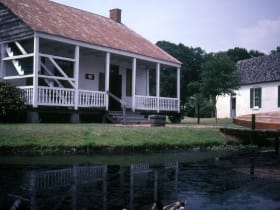
Acadian Village is a gentle, walkable step into the Cajun past, built from real 1800s Acadian houses moved here and set along a little bayou.
Rip Van Winkle Gardens and the Lake Peigneur Disaster
17 miles away
The gardens are pretty, but people come for one of the wildest disaster stories in America.