

Lake Martin
1209 Rookery Rd, Breaux Bridge, LA
Breaux Bridge, LA
A shallow cypress lake on the edge of the Atchafalaya, where thousands of wading birds nest each spring above alligator-dark water.
Lake Martin is a shallow cypress-and-tupelo swamp near Breaux Bridge, and it is one of the easiest places in Louisiana to experience the beauty of the Atchafalaya country without a long trek. A levee road and a walking trail run right along the water, so you can watch the swamp from the bank, and guided boat tours slip out among the flooded trees for a closer look.
The lake is best known for its wading-bird rookery, one of the largest in the region. Each spring, thousands of herons, egrets, ibis, and roseate spoonbills gather to nest in the cypress standing out in the water, turning the trees white and pink with birds. Alligators cruise the shallows below, and the whole scene, with Spanish moss hanging from the branches, is Louisiana swamp at its most iconic.
What Travelers Love
- One of the largest wading-bird rookeries in the region, alive with herons, egrets, and ibis in spring
- Bald cypress and tupelo rising straight out of the water, draped in Spanish moss
- Alligators sunning along the banks and gliding through the shallows
- Easy access by a levee road, a walking trail, and guided swamp boat tours
Worth Knowing
- The rookery is busiest and most spectacular in spring nesting season; other seasons are quieter
- Alligators are wild and should never be fed or approached
- Bring insect repellent, sun protection, and water, especially in the warm months
- A guided boat tour gets you deeper into the swamp than the levee road alone
Learn about Lake Martin
The Atchafalaya and the people of Acadiana
Lake Martin sits on the western edge of the Atchafalaya Basin, the largest river-swamp in North America, a vast wetland of bayous, lakes, and flooded forest fed by the Atchafalaya River. This is the heart of Acadiana, the cultural home of the Cajun people, descendants of French-speaking Acadians who were expelled from Canada in the eighteenth century and resettled in the bayou country, where their language, music, and cooking took deep root.
Long before and alongside the Acadians, this delta country was home to the Chitimacha, Houma, and other Native peoples who lived by its waters. The Chitimacha remain in the region today as a federally recognized tribe, and the wider basin has supported fishing, hunting, and gathering for thousands of years. The swamp visitors admire is not empty wilderness but a working landscape woven into the life of Cajun Country.
A swamp built of cypress and water
The signature trees are the bald cypress and the water tupelo, both able to grow with their trunks standing in water. Bald cypress develop flared, buttressed bases and send up woody knees around them, and though they look evergreen, they drop their needles each fall, turning rusty gold before going bare. Spanish moss, which is not a moss at all but an air plant related to pineapples, drapes the limbs and softens every silhouette.
The lake is shallow and slow, the classic still, dark water of a Louisiana swamp, its surface often dusted green with tiny floating plants. This flooded-forest habitat is enormously productive, nurturing fish, crawfish, frogs, and turtles that in turn feed the birds and alligators. It is the abundance of that food, and the safety of nesting over water, that draws the great rookery here.
The rookery and its wildlife
In spring, Lake Martin becomes one of the busiest wading-bird rookeries in the South. Great egrets, snowy egrets, great blue herons, little blue herons, cattle egrets, ibis, and the striking pink roseate spoonbill crowd into the cypress to build nests and raise young. The birds nest over the water in part because alligators below discourage raccoons and other nest raiders from swimming out, an uneasy partnership that helps the colony thrive.
The alligators themselves are a highlight, basking on logs and banks or drifting with just their eyes above the surface. Turtles line the sunny logs, water snakes move through the shallows, and in the cooler months migrating and wintering waterfowl use the lake. It is a place where a patient hour on the levee, or a slow boat ride among the trees, rewards you with a great deal of life.
Seeing Lake Martin
The simplest visit is a walk or slow drive along the levee road and the lakeside trail, where you can watch birds and alligators from the bank at your own pace. Early morning and the hours near sunset are the most active and the most beautiful, with soft light on the water and birds coming and going from the rookery. Spring is the peak, when the nesting colony is at its height.
For a deeper experience, a guided swamp boat tour carries you out among the flooded cypress, closer to the birds and gators than the shore allows, with a guide who can name what you are seeing. Either way, bring insect repellent and water, and pair the visit with the nearby town of Breaux Bridge, the self-styled crawfish capital, for a full taste of Cajun Country.
Closest Boutels
The closest Boutel™ stays, so you can turn this stop into an overnight. Each is a place we chose through independent editorial review, never a paid placement.
Details
Breaux Bridge, LA
Frequently asked questions
What is Lake Martin?
Lake Martin, near Breaux Bridge in the Acadiana region of southern Louisiana, is a beautiful cypress swamp lake famous for its stunning scenery and one of the largest wading-bird rookeries in the region, a beloved destination for swamp tours and wildlife viewing. The lake, ringed by moss-draped cypress and tupelo trees, is a haven for thousands of egrets, herons, ibises, and other birds that nest here, along with alligators and other wildlife, and it can be experienced by swamp boat tours, a shoreline trail, and a levee road. Its haunting beauty and abundant wildlife make it a quintessential Louisiana swamp destination. A gorgeous and wildlife-rich swamp lake, it delights visitors. With its cypress swamp, Lake Martin offers a compelling destination in Louisiana.
What can you do at Lake Martin?
You can take a swamp boat tour among the moss-draped cypress trees, walk the shoreline trail or drive the levee road, and watch for the thousands of nesting wading birds, alligators, turtles, and other wildlife, especially during the spring rookery season. The scenic cypress swamp, the swamp boat tours, the abundant birds and wildlife, and the haunting beauty are the draws, making it a quintessential Louisiana swamp experience. The bird rookery and the cypress scenery are highlights. With its swamp and wildlife, Lake Martin offers a rewarding experience in Louisiana.
Is it safe to visit Lake Martin, and what should I know?
Lake Martin is a wild swamp home to alligators and other wildlife, so keeping a safe distance, never approaching or feeding alligators, and staying on the trails, levee, or in the boat during tours are essential for safety, as feeding alligators is dangerous and illegal. Bringing insect repellent, water, and sun protection helps in the buggy, humid swamp, and going with a reputable swamp tour operator enhances safety and the experience. Keeping your distance from alligators and touring safely ensure a rewarding visit to Lake Martin in Louisiana.
When is the best time to visit Lake Martin?
Spring is the prime time, when the wading birds nest in great numbers at the rookery and the swamp is alive with activity, while the milder months of fall through spring are generally the most pleasant for swamp tours and viewing, avoiding the intense summer heat, humidity, and mosquitoes. Because the rookery season is seasonal, timing a spring visit is especially rewarding. For the nesting birds, aim for spring, or enjoy the swamp through the cooler months, at Lake Martin in Louisiana.
What is near Lake Martin?
Lake Martin is near Breaux Bridge in the Acadiana region of southern Louisiana, within reach of Lafayette with Vermilionville and the Acadian Village, Avery Island with the Tabasco factory and Jungle Gardens, and the other attractions of Acadiana. That makes Lake Martin a compelling stop to combine with the other attractions of Acadiana on a visit to Louisiana.
Nearby
Vermilionville
5.3 miles away
Vermilionville makes Cajun history hands-on for kids. Walk the 23-acre village along Bayou Vermilion and you meet costumed artisans actually doing things, cooking over a fire, weaving, carving a boat,...
Acadian Village
12 miles away
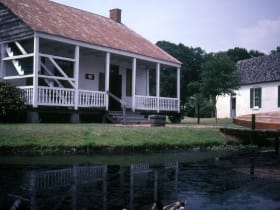
Acadian Village is a gentle, walkable step into the Cajun past, built from real 1800s Acadian houses moved here and set along a little bayou.
Rip Van Winkle Gardens and the Lake Peigneur Disaster
18 miles away
The gardens are pretty, but people come for one of the wildest disaster stories in America.