Umpqua Hot Springs
N Umpqua Rd, Idleyld Park, OR
Idleyld Park, OR
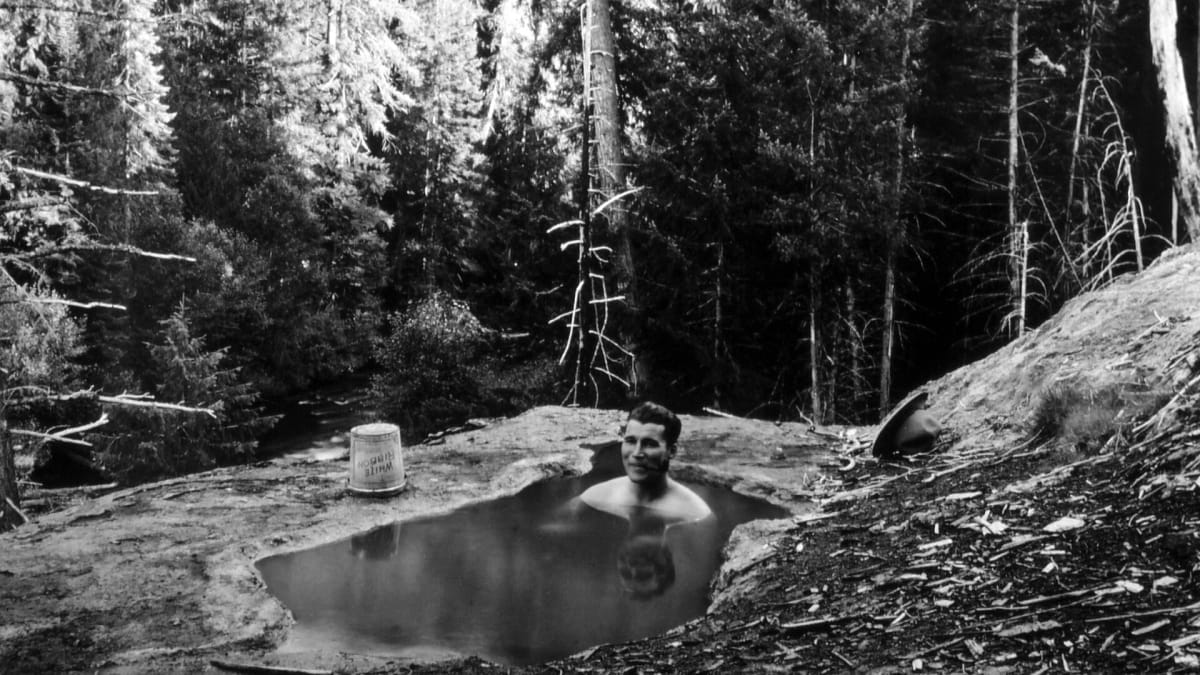
A stack of natural mineral pools set into a colorful travertine cliff, looking out over the North Umpqua River from high on the canyon wall.
Umpqua Hot Springs is one of Oregon's most striking soaks: a cluster of natural pools set into a travertine cliff roughly a hundred and fifty feet above the North Umpqua River. Geothermal water rises through the rock at bathing-warm temperatures and steps downhill from pool to pool, each one slightly cooler than the last, with the whole terrace stained in rusty and greenish bands from the minerals the water leaves behind.
The reward is the view as much as the water. From the pools you look out over the river and the forested canyon, steam drifting up off the surface on a cool morning. It takes a short, steep walk to get here and it is a completely undeveloped site, but that ruggedness is part of why people love it.
What Travelers Love
- Soaking in warm mineral water perched high on a cliff above the river
- The colorful travertine terrace, streaked with rust and green from mineral deposits
- The tiered pools, each a slightly different temperature as the water steps downhill
- The deep-forest quiet of the surrounding North Umpqua country
Worth Knowing
- This is a primitive, undeveloped site with no drinking water, restrooms, or staff, so come prepared and pack out everything
- The trail from the parking area is short but steep, and the terrace above the river has real drop-offs
- It is a day-use area only; camping at the springs is not allowed
- Etiquette varies here and the pools are small, so arrive early, expect to share, and be ready for a wait on busy days
Learn about Umpqua Hot Springs
A place people have come to for thousands of years
People have been drawn to these springs for a very long time. Archaeological evidence indicates Native people visited the Umpqua Hot Springs area for thousands of years, and the wider North Umpqua watershed lay within the homeland and seasonal range of the Umpqua peoples. Their descendants today are enrolled in the Cow Creek Band of Umpqua Tribe of Indians, a federally recognized tribe of southwestern Oregon.
The Cow Creek people traditionally moved with the seasons, spending summers in the mountains and winters in the valleys, fishing salmon and lamprey and gathering game, roots, and berries across a broad territory. Beyond that long presence, the specific ways the springs were used in the deep past are not fully documented, and it is better to acknowledge that uncertainty than to invent a story. In 1853 the tribe ceded its homeland in one of the region's earliest treaties and was later removed; after long decades of effort, the Cow Creek Band regained federal recognition in 1982 and remains active in the Umpqua country today.
In the modern era the springs sit on Umpqua National Forest land and are managed by the Forest Service. Heavy use took a toll over the years, and around 2016 the Forest Service made changes to help the site recover, shifting it to day-use only and prohibiting camping. Rules and access can change, so it is worth checking current conditions with the Umpqua National Forest before a trip.
How the springs and their travertine terrace formed
The springs are geothermal, meaning the water is heated deep underground and rises to the surface along fractures in the rock. Here it flows up through an active fault, emerging warm enough for a comfortable soak. Because the North Umpqua country sits along the flank of the volcanic Cascade Range, there is a natural source of that underground heat.
As the mineral-rich water reaches the air and cools, it drops its dissolved minerals, building up the shelf of travertine that the pools sit on. Over a very long span of time this deposit has grown into the terraced cliff you see, and the ongoing mineral staining is what gives the rock its vivid rust-and-green banding. The pools themselves are shaped partly by nature and partly by generations of soakers who have arranged the stone.
The water here is notably mineral-rich; among Cascade hot springs it carries an unusually high load of dissolved solids, which is exactly why it builds such a dramatic terrace. Water temperatures step down as the flow moves from the top pool to the lower ones, so soakers pick a pool to match how warm they want to be.
Wildlife and the surrounding forest
The North Umpqua below the springs is a celebrated wild-fish river, famous for its runs of summer steelhead, sea-run fish that push far up the corridor to spawn. Those fish and the cold, clean river that carries them are the ecological backbone of the whole valley.
Along the water, watch for the American dipper, a small slate-gray songbird that walks and swims underwater to feed and bobs on midstream rocks between dives. The surrounding forest holds woodpeckers, including the big pileated woodpecker whose drumming carries through the trees, along with owls that hunt the canyon after dark.
The setting is classic western Cascade forest: Douglas fir and western hemlock over sword fern and moss, with the river always somewhere below. Black-tailed deer are common in the corridor, and black bear range through the broader national forest, though they generally keep out of sight.
Season by season
Winter and cold mornings are, for many people, the most magical time, when steam pours off the pools and the contrast between the hot water and the chilly air is at its best. The trade-off is that the road and the short trail sit at enough elevation to see snow and ice, so conditions and access can be uncertain.
Spring brings a thundering, high North Umpqua below and a green, dripping forest, though trails stay wet and the weather is changeable.
Summer is the busiest season by far, with warm days and easy access, which means the small pools can be crowded and an early arrival really pays off.
Fall is a quiet, lovely window, with cooler air, fewer people, and the first autumn rains beginning to reawaken the river below.
Closest Boutels
The closest Boutel™ stays, so you can turn this stop into an overnight. Each is a place we chose through independent editorial review, never a paid placement.
Details
Idleyld Park, OR
Frequently asked questions
Is Umpqua Hot Springs clothing-optional?
Yes. Umpqua is a clothing-optional natural hot spring, and nudity is common and generally expected at the pools, though you will find a mix of soakers with and without swimwear. The etiquette is simple: be respectful of everyone's choices, wear or skip a swimsuit as you are comfortable, and if you are unsure in the moment, it is fine to ask. Come with an open mind and treat others courteously.
How do you get to Umpqua Hot Springs, and do I need a pass?
A day-use parking pass, such as a Northwest Forest Pass or an interagency pass, is required at the trailhead. From there it is a short but steep climb of less than half a mile up to the pools on a bluff above the river. The access road is rough with potholes, so a higher-clearance vehicle helps, and the trail gets slick when wet, so wear shoes with good grip.
When is the best time to visit Umpqua Hot Springs?
Late spring through early fall, roughly May to September, is the easiest window, with the access road open and the trail clear. In winter and early spring the road is typically gated, which adds several miles of walking, snowshoeing, or skiing to reach the springs. Whenever you go, early mornings on weekdays are quietest, since this popular spot can get crowded.
What are the rules and etiquette at Umpqua Hot Springs?
It is a fragile natural place with no facilities, so leave no trace: pack out everything, and keep soap, shampoo, lotion, and sunscreen out of the water, which also means no relieving yourself anywhere near the pools. Be considerate of others sharing the small pools, keep noise down, and take turns. Simple courtesy keeps this beautiful spot open and pleasant for everyone.
Is it safe to soak at Umpqua Hot Springs?
For most people a careful soak is fine, but a few precautions matter. Never submerge your head or drink the water, as natural hot springs can carry organisms that are dangerous if they enter the nose, and avoid any pool with visible algae, which can irritate skin. The pools sit on a bluff with drop-offs to the river below, so watch your footing, keep children very close, and know your own limits with the heat.
Nearby

Toketee Falls + North Umpqua River
4.2 miles away
Toketee Falls drops through columnar basalt, the hexagonal columns formed as a thick lava sheet cooled slowly and contracted in a honeycomb pattern.
Diamond Lake
15 miles away
The lake sits in a broad, shallow crater at 5,183 feet, filled with snowmelt and surrounded by pumice flats and lodgepole pine.
Natural Bridge on Upper Rogue River
21 miles away
Natural lava tubes that capture a full river are rare. The tube here is large enough that the Rogue runs through it at full volume rather than seeping.

Crater Lake Rim Drive
26 miles away
The Cleetwood Cove Trail descends 1.1 miles to the lake and is the main place where you can touch the water. The trail is steep; plan 30 minutes down, 45 up.

Crater Lake National Park
31 miles away
The deepest lake in the United States, filling the caldera of a collapsed volcano with impossibly blue water.