
Three Rivers Petroglyph Site
455 3 Rivers Rd, Tularosa, NM
Tularosa, NM
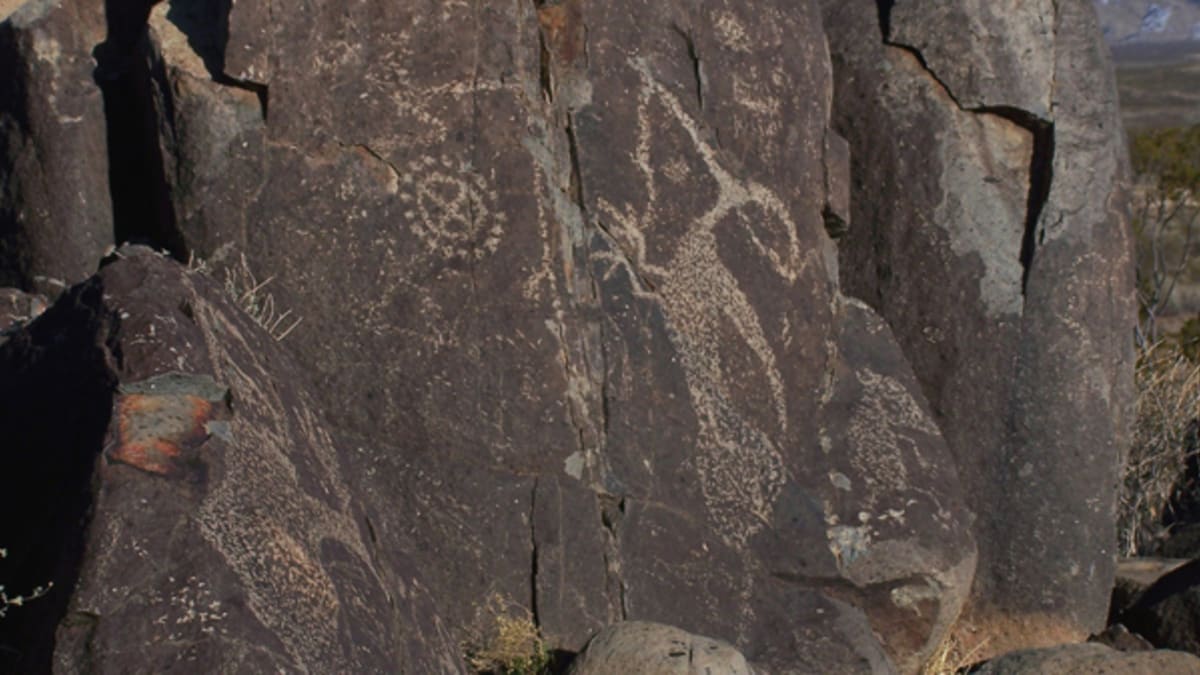
A long basalt ridge carrying thousands of ancient carvings, birds, faces, animals, and masks, looking out over the white dunes and the Sacramento Mountains.
Three Rivers is one of the richest concentrations of ancient rock art in the Southwest, a long ridge of dark basalt carrying thousands of petroglyphs pecked into the stone. The images crowd the boulders along the ridgeline, faces and masks, birds and bighorn sheep, fish, insects, handprints, sunbursts, and geometric patterns, an astonishing gallery scattered across a mile of desert.
The carvings are the work of the Jornada Mogollon people, who lived and farmed in the Tularosa Basin roughly a thousand years ago, and who left this ridge covered in imagery over generations. A rocky trail climbs the ridge and threads among the boulders, letting visitors walk slowly from image to image with the wide basin, the white dunes, and the snow-capped peak of Sierra Blanca spread out beyond.
What Travelers Love
- Thousands of petroglyphs concentrated along a single walkable ridge
- The astonishing variety of images, from animals and birds to masks and geometric designs
- Wide views over the Tularosa Basin toward White Sands and Sierra Blanca
- A quiet, remote site where you can take your time with the carvings undisturbed
Worth Knowing
- The trail along the ridge is rocky and uneven, so wear sturdy shoes and watch your footing
- There is little shade, so bring water, sun protection, and a hat, especially in summer
- Never touch, chalk, or make rubbings of the petroglyphs; the oils and pressure damage them
- This is desert country with rattlesnakes and cactus, so stay on the trail and watch where you step and reach
Learn about Three Rivers Petroglyph Site
The Jornada Mogollon and their images
The petroglyphs were made by the Jornada branch of the Mogollon culture, ancestral Puebloan farmers and hunters who occupied the Tularosa Basin and surrounding country from roughly a thousand years ago. They pecked and scratched the images through the dark, weathered surface of the basalt to reveal the lighter rock beneath, working over many generations to build up the vast assemblage seen today.
The range of subjects is remarkable, animals such as bighorn sheep, deer, fish, and birds, along with human and masklike faces, handprints, footprints, sunbursts, and abstract geometric forms. Many likely carried spiritual or ceremonial meaning, tied to hunting, water, or ritual, though their exact significance is known only in part. To Pueblo peoples of today, whose ancestors include the Mogollon, such places remain culturally significant and are treated with respect.
Walking the ridge
A trail leaves the small visitor area and climbs onto the basalt ridge, running along its spine for about a mile among the carved boulders. It is a rocky, uneven path, more of a rough scramble in places than a graded walk, and the reward is the sheer density of images, with new ones appearing on almost every dark rock as you go.
Because the site is remote and lightly visited, it is often possible to have long stretches of the ridge to yourself, moving at your own pace and finding carvings that reveal themselves only on a second look. The open, exposed setting means sun and heat are real considerations, so water, a hat, and an early or late start make the walk far more comfortable.
The Tularosa Basin and its long view
The ridge stands like a natural viewpoint over the Tularosa Basin, a wide desert valley walled by mountains and holding, at its heart, the great gypsum dunes of White Sands. From the carvings you look west toward that pale sea of sand and east and north to the Sacramento Mountains and the high, often snow-capped peak of Sierra Blanca.
That commanding outlook was surely part of why the ridge mattered to the people who carved it, a raised place above the basin where they lived and farmed. Standing among the petroglyphs with the basin stretched out below makes the connection between the images and the land they overlook feel immediate.
Preserving the carvings and when to go
Petroglyphs are fragile and irreplaceable, and even a light touch transfers oils that speed their decay. Chalking, tracing, or making rubbings, and of course any scratching, cause real and permanent harm. The site asks visitors to look and photograph only, and to stay on the trail so the surrounding surfaces and any buried features are left undisturbed for the people who hold this place sacred.
Fall, winter, and spring bring the most comfortable weather for the exposed ridge, with mild temperatures and clear desert light that makes the carvings stand out. Summer is hot and best tackled early or late in the day. Whenever you come, the low-angle light of morning and evening sharpens the shadows in the pecked lines and makes the images easiest to see and photograph.
Closest Boutels
The closest Boutel™ stays, so you can turn this stop into an overnight. Each is a place we chose through independent editorial review, never a paid placement.
Details
Tularosa, NM
Frequently asked questions
What is the Three Rivers Petroglyph Site?
The Three Rivers Petroglyph Site, near Tularosa in southern New Mexico, is one of the largest and most remarkable concentrations of ancient rock art in the Southwest, with more than twenty thousand petroglyphs carved into the desert rocks along a rocky ridge. Created over centuries by the ancient Jornada Mogollon people, the petroglyphs depict a fascinating array of images, including animals, birds, fish, human figures, masks, and geometric and abstract designs. A trail winds along the ridge past the carvings, offering an up-close look at this extraordinary ancient art with views of the Sacramento Mountains and Tularosa Basin. With its thousands of petroglyphs, the Three Rivers Petroglyph Site offers a fascinating window into ancient culture in southern New Mexico.
What can you see at the Three Rivers Petroglyph Site?
You can walk the rocky ridge trail past thousands of ancient petroglyphs carved by the Jornada Mogollon people, seeing a remarkable variety of images including animals, birds, fish, insects, human figures, masks, handprints, and geometric designs, with interpretive information explaining the rock art. The concentration and variety of the carvings are extraordinary. The site also offers scenic views and a nearby prehistoric village trail. Bringing water and good shoes for the rocky trail helps. With its thousands of fascinating petroglyphs and scenic setting, the Three Rivers Petroglyph Site offers a rewarding and educational look at ancient Native rock art in southern New Mexico.
What should visitors keep in mind at the Three Rivers Petroglyph Site?
The ancient petroglyphs are fragile, irreplaceable, and culturally significant, so visitors must never touch, trace, chalk, or deface them, which is illegal and damaging, and should stay on the designated trail and view the carvings respectfully. The rocky ridge trail is uneven, so wear sturdy shoes and watch your footing. The desert setting is exposed and can be hot, so carry water, sun protection, and a hat. Watch for snakes in warm weather. Respecting the petroglyphs, staying on the trail, and coming prepared for the sun and rocky terrain ensures a safe and considerate visit to this special site.
When is the best time to visit the Three Rivers Petroglyph Site?
Fall through spring offers the most comfortable temperatures for walking the exposed ridge trail, avoiding the intense heat of summer in the Tularosa Basin, while morning and late-afternoon light can make the petroglyphs stand out on the rocks and is best for photography. Mornings are cooler in warm months. Spring can bring wildflowers. For the best combination of comfortable weather and good light to view the rock art, aim for the cooler months from fall through spring, ideally in the morning or late afternoon, at the Three Rivers Petroglyph Site.
What is near the Three Rivers Petroglyph Site?
The Three Rivers Petroglyph Site is near Tularosa in southern New Mexico, within reach of the spectacular White Sands National Park, Alamogordo with the New Mexico Museum of Space History, the Valley of Fires lava flow near Carrizozo, and the mountain town of Ruidoso. That makes the Three Rivers Petroglyph Site a fascinating stop to combine with White Sands National Park, the Valley of Fires, and the other attractions of southern New Mexico on a visit to the state.
Nearby

Valley of Fires Recreation Area
15 miles away
Standing on a raised boardwalk out in a lava field that is only about 5,000 years old, you can see the ropy pahoehoe texture where the rock cooled mid-flow.
New Mexico Museum of Space History
42 miles away
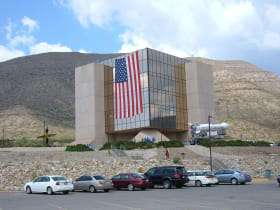
This museum sits right where a lot of American rocketry actually happened, since White Sands Missile Range is just over the mountains.
Oliver Lee Memorial State Park
50 miles away
People drive US-54 between Alamogordo and El Paso without ever knowing this canyon is here, tucked into the mountain wall a few minutes off the highway.

White Sands National Park
51 miles away
The world's largest gypsum dune field, rolling waves of brilliant white sand you can sled down.