
Tallulah Gorge State Park
338 Jane Hurt Yarn Dr
Tallulah Falls, GA
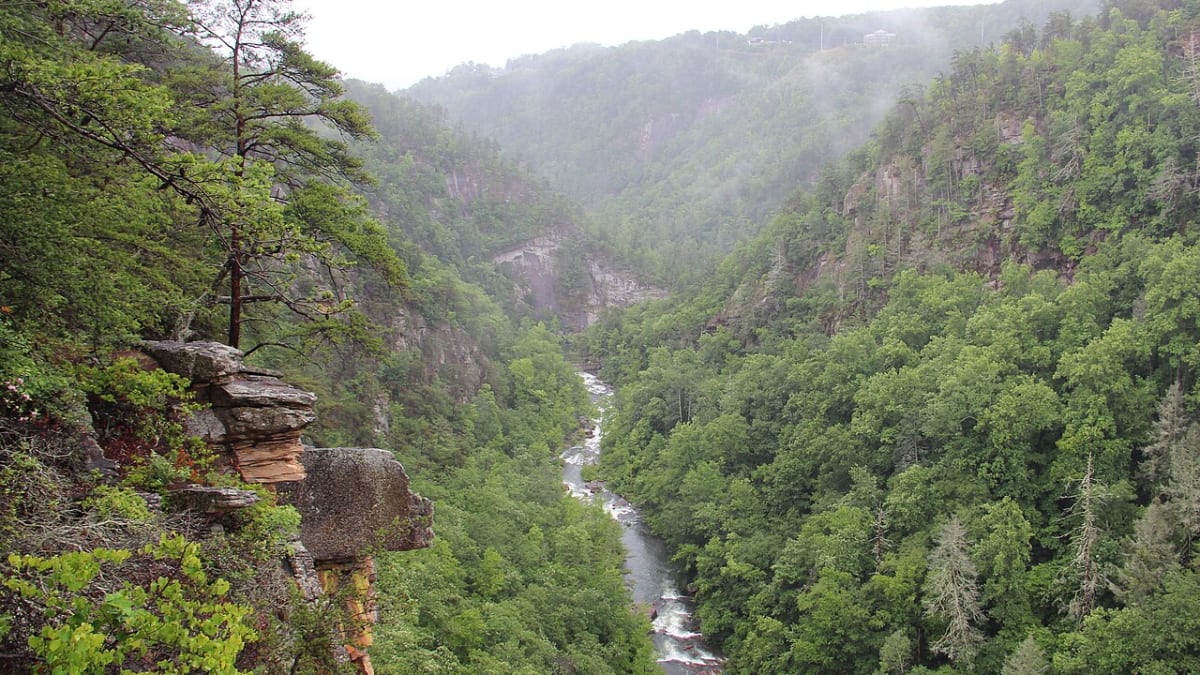
One of the deepest gorges in the eastern United States, where the Tallulah River drops through a chain of waterfalls and a swinging suspension bridge hangs high above the roar.
Tallulah Gorge is a river canyon nearly a thousand feet deep, one of the deepest in the eastern United States, cut by the Tallulah River as it drops through the mountains of northeast Georgia in a chain of waterfalls. A suspension bridge sways above the river partway down, giving hikers a heart-in-throat view straight into the churning water below, while rim trails on both sides string together a series of dizzying overlooks.
The park protects both the gorge and its long human story. In the early 20th century the river above the gorge was dammed for hydroelectric power, and much of the water was diverted, quieting the falls that had once made Tallulah a famous resort destination. On scheduled release days the dam sends the river roaring back through the canyon, and paddlers and gawkers gather to see the gorge as it once was.
What Travelers Love
- Crossing the suspension bridge that sways high above the river and its falls
- Rim-trail overlooks that look straight down into the gorge
- The chain of waterfalls tumbling through the canyon floor
- The challenge of the permitted gorge-floor hike for those up for it
Worth Knowing
- The steep staircases and gorge-floor route are strenuous; know your limits and wear real hiking shoes
- A limited number of permits are issued each day for the gorge floor, so arrive early to get one
- Scheduled water releases from the upstream dam change the river dramatically; check the park's release calendar
- The rock is slick near the water and the staircases are long, so take your time and carry water
Learn about Tallulah Gorge State Park
The resort era and the dam
In the late 1800s Tallulah Falls was one of the South's premier tourist destinations, a mountain resort drawing crowds by rail to marvel at the waterfalls thundering through the gorge. Hotels lined the rim, and honeymooners and sightseers came to walk the overlooks and feel the spray.
That era ended when the river was dammed for hydroelectric power in the early 20th century, diverting most of the flow and stilling the falls. A famous local conservationist, Helen Dortch Longstreet, fought hard to stop the dam and lost, in one of the early battles between industry and wild rivers in the South. The falls fell quiet for decades, and only on scheduled water releases does the full river surge back through the canyon today.
The gorge, the bridge, and the trails
Rim trails run along both the north and south walls of the gorge, linking overlooks that gaze across and down into the canyon at the string of waterfalls below. From these points the scale of the place sinks in: sheer rock walls dropping hundreds of feet to the river, with the falls stepping down the gorge floor.
For those who want to go deeper, long staircases descend toward the river, and a suspension bridge crosses high above the water, swaying gently as hikers pass. With a permit, experienced hikers can take a rugged route across the gorge floor, scrambling over boulders and slick rock to reach the base of the falls. It is one of the more demanding day hikes in the state, and not for everyone, but it puts you right in the heart of the canyon.
A daredevil's high wire
Tallulah Gorge has drawn tightrope walkers to span its chasm. In 1886 a professor billed as a great funambulist walked a wire across the gorge, and the feat became part of the resort's legend, a spectacle for the crowds gathered on the rim.
Nearly a century later, in 1970, the wire-walker Karl Wallenda crossed the gorge on a cable in front of a huge crowd, pausing midway to perform two headstands high above the river. A pair of stone towers that anchored his cable still stand near the rim, and the walk remains part of the story locals tell about the place.
Rare plants, wildlife, and the seasons
The gorge shelters a distinctive community of plants adapted to its cool, moist walls, including a rare and protected species found in these cliffs. Because these plants are fragile and easily damaged, the park keeps parts of the gorge floor tightly managed, which is one reason for the daily permit limits.
Spring brings wildflowers to the rim and higher water to the river, while fall lights the surrounding hardwoods in color and draws the biggest crowds to the overlooks. Summer is green and humid, best hiked early before the heat, and winter is quiet and stark, when a rare cold snap can hang ice from the cliff faces. Scheduled water releases in spring and fall are the times to see the river at full roar.
Closest Boutels
The closest Boutel™ stays, so you can turn this stop into an overnight. Each is a place we chose through independent editorial review, never a paid placement.
The Station by Compo Hotels
Boutel745 Old Buncombe Rd, Travelers Rest, SC 29690, Travelers Rest, SC
55 miles away|Learn More ›
Details
Tallulah Falls, GA
Frequently asked questions
What is Tallulah Gorge State Park?
Tallulah Gorge State Park, in northeastern Georgia, protects one of the most spectacular and deepest gorges in the eastern United States, a dramatic canyon where the Tallulah River has carved a chasm hundreds of feet deep through the rock. The gorge features sheer cliffs, a series of waterfalls, and stunning scenery, with rim trails and overlooks offering breathtaking views, a suspension bridge spanning high above the river, and, for those with a permit, a challenging trail down to the gorge floor. Rich in natural beauty and dramatic vistas, it is one of North Georgia's premier natural destinations. With its deep gorge and waterfalls, Tallulah Gorge State Park offers a spectacular destination in Georgia.
What can you do at Tallulah Gorge State Park?
You can hike the rim trails to breathtaking overlooks of the deep gorge and its waterfalls, cross the suspension bridge high above the river, visit the interpretive center, and, with a permit, hike the challenging trail down to the gorge floor. The dramatic gorge and waterfall views, the suspension bridge, the rim trails, and the adventurous gorge-floor hike are the draws, making it a spectacular outdoor destination. The views into the deep chasm are unforgettable. With its gorge and trails, Tallulah Gorge State Park offers a rewarding experience in Georgia.
Do you need a permit to hike the Tallulah Gorge floor, and is it safe?
Hiking down to the floor of Tallulah Gorge requires a free permit, limited in number each day and issued first-come, so arriving early is important, and the gorge-floor hike may close at times due to water releases or conditions, so checking current availability before you go is essential. The descent is very strenuous, with steep stairs and rugged terrain. More broadly, the gorge is extremely deep with sheer cliffs and dangerous drops, so staying on marked trails, behind railings, and at designated overlooks, keeping well back from cliff edges, and watching children closely are essential, as falls can be fatal, and the slippery rocks near the water make entering the river hazardous and restricted. Respecting the permits, cliffs, and rules ensures a safe visit to Tallulah Gorge State Park in Georgia.
When is the best time to visit Tallulah Gorge State Park?
Spring brings wildflowers and, at times, scheduled water releases that swell the falls, summer offers lush green though warm, and fall is spectacular when the gorge blazes with foliage, one of the most beautiful and popular times, so arriving early helps then. Scheduled water releases in spring and fall make the falls especially dramatic. For foliage aim for fall, or visit in spring for wildflowers and water releases, at Tallulah Gorge State Park in Georgia.
What is near Tallulah Gorge State Park?
Tallulah Gorge State Park is in northeastern Georgia, within reach of the North Georgia mountains, Anna Ruby Falls and Helen, the northeastern Georgia lakes and forests, and the mountain region. That makes Tallulah Gorge State Park a spectacular stop to combine with Anna Ruby Falls and the other attractions of the North Georgia mountains on a visit to the state.
Outside the Park

Anna Ruby Falls
19 miles away
This is an easy waterfall win for families near Helen. Anna Ruby Falls is really two falls side by side, dropping down the same cliff into one pool, which fascinates kids who expect just one.
Cabbage Patch Kids Babyland General Hospital
24 miles away
This is a genuinely odd and delightful stop for younger kids. Babyland General Hospital near Cleveland is where the Cabbage Patch Kids come from, staged inside a mansion like a make-believe hospital w...

South Carolina Botanical Garden
32 miles away
Most people drive to Clemson for football or for the university itself and never learn there is a 295-acre botanical garden on the edge of campus, free to walk.

Blue Ridge Parkway
46 miles away
America's Favorite Drive, a 469-mile mountain parkway with no trucks or billboards, running the crest of the southern Appalachians from Shenandoah to the Great Smokies.
Great Smoky Mountains National Park
66 miles away
The most-visited national park, famous for misty ridgelines, wildflowers, and synchronous fireflies.