

South Carolina Botanical Garden
250 Duck Pond Dr
Clemson, SC
An open garden of woodland trails, streams, and native plantings spreads across the wooded edge of Clemson University, welcoming visitors year-round.
The South Carolina Botanical Garden is the state's largest public garden, sprawling across a wide swath of woodland, stream, and meadow on the campus of Clemson University. Unlike a formal walled garden, it feels more like a managed piece of Upstate forest, laced with natural trails that lead past display beds, a wildflower meadow, a native plant collection, and quiet streams tumbling through the trees.
The garden began humbly and grew into a sprawling outdoor classroom and public retreat that welcomes visitors year-round. It shares its grounds with the Bob Campbell Geology Museum and a natural heritage learning center, so a visit can combine a woodland walk with a look at the rocks, minerals, and fossils of the region. Set against the backdrop of the Blue Ridge foothills, it is a peaceful counterpoint to the bustle of the university town.
What Travelers Love
- Miles of natural woodland trails winding along streams and through the forest
- Themed display gardens, from a native plant collection to a wildflower meadow
- The Bob Campbell Geology Museum and a natural heritage learning center on site
- A garden that welcomes visitors year-round without a gate or a ticket
Worth Knowing
- The garden is large and spread out, so wear good shoes for the trails
- Trails can be muddy after rain and cross a few streams, so watch your footing
- Bring water and sun protection, as some areas are open meadow
- Spring blooms and fall color are the showiest times, so plan around them if you can
Learn about South Carolina Botanical Garden
From campus arboretum to state garden
The garden traces its roots to the mid-twentieth century, when Clemson faculty began planting a camellia collection on campus. Over the following decades it grew steadily, adding themed gardens, trails, and natural areas until it became a major public garden in its own right, eventually designated the South Carolina Botanical Garden.
Because it grew up as part of a land-grant university, the garden has always doubled as a place of teaching and research. Students and scientists use its collections and natural areas, and the public is welcome to walk the same trails and beds, making it a rare garden that serves both scholarship and simple enjoyment. It has kept its open, un-gated character, inviting visitors in freely to explore at their own pace.
Gardens and trails
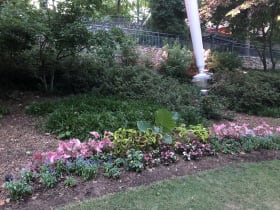
The heart of the experience is the network of trails that thread through the property. They wind along streams, cross footbridges, and pass through a series of themed areas, from a collection of native plants of the Southern Appalachians to a wildflower meadow that changes with the seasons, a fern garden, and woodland plantings tucked among the mature trees.
Because so much of the garden is natural forest rather than clipped lawn, a walk here feels immersive, more a stroll through Upstate woods than a tour of formal beds. Streams and small waterfalls add the sound of moving water, and quiet benches and clearings invite visitors to sit and take in the surroundings. It is a place that rewards unhurried wandering.
Museum and learning center
Within the garden grounds stands the Bob Campbell Geology Museum, a collection of rocks, minerals, gemstones, and fossils that draws on the rich geology of the region. It is a natural pairing with the garden, giving visitors a look beneath the plants at the stone and mineral foundations of the landscape they are walking through.
A natural heritage learning center rounds out the educational side of the garden, with exhibits and programs on the ecology and natural history of South Carolina. Together these facilities make the garden more than a pretty walk, tying the living plants to the geology, wildlife, and cultural history of the Upstate and the wider state.
The foothills and the seasons
The garden sits in the transition zone where the rolling Piedmont climbs toward the Blue Ridge, and that setting shapes what grows and lives here. Nearby Lake Hartwell and the ridges of the Cherokee Foothills frame the horizon, and the woodlands shelter deer, songbirds, and the small creatures of the Southern forest.
Spring is the great show, when azaleas, wildflowers, and the meadow burst into bloom and the air is soft. Summer is green and shady but warm, best enjoyed in the wooded stretches. Fall paints the hardwoods in color and cools the walking, and even winter has its quiet charm, with bare trees opening long views and the camellias that started it all still flowering in the cold.
Closest Boutels
The closest Boutel™ stays, so you can turn this stop into an overnight. Each is a place we chose through independent editorial review, never a paid placement.
The Station by Compo Hotels
Boutel745 Old Buncombe Rd, Travelers Rest, SC 29690, Travelers Rest, SC
29 miles away|Learn More ›
Details
Clemson, SC
Frequently asked questions
What is the South Carolina Botanical Garden?
The South Carolina Botanical Garden, on the campus of Clemson University in the Upstate of South Carolina, is the state's largest botanical garden, a beautiful and expansive garden spread over hundreds of acres. The garden features diverse themed areas, including native plant collections, wildflower meadows, a butterfly garden, woodland trails, streams, ponds, and sculptures, along with a natural history museum and a geology museum on the grounds. Free to visit, it offers a lovely blend of gardens, nature, and education. A treasured green space, it showcases the flora of the region and beyond. With its varied gardens and trails, the South Carolina Botanical Garden offers a delightful destination in South Carolina.
What can you see at the South Carolina Botanical Garden?
You can explore diverse themed gardens including native plants, wildflower meadows, a butterfly garden, and ornamental displays, walk woodland trails past streams and ponds, see outdoor sculptures, and visit the natural history and geology museums on the grounds. The variety of gardens, the trails, and the natural beauty are highlights, offering something for garden lovers, families, and nature enthusiasts, and admission is free. With its varied gardens, trails, sculptures, and museums, the South Carolina Botanical Garden offers an engaging and beautiful experience at Clemson in South Carolina.
Is the South Carolina Botanical Garden free?
Yes, the South Carolina Botanical Garden is generally free to visit, welcoming the public to enjoy its hundreds of acres of gardens, trails, and grounds at no charge, a wonderful value and a gift to the community as part of Clemson University. Some special programs or events may have their own arrangements. Checking current hours before you go is wise. This free access makes it an easy and popular destination for a stroll, a family outing, or a nature walk. With free admission to its beautiful gardens and trails, the South Carolina Botanical Garden offers wonderful value at Clemson in South Carolina.
When is the best time to visit the South Carolina Botanical Garden?
Spring is especially beautiful, when the gardens burst into bloom with wildflowers, flowering trees, and the butterfly garden coming alive, a lovely time, while other seasons offer their own appeal, with lush greenery in summer, color in fall, and interest year-round. The gardens and trails are pleasant in the milder months. For peak blooms and the butterfly garden aim for spring and early summer, and for color, fall, at the South Carolina Botanical Garden at Clemson in South Carolina.
What is near the South Carolina Botanical Garden?
The South Carolina Botanical Garden is on the Clemson University campus in the Upstate of South Carolina, near Clemson and Lake Hartwell, within reach of the Greenville area, Table Rock and Caesars Head State Parks, and the Upstate. That makes the South Carolina Botanical Garden a delightful stop to combine with the Clemson area and the other attractions of the Upstate on a visit to South Carolina.
Nearby

Table Rock State Park
26 miles away
Table Rock is the postcard mountain of the South Carolina Upcountry, a sheer granite dome that rises straight out of the foothills, and the state park sits right at its base.
Falls Park on the Reedy
27 miles away
It is hard to believe now, but for decades a highway bridge sat right on top of these falls and hid them from the city.
Greenville Main Street
27 miles away
Southern downtowns are not usually built for walking, which is what makes Greenville Main Street a surprise.

Blue Ridge Parkway
43 miles away
America's Favorite Drive, a 469-mile mountain parkway with no trucks or billboards, running the crest of the southern Appalachians from Shenandoah to the Great Smokies.