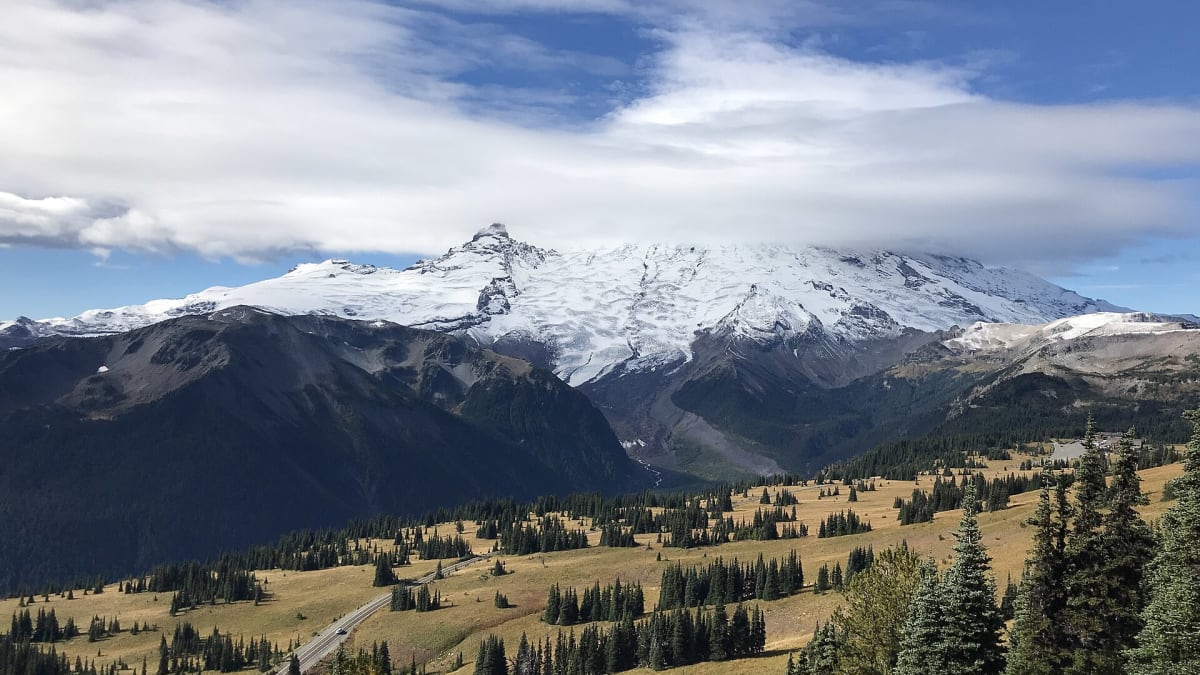
Sunrise
Sunrise, Mount Rainier National Park
Enumclaw, WA
A mile-and-a-quarter-high perch with a face-on view of Mount Rainier and the largest glacier in the lower 48.
Sunrise is the highest point you can drive to in Mount Rainier National Park, a subalpine perch at about 6,400 feet on the mountain's northeast side. From here Mount Rainier fills the sky, and you look straight across at the Emmons Glacier, the largest glacier by area in the lower 48 states, spilling down the mountain's flank.
Because it sits so high, Sunrise has a short, intense season, buried in snow most of the year and open only in the warmth of summer. When it is open, its meadows bloom, its ridge trails throw open views in every direction, and it offers a very different, more alpine experience than the busier Paradise on the other side of the mountain.
What Travelers Love
- The close, face-on view of Mount Rainier and the vast Emmons Glacier
- High subalpine meadows that bloom with wildflowers in the short summer
- Ridge-top trails like Sourdough Ridge with views in every direction
- The feeling of standing above much of the surrounding landscape at over a mile high
Worth Knowing
- The road to Sunrise is seasonal, usually open only from summer into early fall
- At 6,400 feet the air is thin and the weather changes fast, so bring layers and water
- Sunrise is inside Mount Rainier National Park, so an entrance pass is needed
- The lot fills on clear summer days, so arrive early for a parking spot and the best light
Learn about Sunrise
The view and the glaciers
Sunrise faces the great eastern wall of Mount Rainier, and its centerpiece is the Emmons Glacier, a broad river of ice that is the largest glacier by area in the contiguous United States. Short walks to viewpoints like Emmons Vista put the glacier and the summit right in front of you.
At this height the world opens up. On a clear day you can pick out other Cascade volcanoes on the horizon, and the low-angle light of morning and evening sets the mountain glowing, which is part of how Sunrise earned its name.
Trails through the high meadows
A web of trails fans out from the Sunrise area across open subalpine meadows and along ridgelines. The Sourdough Ridge Trail is a popular choice, climbing gently to panoramic views, while longer routes push deeper into the high country toward Frozen Lake and beyond.
The meadows here are fragile and slow to heal, so staying on the trails matters, and the short growing season means the wildflowers put on a compressed, vivid show. Marmots, deer, and mountain goats are often seen on the slopes.
A 1930s mountain outpost
The Sunrise area was developed in the 1930s, when it was known as Yakima Park, and built in the rustic national-park style meant to blend into the landscape. It was envisioned as a grand mountain resort, and while those plans were scaled back, the day lodge and visitor facilities still carry that early-park character.
That history, combined with the elevation and the glacier views, gives Sunrise a distinct feel from the rest of the park. It rewards the longer drive up with a genuinely high-alpine day on Mount Rainier.
Closest Boutels
The closest Boutel™ stays, so you can turn this stop into an overnight. Each is a place we chose through independent editorial review, never a paid placement.
Details
Enumclaw, WA
Frequently asked questions
What is Sunrise in Mount Rainier National Park?
Sunrise is the highest point you can reach by car in Mount Rainier National Park, a subalpine area at about 6,400 feet on the northeast side of the mountain. It offers a close, face-on view of Mount Rainier and the Emmons Glacier, the largest glacier by area in the lower 48 states, along with high wildflower meadows and ridge-top trails with sweeping views. Developed in the 1930s as Yakima Park, Sunrise has a more alpine, less crowded feel than Paradise on the mountain's south side, and its high road is open only in the warm summer months, making it a rewarding high-country destination.
When is Sunrise open?
Because Sunrise sits so high on the mountain, at about 6,400 feet, its road is seasonal and typically opens only from summer into early fall, once the deep snowpack has melted and the road is cleared. In a heavy snow year it can open later, and it closes again with the first serious snows of autumn. Sunrise is not accessible by car in winter. For the wildflowers, the glacier views, and the ridge trails, plan a visit in summer, and always check the current road status before you make the long drive up, since opening and closing dates shift from year to year.
What is there to do at Sunrise?
At Sunrise you can take in the close view of Mount Rainier and the Emmons Glacier from viewpoints like Emmons Vista, hike the many trails that fan out across the high subalpine meadows, and climb gently along Sourdough Ridge for panoramic views of the Cascades. Longer routes lead deeper into the high country toward Frozen Lake and beyond. You can watch for marmots, deer, and mountain goats, enjoy the short but vivid summer wildflower bloom, and visit the historic day lodge and visitor facilities. With its elevation, glacier views, and trail network, Sunrise offers a genuinely alpine day on Mount Rainier.
How do you get to Sunrise at Mount Rainier?
Sunrise is on the northeast side of Mount Rainier National Park and is reached from State Route 410, which runs from the Enumclaw area, by turning onto the Sunrise Road and climbing a long series of switchbacks to the Sunrise area. It is a separate approach from the Nisqually and Paradise side of the park on the southwest. The Sunrise Road is a seasonal, high-elevation route open only in summer and early fall, so plan accordingly, allow extra driving time for the climb, and check the current road status before you go, since the road's opening depends on snow clearing each year.
How is Sunrise different from Paradise?
Sunrise and Paradise are the two great high-country destinations in Mount Rainier National Park, but they sit on opposite sides of the mountain and have a different feel. Paradise, on the busier southwest side, is the most popular spot in the park, lower and reachable year-round to varying degrees, with lush wildflower meadows and the historic Paradise Inn. Sunrise, on the quieter northeast side, is higher at about 6,400 feet, more starkly alpine, and open only in the warm months, with a face-on view of the Emmons Glacier. Many visitors love experiencing both for two very different perspectives on the same mountain.
Nearby
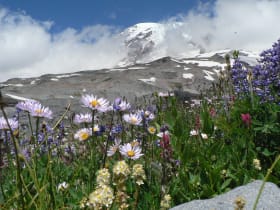
Paradise
9.9 miles away
Paradise is the beloved heart of Mount Rainier, a high subalpine basin famous for summer wildflower meadows that spread right up to the glaciers.

Reflection Lakes
11 miles away
Reflection Lakes are a pair of small subalpine lakes along Stevens Canyon Road that hold one of the most iconic views in the park: Mount Rainier mirrored in still water on a calm morning.

Narada Falls
11 miles away
Narada Falls is a powerful 168-foot waterfall on the Paradise River, one of the most popular stops on the road to Paradise.
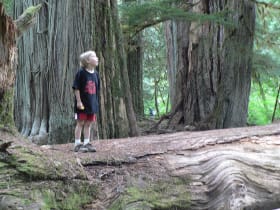
Grove of the Patriarchs
11 miles away
The Grove of the Patriarchs is a stand of ancient old-growth trees on an island in the Ohanapecosh River, some of them western redcedars and Douglas firs more than a thousand years old.
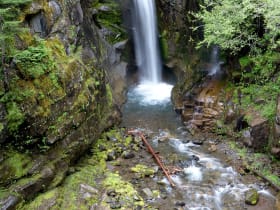
Christine Falls
11 miles away
Christine Falls is a graceful 69-foot waterfall on Van Trump Creek, most famous for the view from below, where the lower tier is perfectly framed beneath an elegant 1928 stone highway bridge.

Longmire Historic District
14 miles away
Longmire is the historic heart of Mount Rainier National Park, where James Longmire opened a mineral springs resort in 1883.