
Grove of the Patriarchs
Ohanapecosh, Mount Rainier National Park
Packwood, WA
An island of ancient old-growth trees, some more than a thousand years old, in the clear Ohanapecosh River.
The Grove of the Patriarchs is a stand of ancient trees on a small island in the Ohanapecosh River, protected from the fires that shaped much of the surrounding forest. Some of these western redcedars, Douglas firs, and western hemlocks have been growing for more than a thousand years, and standing among them is a humbling reminder of how old a forest can become.
A flat, easy trail winds through the woods along the clear river to reach the grove, making it one of the most rewarding short walks in the park. The giants rise straight and impossibly tall out of a green understory, and the whole grove has the cool, quiet feel of a natural cathedral.
What Travelers Love
- Ancient western redcedars and Douglas firs, some more than a thousand years old
- The clear, blue-green water of the Ohanapecosh River along the trail
- The cool, hushed, cathedral feel of standing among the giants
- A short, mostly flat walk that reaches truly old-growth forest
Worth Knowing
- Access can change with river flooding and bridge repairs, so confirm the trail is open before you go
- The grove sits inside Mount Rainier National Park, so an entrance pass is needed
- The trees and their shallow roots are fragile, so stay on the trail and any boardwalk
- The southeast corner of the park is reached by seasonal roads, closed by snow much of the year
Learn about Grove of the Patriarchs
Why the trees grew so old
The grove survives because of its island. Cut off from the surrounding slopes by the river, it was largely spared the wildfires that periodically swept the valley, so the trees kept growing for centuries while forests elsewhere burned and started over.
The result is a rare pocket of very old growth. The largest redcedars are enormous, their trunks broad enough that several people together can barely reach around them, and their age is measured not in decades but in many centuries.
The walk to the grove
The trail is mostly flat and follows the beautiful Ohanapecosh River, whose water runs a clear blue-green over pale stones. It is a gentle walk suitable for most visitors, and interpretive signs help tell the story of the ancient forest.
Because the grove sits across the river, reaching the island has traditionally meant crossing a footbridge, and river floods and bridge conditions can affect access from year to year. It is always worth checking whether the trail and any bridge are open before you plan your visit.
Closest Boutels
The closest Boutel™ stays, so you can turn this stop into an overnight. Each is a place we chose through independent editorial review, never a paid placement.
Details
Packwood, WA
Frequently asked questions
What is the Grove of the Patriarchs at Mount Rainier?
The Grove of the Patriarchs is a stand of ancient old-growth trees on a small island in the Ohanapecosh River, in the southeast corner of Mount Rainier National Park. Protected from wildfire by the surrounding river, some of its western redcedars, Douglas firs, and western hemlocks have been growing for more than a thousand years, making them among the oldest and largest trees in the park. A flat, easy trail leads through the forest to the grove, where the giants tower in a cool, hushed, cathedral-like setting, making it one of the most beloved short walks in Mount Rainier.
How old are the trees in the Grove of the Patriarchs?
Some of the trees in the Grove of the Patriarchs are estimated to be more than a thousand years old, which is why the grove carries that name. The ancient western redcedars in particular are enormous, with trunks so broad that several people linking hands can barely reach around them. The grove survived for so long because it grows on an island in the Ohanapecosh River, which shielded it from the wildfires that periodically reset the surrounding forest. Walking among these centuries-old giants offers a rare and humbling glimpse of what an ancient Pacific Northwest forest looks like.
Is the Grove of the Patriarchs trail open?
Access to the Grove of the Patriarchs can change from year to year, because reaching the island has traditionally required crossing a footbridge over the Ohanapecosh River, and river flooding and bridge conditions can affect the trail. For that reason it is important to check the park's current trail and access information before planning your visit, since the crossing may be closed or altered at times. The southeast corner of the park is also reached by seasonal roads that close with snow for much of the year, so the grove is generally a summer and early-fall destination.
How do you get to the Grove of the Patriarchs?
The Grove of the Patriarchs is near the Stevens Canyon Entrance on the southeast side of Mount Rainier National Park, in the Ohanapecosh River valley close to the gateway town of Packwood. Most visitors reach it via State Route 123 and the Stevens Canyon Entrance, with the trailhead a short distance inside the park. The roads into this corner of the park are seasonal and close with snow for much of the year, so the grove is best visited in summer or early fall. Always check the current road and trail status before you go, since both the access road and the river crossing can be affected by conditions.
What else is near the Grove of the Patriarchs?
The Grove of the Patriarchs sits in the southeast part of Mount Rainier National Park, within reach of some of the park's south-side highlights via Stevens Canyon Road. To the west lie Reflection Lakes, with their mirror view of the mountain, Narada Falls on the Paradise River, and Paradise itself, with its wildflower meadows and historic inn. The nearby Ohanapecosh area offers old-growth forest and the clear river. That makes the Grove of the Patriarchs a natural stop to combine with the scenic drive along Stevens Canyon toward Paradise on a visit to the eastern side of Mount Rainier.
Nearby

Reflection Lakes
8.4 miles away
Reflection Lakes are a pair of small subalpine lakes along Stevens Canyon Road that hold one of the most iconic views in the park: Mount Rainier mirrored in still water on a calm morning.
Paradise
8.7 miles away
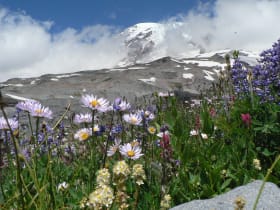
Paradise is the beloved heart of Mount Rainier, a high subalpine basin famous for summer wildflower meadows that spread right up to the glaciers.

Narada Falls
9.2 miles away
Narada Falls is a powerful 168-foot waterfall on the Paradise River, one of the most popular stops on the road to Paradise.
Christine Falls
11 miles away
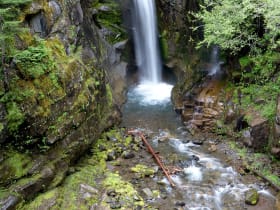
Christine Falls is a graceful 69-foot waterfall on Van Trump Creek, most famous for the view from below, where the lower tier is perfectly framed beneath an elegant 1928 stone highway bridge.

Sunrise
11 miles away
Sunrise is the highest point you can reach by car in Mount Rainier National Park, at about 6,400 feet, with a face-on view of the mountain and the vast Emmons Glacier, the largest glacier in the lower...

Longmire Historic District
12 miles away
Longmire is the historic heart of Mount Rainier National Park, where James Longmire opened a mineral springs resort in 1883.