
South Pass City Historic Site
South Pass City Rd
Lander, WY
A whole gold-rush town restored in a mountain gulch near the Oregon Trail, where the nation's first woman judge held court and the Carissa Mine still stands.
South Pass City is the rare gold-rush town that never disappeared. When prospectors struck rich gold-bearing quartz at the Carissa lode in June of 1867, a rush swept into these mountains near the Oregon Trail's famous South Pass, and within two years a full town had risen along Willow Creek: hotels and saloons, stores and a school, a newspaper and hundreds of eager residents. At its peak in 1869 it was one of the largest towns in the territory and briefly its second incorporated city.
The easy gold played out fast, and by the mid-1870s the boom was over and most of the people had gone. But the buildings stayed, and in time Wyoming took the town into its care. Today South Pass City is a state historic site with more than two dozen original structures restored and furnished, so a visitor does not just read about a mining boomtown but walks straight down its main street into one.
What Travelers Love
- A restored gold-rush town of two dozen-plus original buildings, not just a ruin or two
- Walking into a real 1860s saloon, store, hotel, and cabins furnished as they were
- The Carissa Mine and stamp mill standing above the town, the reason it all began
- Standing where the nation's first woman justice of the peace held court in 1870
Worth Knowing
- The site is a Wyoming State Historic Site that opens for the warm season, so check ahead before a long drive and expect it closed in winter
- The last miles in are on a graded gravel road that is easy in dry weather but can be rough or muddy after rain and is not maintained in winter
- It sits high in the mountains and the weather turns fast, so bring layers, water, and sun protection even on a summer day
- Give yourself a couple of unhurried hours to walk the whole town and the mine, since there are no services once you leave the highway
Learn about South Pass City Historic Site
The Carissa strike and the boom
The story starts with the Carissa. In June of 1867 prospectors traced gold to a quartz lode on the hill above Willow Creek, and word of the strike pulled miners and merchants into the Sweetwater country in a hurry. South Pass City grew up right below the mine as the supply and social center of the new district, and by 1868 it had been incorporated, the second town in Wyoming Territory to earn that standing.
At its height around 1869 the town held close to a thousand people and something like two hundred and fifty buildings, an instant city of frame storefronts and log cabins in a mountain gulch that had been empty a couple of years before. The Carissa Mine was its beating heart and its curse, for the town rose and fell on the mine's fortunes. When the shallow, easy ore gave out by the early 1870s and deeper mining grew too costly, the crowds drifted away as fast as they had come, and South Pass City slid toward ghost-town quiet.
Where women first won the vote and the bench
South Pass City holds a place in national history far larger than its size. In December of 1869 the brand-new Wyoming Territory became the first government in the nation to grant women the right to vote and hold office, and the man who introduced that suffrage bill in the legislature, William Bright, was a South Pass City saloonkeeper and mine official.
The following February the town made history again. Esther Hobart Morris, a local woman, was appointed justice of the peace, the first woman in the country to hold a judicial office. Her very first case was to prosecute the previous justice, who had resigned in protest and refused to hand over the court's records. Over her months on the bench she heard dozens of cases without a single one overturned, quiet proof, in a rough mining camp, that the new law worked. A cabin site in town marks her connection, and Wyoming's nickname, the Equality State, traces straight back to what happened here.
A town saved, and the Carissa reborn
What makes South Pass City special is that it survived. A small population lingered through the lean decades, and mining flared up now and then, but no modern city rolled over the old townsite. In the 1960s Wyoming acquired the town and began preserving it, and today the state historic site cares for more than two dozen original buildings, many restored and furnished with period pieces so that the hotel, saloon, general store, school, and homes feel lived in rather than merely labeled.
The Carissa Mine itself, which ran on and off until it finally closed in the 1950s, came into state hands in the early 2000s, and a major stabilization effort has preserved the headframe, hoist, and stamp mill on the hill above town. Together the restored streets and the standing mine let a visitor read the whole arc of a hardrock gold camp in one place, from the quartz that started it to the parlors of the families who stayed.
It is that completeness that sets South Pass City apart from the lonelier ghost towns of the West. You do not squint to imagine the town that once stood here. You walk right through it.
Visiting South Pass City
South Pass City lies southeast of Lander in the southern Wind River Mountains, reached by turning off the highway and following a graded gravel road the last few miles into the gulch. The road is easy in dry weather but can be rough or muddy after rain, and it is not kept up in winter, so aim for a fair-weather day and top off fuel and water in Lander first, since there are no services at the site.
The town opens for the warm season, so check ahead before a long detour. Plan on a couple of unhurried hours to stroll the main street, step inside the restored buildings, and walk up to the Carissa Mine above town. It is high, windy country, so pack layers even in summer. For anyone who loves real history standing where it happened, this is one of the finest restored boomtowns in the West, still holding its ground on Willow Creek.
Closest Boutels
The closest Boutel™ stays, so you can turn this stop into an overnight. Each is a place we chose through independent editorial review, never a paid placement.
Details
Lander, WY
Frequently asked questions
What is South Pass City Historic Site?
South Pass City Historic Site, in the mountains of west-central Wyoming near Lander, preserves a remarkably intact nineteenth-century gold-mining town, a collection of original buildings from Wyoming's gold-rush era set in a scenic high-country valley. Once a bustling boomtown after gold was discovered nearby, South Pass City has been carefully restored, and visitors can walk its streets and step into authentic historic structures, from cabins and a saloon to shops and a mine, furnished to evoke frontier life. Near the famous South Pass where emigrant trails crossed the Continental Divide, it offers a vivid window into pioneer and mining history in west-central Wyoming.
What can you do at South Pass City Historic Site?
You can walk the streets of the restored gold-mining town, step inside dozens of original historic buildings furnished to show frontier life, from cabins, a saloon, and shops to a hotel and mining structures, tour a historic gold mine, learn about the gold rush and the emigrant trails at the nearby South Pass, and enjoy the scenic high-country setting. Interpretive displays and sometimes living-history events bring the era to life. The authenticity of the town is remarkable. With its restored buildings, mining history, and pioneer stories, South Pass City offers a vivid historic experience near Lander in west-central Wyoming.
Why is South Pass historically important?
South Pass is historically important because it is the broad, gentle gap through the Rocky Mountains where the Oregon, California, and Mormon trails crossed the Continental Divide, making it one of the most significant landmarks of the great westward migration, as its easy grade allowed hundreds of thousands of emigrants and their wagons to cross the mountains. The later discovery of gold nearby gave rise to South Pass City. The area also played a notable role in the early history of women's voting rights in Wyoming. This rich history makes South Pass City and the surrounding area a meaningful destination in west-central Wyoming.
When is the best time to visit South Pass City Historic Site?
South Pass City is typically open seasonally in the warmer months, generally from around late spring through fall, so those are the times to visit, with summer offering the fullest access, pleasant high-country weather, and sometimes living-history events, while the site is closed and the high road snowbound in winter. Checking current seasonal hours before you go is wise. Even summer can be cool at the elevation, so bring layers. For the best weather, full access, and possible events, aim for summer at South Pass City Historic Site near Lander in west-central Wyoming.
What is near South Pass City Historic Site?
South Pass City Historic Site is in the mountains near Lander in west-central Wyoming, near the famous South Pass on the Continental Divide, the emigrant trail corridor, Sinks Canyon State Park, and within reach of Lander, the Wind River Range, and the route toward Pinedale. That makes South Pass City a vivid historic stop to combine with Lander, Sinks Canyon State Park, and the other attractions of west-central Wyoming on a visit to the state.
Nearby
Sinks Canyon State Park
18 miles away
Sinks Canyon State Park 8 miles south of Lander is named for the Middle Fork of the Popo Agie River, which flows into a cave in the limestone canyon wall and disappears - only to reappear 0.25 miles d...
Killpecker Sand Dunes and Boars Tusk
38 miles away
North of Rock Springs, the Red Desert hides one of the largest active dune fields in the country, a shifting sea of sand stretching for miles across the high desert.
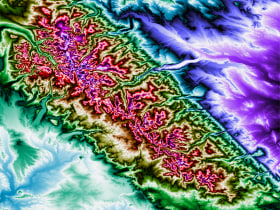
Wind River Range
50 miles away
The Wind River Range holds over 40 named glaciers and more than 1,300 lakes above 9,000 feet.