
Sinks Canyon State Park
Sinks Canyon Rd, Lander, WY
Lander, WY
A river that disappears into a mountainside cave and wells up again in a trout-filled pool a quarter mile away, a puzzle geologists still study.
Sinks Canyon State Park protects one of Wyoming's most curious natural wonders. The Popo Agie River, rushing down out of the Wind River Range, suddenly pours into a large cave in the canyon wall, the Sinks, and disappears underground. A quarter mile down the canyon the water wells back up in a calm, deep pool called the Rise, filled with big trout.
What makes it stranger still is that more water seems to emerge at the Rise than went into the Sinks, and the water that comes out is warmer, and it takes longer to travel underground than a straight path would allow. Scientists have studied the puzzle for years, and it only adds to the wonder of a place already set in a beautiful canyon on the doorstep of the high mountains.
What Travelers Love
- Watching the whole river pour into the Sinks cave and vanish underground
- The Rise, a calm pool downstream full of big trout, where the water returns
- Rock climbing on the canyon's famous walls
- Hiking trails climbing toward the high country of the Wind River Range
Worth Knowing
- The visitor center and some facilities are seasonal, so check hours before an off-season trip
- You may feed the trout at the Rise with food sold on site, but not fish for them there
- The canyon road climbs toward high trailheads and can be rough and snowy in shoulder seasons
- Watch children near the powerful water at the Sinks
Learn about Sinks Canyon State Park
The Sinks and the Rise
At the Sinks, the full flow of the Popo Agie River thunders into the mouth of a cave in a wall of dolomite rock and vanishes from sight. The water works its way through cracks and channels in the soluble rock, hidden underground for a stretch of the canyon.
Then, a quarter mile downstream, it reappears at the Rise, a deep, clear pool where the water bubbles up calm and cold, thick with large trout that gather to be fed. Standing at each spot, you can watch a whole mountain river disappear and return, a rare and vivid piece of natural plumbing.
The mystery in the rock
The disappearing act is caused by the dissolving of the dolomite bedrock, which cave water has honeycombed with passages over long ages, letting the river slip underground. That much is understood, but the details remain a genuine mystery.
Dye studies have shown that the water takes surprisingly long to travel between the Sinks and the Rise, that more water emerges than enters, and that it comes out a little warmer. The likely answer involves large hidden reservoirs and slow underground flow within the rock, but the exact workings are still not fully known, which is part of the site's charm.
Canyon walls and mountain trails
Sinks Canyon is a rugged, scenic gorge with tall rock walls that have made it a well-known destination for rock climbers, who work routes on the canyon's cliffs. The Popo Agie itself offers fishing and cool riverside picnicking in the shade of pines.
Trails climb from the canyon toward the high country of the Wind River Range, including routes up switchbacks to alpine lakes and viewpoints. The canyon road continues into the mountains, so the park is both a destination and a gateway to the wilderness above.
Wildlife, the mountains, and seasons
The canyon is home to bighorn sheep on the crags, mule deer, moose in the willow bottoms, marmots and pikas in the rocks, and a range of birds, with the big trout gathered at the Rise a highlight in themselves. The mix of river, forest, and cliff packs a lot of life into a small canyon.
The park lies on the edge of the Eastern Shoshone and Northern Arapaho homeland, near the Wind River Reservation, and that deep history colors the whole region. Summer brings warm days and full flow, fall is crisp and gold, and winter quiets the canyon under snow, when the river still slips into its cave beneath the ice.
Closest Boutels
The closest Boutel™ stays, so you can turn this stop into an overnight. Each is a place we chose through independent editorial review, never a paid placement.
Details
Lander, WY
Frequently asked questions
What is Sinks Canyon State Park?
Sinks Canyon State Park, near the town of Lander in west-central Wyoming, is a beautiful canyon park in the foothills of the Wind River Range, famous for a remarkable geologic phenomenon: the Popo Agie River disappears into a cave in the canyon wall, called the Sinks, and then reemerges a quarter mile downstream in a calm pool called the Rise. Intriguingly, the water takes longer to travel underground than expected and more water comes out than goes in, adding to the mystery. Along with this natural wonder, the park offers hiking, climbing, camping, fishing, and beautiful canyon scenery. With its disappearing river, trails, and scenery, Sinks Canyon State Park offers a fascinating natural destination near Lander, Wyoming.
What are the Sinks and the Rise at Sinks Canyon?
The Sinks and the Rise are the two ends of a remarkable natural phenomenon at Sinks Canyon State Park. At the Sinks, the Popo Agie River flows into a cave opening in the canyon's limestone wall and disappears underground. About a quarter mile downstream, the water reemerges at the Rise, a calm, spring-fed pool. Curiously, dye studies have shown the water takes far longer to travel underground than expected, and more water flows out at the Rise than into the Sinks, mysteries not fully explained. Visitors can view both the Sinks and the Rise, where large trout gather, making this disappearing river a fascinating highlight of the park.
What can you do at Sinks Canyon State Park?
You can view the fascinating Sinks, where the river disappears into the cave, and the Rise, where it reemerges with large trout gathering, hike the canyon trails ranging from easy walks to more strenuous routes, rock climb on the canyon's popular cliffs, camp at the campgrounds, fish, watch for wildlife including bighorn sheep, and enjoy the beautiful canyon scenery, with a visitor center explaining the geology. The disappearing river is the star attraction. With its geologic wonder, trails, climbing, camping, and scenery, Sinks Canyon State Park offers a fascinating and rewarding outdoor experience near Lander in west-central Wyoming.
When is the best time to visit Sinks Canyon State Park?
Late spring through fall is ideal for hiking, climbing, camping, and enjoying the canyon, with summer offering warm weather and the river most active, and fall bringing beautiful color, while the Sinks and Rise can be viewed whenever the park is accessible. The river flow is highest in late spring and early summer from snowmelt. Winter is cold and quiet. For the best combination of comfortable weather, full recreation, and an active river, aim for late spring through fall at Sinks Canyon State Park near Lander, Wyoming.
What is near Sinks Canyon State Park?
Sinks Canyon State Park is near the town of Lander in west-central Wyoming, a gateway to the Wind River Range, near the Wind River Indian Reservation, the South Pass City historic site, and within reach of Pinedale, Dubois, and the Wind River country. That makes Sinks Canyon State Park a fascinating natural stop to combine with Lander, the Wind River Range, South Pass City, and the other attractions of west-central Wyoming on a visit to the state.
Outside the Park
South Pass City Historic Site
18 miles away
One of the finest restored gold-rush towns in the West, South Pass City preserves more than two dozen original 1860s buildings along Willow Creek beneath the Carissa Mine.
Wind River Range
42 miles away
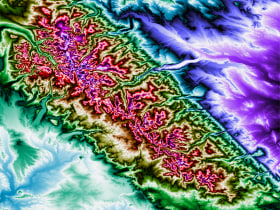
The Wind River Range holds over 40 named glaciers and more than 1,300 lakes above 9,000 feet.

Fremont Lake
53 miles away
Fremont Lake 5 miles north of Pinedale is Wyoming's second largest natural lake, glacially carved and 600 feet deep.