
Safe House Black History Museum
403 Demopolis St, Greensboro, AL
Greensboro, AL
In this small house, townspeople hid Dr. King from the Klan on a tense night in 1968, and it now stands as a museum of that courage.
The Safe House Black History Museum in Greensboro preserves the memory of a tense night in March 1968, when Dr. Martin Luther King Jr. came to town to organize and found himself in danger from the Ku Klux Klan. Members of the local Black community hid him inside this modest house, standing guard through the night to protect him, and the home has since become a museum honoring that act of courage.
The museum tells its story from the ground up, through the memories and artifacts of the community that lived it. Beyond that single dramatic night, it preserves the broader, often-overlooked history of the civil rights movement in the rural Black Belt, where ordinary people risked everything for the cause, far from the cameras that captured the movement's more famous moments.
What Travelers Love
- The powerful, true story of ordinary people protecting Dr. King
- A grassroots museum told from the community's own perspective
- Exhibits on local civil rights history often overlooked in the larger narrative
- The chance to stand in the actual house where the events unfolded
Worth Knowing
- This is a small, community-run museum, so it is best to confirm arrangements ahead of a visit
- The story it tells is serious and moving; approach it with respect
- It sits in the rural Black Belt, an area rich in overlooked civil rights history
- It pairs naturally with other movement sites across central Alabama
Learn about Safe House Black History Museum
The night they hid Dr. King
In March 1968, weeks before his assassination, Dr. Martin Luther King Jr. traveled through the Black Belt, and a stop in Greensboro turned dangerous when word spread that the Klan intended to find him. Rather than let him leave into the night and possible harm, members of the local Black community brought him to this house and stood watch, armed and determined, until the threat passed.
It was a moment of quiet, extraordinary courage, ordinary townspeople placing themselves between a national leader and those who meant him harm. The house became known as the Safe House for what happened within it, and the story has been preserved and passed down by the people of Greensboro who lived it.
A community's museum
The Safe House Black History Museum grew out of the community's determination to remember and honor that night and the larger struggle around it. It was established in the very house where King was sheltered, and it is run as a grassroots, community-centered institution rather than a large, polished museum.
That intimacy is its strength. The exhibits and stories come directly from the people and families of Greensboro, giving visitors a firsthand, deeply local account of the civil rights years in the rural South. It stands as a reminder that the movement was carried not only by famous leaders but by countless unnamed people in small towns like this one.
The Black Belt and the movement
Greensboro lies in the Black Belt, the swath of dark, fertile soil across central Alabama that was cotton-plantation country and remains home to a large African American population with deep roots in the land. This region was a crucial and often perilous front in the civil rights struggle, with its own campaigns for voting rights, dignity, and justice.
The Safe House Museum helps tell that overlooked chapter, honoring the local activists, families, and everyday people of the rural counties who sustained the movement. It offers a fuller picture of the era than the famous marches alone, rooted in the specific courage of one small Alabama town.
A stop on the Alabama civil rights trail
A visit to the Safe House pairs naturally with the wider network of civil rights sites across central Alabama, from Selma and Montgomery to Birmingham, each preserving a different piece of the struggle. Together they trace the movement's course through the state that was so central to it.
Because it is small and community-run, it is worth planning ahead and confirming arrangements before a visit. The reward is a rare, personal encounter with history in the place where it happened, told by the community that made it.
Closest Boutels
The closest Boutel™ stays, so you can turn this stop into an overnight. Each is a place we chose through independent editorial review, never a paid placement.
Details
Greensboro, AL
Frequently asked questions
What is the Safe House Black History Museum?
The Safe House Black History Museum, in Greensboro, Alabama, is a small but powerful museum housed in the very home where Dr. Martin Luther King Jr. was sheltered and hidden from the Ku Klux Klan one night in 1968. When Dr. King came to Greensboro during the Civil Rights Movement and the Klan sought him, local Black residents protected him in this house, an act of courage that the museum now commemorates. The museum preserves that story and the broader history of the Civil Rights struggle and Black history in the region, honoring the ordinary people who risked their lives for justice. A moving testament to courage, the Safe House Black History Museum offers a meaningful destination in Alabama.
Why is the Safe House Black History Museum significant?
The Safe House Black History Museum is significant because it preserves the house where, in 1968, local Black residents of Greensboro sheltered and protected Dr. Martin Luther King Jr. from the Ku Klux Klan, who were searching for him, an extraordinary act of courage by ordinary community members. The museum honors that night and the larger story of the Civil Rights Movement, the danger faced by those who stood for justice, and the history of the local Black community. It gives voice to the everyday heroes of the movement. This powerful history makes the Safe House Black History Museum a meaningful landmark in Greensboro, Alabama.
What can you see at the Safe House Black History Museum?
You can see the house where Dr. King was sheltered from the Klan and learn the moving story of that night, along with exhibits, artifacts, and remembrances documenting the Civil Rights Movement, the courage of the local Black community, and Black history in the region. The preserved safe house, the firsthand story of protecting Dr. King, and the community history are the heart of the visit, offering a deeply personal and powerful window into the movement. It honors ordinary people's courage. With its history and artifacts, the Safe House Black History Museum offers a meaningful visit in Greensboro, Alabama.
What should visitors know before visiting the Safe House Black History Museum?
Visitors should know that this is a small, community-based museum preserving a profoundly meaningful piece of Civil Rights history, best approached with respect and reflection. Because it is a modest, locally run museum, its hours may be limited and can vary, so calling ahead or checking the current schedule, and arranging a visit if needed, before you go is important. Taking time to absorb the personal story it tells is worthwhile. Approaching it thoughtfully and confirming access ahead ensures a meaningful visit to the Safe House Black History Museum in Greensboro, Alabama.
What is near the Safe House Black History Museum?
The Safe House Black History Museum is in Greensboro in Alabama's Black Belt region, within reach of the Civil Rights landmarks of Selma with the Edmund Pettus Bridge to the northwest, Moundville Archaeological Park to the north, and the historic towns and countryside of the Black Belt. That makes the Safe House Black History Museum a meaningful stop to combine with the Selma landmarks, Moundville Archaeological Park, and the other historic sites of west-central Alabama on a visit to the state.
Nearby
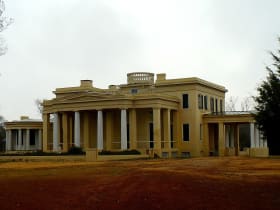
Gaineswood National Historic Landmark
19 miles away
Demopolis hides one of the strangest and finest antebellum houses in America, and few people outside Alabama have heard of it.
Moundville Archaeological Park
21 miles away
Moundville is a landscape shaped by human hands nearly a thousand years ago and now settled back into forest and grass along the Black Warrior River.
Old Cahawba Archaeological Park
39 miles away
Most people driving through the Black Belt have no idea a whole vanished city sits back in these woods.