
Reynolda House Museum of American Art
2250 Reynolda Rd, Winston-Salem, NC
Winston-Salem, NC
A tobacco heiress's country bungalow turned into a museum of American art, its rooms hung with masterworks and its grounds laid out as a working country estate.
Reynolda House is the country home built between 1912 and 1917 by Katharine Smith Reynolds and her husband R. J. Reynolds, founder of the R. J. Reynolds Tobacco Company, and today it is one of the finest small museums of American art in the South. Its rooms hold paintings by artists such as Gilbert Stuart, Frederic Church, Thomas Eakins, Georgia O'Keeffe, and Jacob Lawrence, hung not in white galleries but in the living spaces of a preserved family home.
What makes it a gem is that pairing of great art and intact domestic history. You walk through the actual bedrooms, the sun-filled reception hall, the attic playroom, the bowling alley, and the indoor swimming pool of a real household, and around every corner hangs a canvas by a major American painter. It is a house and a collection at once.
What Travelers Love
- American masterworks hung in the actual rooms of a family home rather than sterile galleries
- The preserved 1917 interiors, from the attic playroom and bowling alley to the basement pool
- Strolling the formal gardens, greenhouses, and woodland trails on the grounds
- A sense of stepping into the private world of an early tobacco fortune
Worth Knowing
- The gardens and estate grounds welcome visitors and are a lovely walk on their own
- The house is a historic building with stairs and period rooms, so plan for a slower, self-paced visit
- It sits beside Wake Forest University and Reynolda Village, easy to combine into an afternoon
- Downtown Winston-Salem and Old Salem are a short drive away for a fuller day
Learn about Reynolda House Museum of American Art
Katharine Reynolds and the estate she built
Katharine Smith Reynolds was far more than the wife of a tobacco magnate. Educated and ambitious, she conceived Reynolda as a self-sufficient country estate and a model of progressive farming and community, complete with dairy herds, orchards, formal gardens, a village of workers' cottages, a school, and a church. She oversaw the design of the low, white, bungalow-style main house, finished in 1917, choosing comfort and light over the grand mansion style of the age.
R. J. Reynolds died in 1918, only a year after the house was completed, and Katharine died a few years later, still young. The estate stayed in the family for decades before their daughter and her husband established the art museum, which opened to the public in 1967. The land here, like all of the North Carolina Piedmont, was long the home of Native peoples, including groups related to the Saura and Tutelo, before European settlement.
The art inside a home
The collection tells the story of American art from the colonial era to the present, and its strength is that you meet it in a domestic setting. A grand landscape by a Hudson River School painter might hang over a fireplace, a colonial portrait watch over a stairway, a modern canvas share a room with the family's own furnishings. The effect is intimate in a way few museums manage.
The holdings include works by John Singleton Copley, Gilbert Stuart, Frederic Church, Thomas Eakins, Mary Cassatt, Georgia O'Keeffe, Jacob Lawrence, and Romare Bearden, among many others, spanning centuries and movements. Special exhibitions rotate through as well, so a return visit often brings something new alongside the permanent favorites.
The house itself
Beyond the paintings, the house is a time capsule of early twentieth-century American life for a wealthy family. The preserved lower level holds an indoor swimming pool, a bowling alley, a shooting range, and a bar, the recreations of a household that meant to entertain itself in style. Upstairs, the bedrooms and the sunny attic playroom show how the Reynolds children lived.
Katharine Reynolds built the home with modern comforts for its time and a warm, informal spirit rather than cold formality. Walking through it, you get a rare, unguarded look at the private life behind one of the great Southern fortunes, and at the taste and ideas of the woman who created it.
The gardens and grounds
The estate's formal gardens, greenhouses, and woodland trails survive as Reynolda Gardens, open to visitors as a public green space. The formal beds change with the seasons, the old greenhouses shelter tender plants, and paths lead out through fields and along a stream, remnants of the working country estate Katharine planned.
Adjacent Reynolda Village, once the estate's dairy barns, cottages, and service buildings, has become a cluster of shops and eateries, and Wake Forest University sits just across the way. Spring and early summer show the gardens at their fullest, while autumn brings color to the surrounding woods, making any season a fine time to pair the art indoors with a walk outside.
Closest Boutels
The closest Boutel™ stays, so you can turn this stop into an overnight. Each is a place we chose through independent editorial review, never a paid placement.
Details
Winston-Salem, NC
Frequently asked questions
What is the Reynolda House Museum of American Art?
The Reynolda House Museum of American Art, in Winston-Salem, North Carolina, is a distinguished art museum housed in the beautiful historic mansion of the Reynolds family, of tobacco fortune fame, surrounded by lovely gardens and grounds. The elegant early twentieth-century estate house displays an outstanding collection of American art spanning centuries, from colonial portraits to modern works by renowned artists, within the atmospheric setting of the preserved home and its period furnishings. The surrounding Reynolda grounds add gardens, a village of shops, and trails. Blending fine American art with a historic estate, it offers a refined cultural experience. With its art collection and historic mansion, the Reynolda House Museum of American Art offers a fascinating destination in North Carolina.
What can you see at the Reynolda House Museum of American Art?
You can view an outstanding collection of American art spanning centuries, from colonial-era portraits to modern and contemporary works by renowned artists, displayed within the beautiful historic Reynolds family mansion with its period rooms and furnishings, and stroll the surrounding gardens and grounds. The distinguished American art collection, the elegant historic estate setting, and the lovely gardens are the highlights, offering a refined blend of art and history. The nearby Reynolda grounds add shops and trails. With its art and historic mansion, the Reynolda House Museum of American Art offers a rewarding visit in North Carolina.
When is the best time to visit the Reynolda House Museum of American Art?
As an indoor museum, the Reynolda House is enjoyable year-round in any weather, making it a great stop in any season, while the mild months of spring through fall are especially pleasant for also strolling the surrounding gardens and grounds, lovely in bloom. It can be busier around special exhibitions. Because hours can vary, checking the current schedule before you go is wise. For the fullest experience with the gardens aim for spring through fall, or visit the museum any time of year, at the Reynolda House Museum of American Art in North Carolina.
What should I know before visiting the Reynolda House Museum of American Art?
Admission is charged for the museum, and the site includes both the historic house museum and the surrounding Reynolda gardens, grounds, and village, so allowing time for both is worthwhile, with comfortable shoes for the grounds. Hours and special exhibitions vary, so checking the current schedule before you go is wise. The historic house has some stairs, though accessibility accommodations may be available. Planning around the hours and the grounds ensures a rewarding visit to the Reynolda House Museum of American Art in Winston-Salem, North Carolina.
What is near the Reynolda House Museum of American Art?
The Reynolda House Museum of American Art is in Winston-Salem, North Carolina, near the Reynolda gardens and village, within reach of Old Salem Museums and Gardens, downtown Winston-Salem, and the Piedmont region, with the Blue Ridge Mountains to the west. That makes the Reynolda House Museum of American Art a fascinating stop to combine with Old Salem Museums and Gardens and the other attractions of the Winston-Salem area on a visit to North Carolina.
Nearby
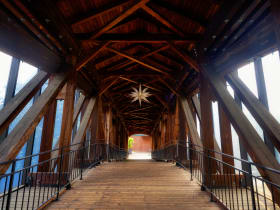
Old Salem Museums and Gardens
4.2 miles away
People know colonial Williamsburg; far fewer know North Carolina has its own deeply preserved colonial town.

International Civil Rights Center and Museum
28 miles away
Many travelers pass through Greensboro without knowing that a turning point of the civil rights movement happened right downtown.

Blue Ridge Parkway
38 miles away
America's Favorite Drive, a 469-mile mountain parkway with no trucks or billboards, running the crest of the southern Appalachians from Shenandoah to the Great Smokies.
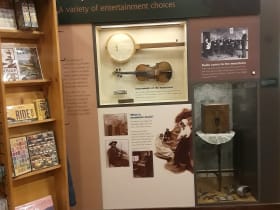
Blue Ridge Music Center
44 miles away
Right on the Blue Ridge Parkway, this is where the regions music is honored and, better, actually played.