
Oregon Dunes
Florence
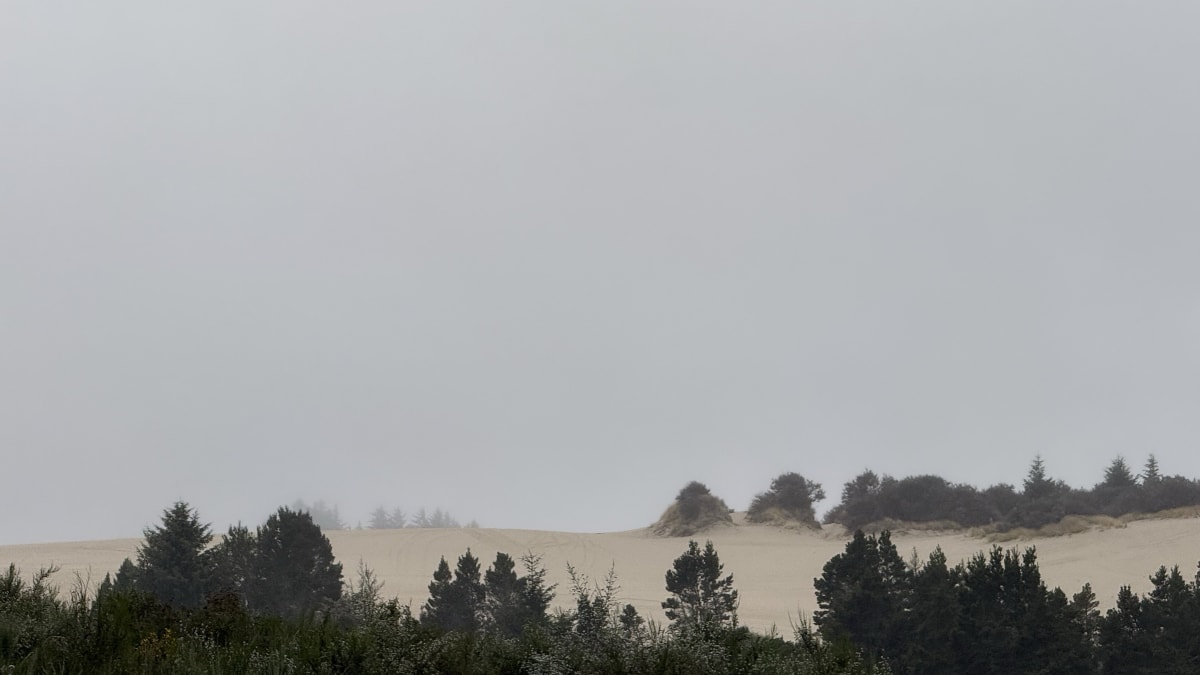
The Oregon Dunes are the largest expanse of coastal sand dunes in North America, a forty-mile sea of sand running down the coast from the Siuslaw River near Florence to the Coos River, with some dunes rising as high as 500 feet above the ocean. Walk out into them and the ordinary world drops away: no trees, no clear horizon, just wind-sculpted ridges of pale sand stretching toward the surf.
If they feel like another planet, there is a reason. These are the dunes that gave us Dune. In 1957 a journalist named Frank Herbert came to Florence to write about them, and what he saw here became the desert world of Arrakis in one of the most famous novels ever written.
Learn about Oregon Dunes
The story of the Oregon Dunes
This coast is the homeland of the Coos, Siuslaw, and Lower Umpqua peoples, who lived along these rivers and estuaries for thousands of years, fishing, gathering shellfish, and hunting the wetlands behind the dunes. Their descendants today are enrolled in the Confederated Tribes of Coos, Lower Umpqua and Siuslaw Indians.
The dunes owe their fame to a book. In 1957 Frank Herbert, then a journalist, came to Florence to research an article about a government effort to tame the shifting sand by planting European beachgrass, a piece he meant to call ‘They Stopped the Moving Sands.’ The article was never published, but the idea of a landscape of living, moving dunes took hold of him. Years of research later it became Dune, published in 1965, with its desert planet Arrakis and its endless sand. Herbert had found his world on the Oregon coast.
Congress set the dunes aside as the Oregon Dunes National Recreation Area in 1972, and the Forest Service has cared for them ever since as part of the Siuslaw National Forest, more than thirty thousand acres of sand, forest, and wetland.
How the dunes formed
The sand began in the mountains. Over countless years the Coast Range eroded, and its rivers, the Siuslaw and the Umpqua among them, carried the grains down to the sea. Waves washed the sand back ashore, and the wind did the rest, pushing it inland dune by dune. Summer winds blow from the north and winter winds from the south, so the dunes are never truly still: they shift, migrate, and rebuild with the seasons. The tallest ridge, known as Banshee Hill, rises about 500 feet.
There is an irony at the heart of the place. The very beachgrass Frank Herbert came to write about, planted to hold the sand in place, has done its job too well. Introduced along this coast through much of the twentieth century, the tough European grass now locks down the foredune and is slowly smothering the open sand, so the great dunes Herbert saw are gradually shrinking. The Forest Service and local volunteers now work to pull the grass back and keep the sand on the move.
Wildlife and the tree islands
The dunes are home to the western snowy plover, a small, pale shorebird that nests in shallow scrapes right on the open sand. It was listed as threatened in 1993, and careful protection of its nesting grounds, roughly from mid-March through mid-September, has slowly brought its numbers back. During those months some stretches of beach are roped off to give the birds room, and it is worth keeping a wide berth.
Scattered across the sand are ‘tree islands,’ pockets of forest the dunes have surrounded but not yet buried. Behind the foredune lies a broad, marshy deflation plain where the wind has scooped down to the water table, now a green ribbon of ponds and shore pine. Roosevelt elk move through the wetlands and forest edges, and shorebirds work the beach.
Season by season
Summer is the season for the dunes: warm, dry days for hiking out to the sea, sandboarding the big open bowls, and riding the designated off-highway areas at the north and south ends. It is also snowy plover nesting season, so parts of the beach are closed to protect the birds.
Fall brings quieter sand and softer light, a fine time to walk the dunes without the summer crowds.
Winter is when the dunes come alive with weather. Storms drive in off the Pacific, the south wind reshapes the ridges overnight, and the whole landscape feels wild and elemental. Dress for wind and rain and you will likely have the sand to yourself.
Spring greens the deflation plain and reopens the season, as the plovers return to nest and wildflowers appear in the swales.
Closest Boutels
The closest Boutel™ stays, so you can turn this stop into an overnight. Each is a place we chose through independent editorial review, never a paid placement.
Frequently asked questions
What can you do at the Oregon Dunes?
A surprising range, across the largest expanse of coastal sand dunes in North America. About half the area is open to off-highway vehicles, where you can rent an ATV or dune buggy or take a guided tour over the sand, while the other half is quiet, non-motorized country laced with hiking trails. You can also try sandboarding down the slopes, or simply climb a towering dune for the view.
Where do you go to ride ATVs versus hike quietly at the Oregon Dunes?
The dunes are zoned for both. Several designated areas are open to off-highway vehicles, with staging areas and nearby rental and tour outfitters, mostly in and around Florence. Other large stretches are set aside as non-motorized, where marked hiking trails wind through forest, open sand, and wetlands in peace. Checking a map of the recreation area ahead of time helps you pick the right access point for what you want to do.
Can you go sandboarding at the Oregon Dunes?
Yes, and this is one of the birthplaces of the sport. There is a dedicated sandboarding park near Florence that rents boards and sleds and offers lessons on its own sculpted dunes, and riders also take to the open dunes elsewhere. Start on smaller hills to get the feel for balance, wear long sleeves and closed shoes to avoid sand scrapes, and expect the climb back up to be the workout.
When is the best time to visit the Oregon Dunes?
It depends on what you want. Summer is liveliest, with the most riders, rentals, and warm-weather energy in the off-highway areas. For quiet hiking, the cooler months are lovely, with far fewer machines on the sand and moody coastal light. Whenever you go, dress for wind and expect the weather to change quickly on this exposed coast.
Is it easy to get lost or hurt in the dunes?
The dunes are vast and the shifting sand hides landmarks, so it is genuinely easy to become disoriented once you are out among the tall hills; carry a map or GPS and note your starting point. In the riding areas, stay within marked boundaries and watch carefully for sudden steep drop-offs and other vehicles coming over the crests. With a little care and awareness, it is a thrilling, wide-open playground.
Nearby

Darlingtonia Botanical Wayside
0.6 miles away
Darlingtonia is a quick and genuinely weird roadside stop: a bog full of carnivorous cobra lilies that most people have never heard of, 5 minutes north of Florence.
Sea Lion Caves
11 miles away
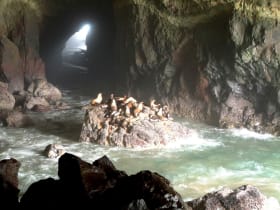
Sea Lion Caves delivers on its promise: an elevator drops you into a cathedral-sized sea cave packed with Steller sea lions hauled out on the rocks.
Thor's Well and the Devil's Churn
22 miles away
Two of the Oregon coast's most theatrical natural features, carved by the surf into the basalt of Cape Perpetua.