

North Light
Corn Neck Road
New Shoreham, RI
A granite lighthouse at the wild northern tip of Block Island, reached only by a walk down a long sand spit haunted by seals and shorebirds.
North Light is the lighthouse at the lonely end of Block Island, a squared granite tower and keeper's house standing at Sandy Point, the island's northernmost tip. Built in 1867, it is the fourth lighthouse to guard this dangerous spit, where earlier towers were undermined by the same shifting sands that still reshape the point. Reaching it requires a walk of about a mile down the beach, and that walk is half the experience.
The point is a wild place. The long spit of Sandy Point is a haven for seals that haul out on the sand and for the shorebirds that gather where the currents meet, part of a protected wildlife area at the island's edge. Standing at the granite light with the Atlantic curving away on three sides, you feel about as far out to sea as you can get in Rhode Island.
What Travelers Love
- A dramatic granite lighthouse alone at the island's wild northern tip
- The long beach walk out along Sandy Point to reach it
- Seals hauled out and shorebirds gathered near the point
- The sense of remoteness and the sweep of open ocean on three sides
Worth Knowing
- Reaching the light means a walk of roughly a mile over soft sand and cobbles each way
- Bring water and sun protection, as there is no shade or services out at the point
- The surrounding beach is a protected wildlife area, so keep well clear of nesting birds and resting seals
- The lighthouse interior is open only on a limited seasonal basis, but the setting is the real draw
Learn about North Light
Four lighthouses at a treacherous point
Sandy Point reaches out from the north end of Block Island into waters where currents and shifting shoals have wrecked countless ships over the centuries. The hazard was serious enough that the government built a light here in 1829, but the ever-moving sand and erosion defeated one tower after another.
The lighthouse standing today is the fourth, completed in 1867 and built of durable Connecticut granite to withstand the exposure that had doomed its predecessors. Its solid, boxy form, with the tower rising from the keeper's dwelling, was made for endurance rather than elegance, and it has held its ground on the point for over a century and a half.
The walk out to Sandy Point
There is no road to North Light. From the end of Corn Neck Road, visitors walk out along the beach for roughly a mile, over soft sand and rounded cobbles, with the ocean on both sides as the spit narrows toward the point. It is a moderate trek that keeps the crowds thin and makes the arrival feel earned.
Along the way the character of the island's wild side reveals itself: dune grass, driftwood, and the constant work of wind and wave. The effort of the walk, and the absence of any services at the end, are exactly what preserve the sense of solitude that makes the point special.
Seals, birds, and a protected shore
Sandy Point and its surrounding waters form a national wildlife refuge, and the area is one of the best places on the island to see wildlife. In the cooler months harbor seals haul out on the sand and rocks near the point, and the beach and shallows draw gulls, terns, sandpipers, and migrating shorebirds in large numbers.
Because it is protected habitat, visitors are asked to give nesting birds and resting seals a wide berth and to stay off marked dune areas. Block Island as a whole is a major stopover on the Atlantic flyway, and the north end is one of its richest corners for birds.
An island shaped by ice and sea
Block Island is a glacial island, a heap of clay, sand, and boulders left by the ice age and then cut off from the mainland as the seas rose. Sandy Point is the northern edge of that pile, constantly rebuilt and reshaped by the currents that sweep around it, which is why lighthouses here have never been able to trust the ground.
The Manisseans, the island's Native people related to the Niantic and Narragansett, knew these shores for thousands of years before the lighthouses came, and the Narragansett Tribe remains part of Rhode Island today. The endless remaking of Sandy Point is a reminder that this island is a living, moving thing rather than a fixed piece of land.
Closest Boutels
The closest Boutel™ stays, so you can turn this stop into an overnight. Each is a place we chose through independent editorial review, never a paid placement.
Details
New Shoreham, RI
Frequently asked questions
What is the North Light?
The North Light, at the northern tip of Block Island off the coast of Rhode Island, is a historic granite lighthouse standing at the end of a long sandy point, a beautiful and remote landmark guarding treacherous waters. This handsome nineteenth-century stone lighthouse, reached by a walk along a sandy beach and spit, has long warned mariners away from the dangerous shoals off the island's northern end, and today it houses a small maritime museum and stands amid a wildlife refuge rich in birds. Its scenic isolation and history make it a rewarding destination. A picturesque and storied lighthouse, it delights visitors. With its lighthouse and setting, the North Light offers a rewarding destination in Rhode Island.
What can you do at the North Light?
You can walk the sandy beach and point out to the historic granite lighthouse, visit the small maritime museum it houses when open, enjoy the wildlife refuge and its birds, and take in the remote coastal scenery and ocean views. The picturesque lighthouse, the scenic walk out to it, the maritime museum, and the birdlife of the refuge are the draws, making it a rewarding outing for those who make the trek. Its remote setting is part of the appeal. With its lighthouse and setting, the North Light offers a rewarding experience on Block Island, Rhode Island.
What should I know before visiting the North Light?
Reaching the North Light involves a walk along a sandy beach and point that can be a fair distance and tiring in soft sand, so wearing suitable footwear, bringing water and sun protection, and allowing time are wise, as there is little shade. The surrounding area is a wildlife refuge, so staying on the beach and paths and respecting nesting-bird areas and any seasonal closures protect the habitat. The lighthouse museum keeps seasonal hours. Preparing for the walk and respecting the refuge ensure a rewarding visit to the North Light in Rhode Island.
When is the best time to visit the North Light?
The warm months of late spring through early fall are the best time to visit, when Block Island is in season, the weather is pleasant for the beach walk to the lighthouse, the maritime museum is generally open, and the ferries run most frequently. Because reaching Block Island requires a ferry with a seasonal schedule and the museum is seasonal, checking current ferry times and hours before you go is important. For the best weather and access, aim for late spring through early fall at the North Light in Rhode Island.
What is near the North Light?
The North Light is at the northern tip of Block Island off the Rhode Island coast, within reach of the island's other attractions, including the Mohegan Bluffs, the beaches, and the town of New Shoreham, all reached by ferry from the mainland. That makes the North Light a rewarding stop to combine with the Mohegan Bluffs and the other attractions of Block Island on a visit to Rhode Island.
Nearby
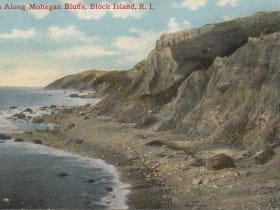
Mohegan Bluffs
5.3 miles away
The south face of Block Island falls away in clay cliffs that stand about 150 feet above the surf, and Mohegan Bluffs is where you feel their full height.

Point Judith Lighthouse
10 miles away
This brown-and-white 1857 lighthouse guards one of New England's most treacherous points, where Narragansett Bay meets the open Atlantic.
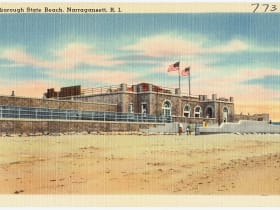
Scarborough State Beach
11 miles away
Rhode Island's most beloved ocean beach, a wide crescent of Atlantic surf on Ocean Road in Narragansett with a long boardwalk, an observation tower, and the stone ruins of a lost Gilded Age mansion ab...
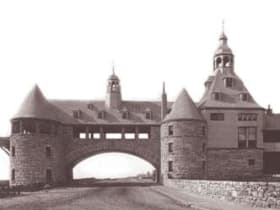
The Towers
15 miles away
This granite arch spanning Ocean Road is the last piece of an 1880s seaside casino designed by McKim, Mead & White, all that survived a fire in 1900.
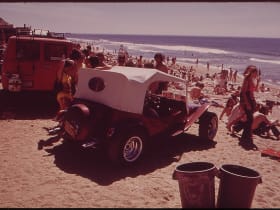
Misquamicut State Beach
16 miles away
Rhode Island's largest state beach spreads a wide half-mile of warm, gentle Atlantic surf in Westerly, with a lively strip of vintage carousel, mini-golf, and water slides just behind the sand.
Flying Horse Carousel
16 miles away
Most visitors to Watch Hill notice the beach before they notice the little carousel on Bay Street, but it is the real treasure here.
Napatree Point Conservation Area
16 miles away
A wild, undeveloped mile-long sand spit curving off Watch Hill, with open Atlantic on one side and calm bay on the other, the ruins of turn-of-the-century Fort Mansfield at the tip, and some of the be...
Narragansett Town Beach
16 miles away
This is the easy family beach in Narragansett, a broad crescent of sand right in the middle of town.
Beavertail State Park
18 miles away
Beavertail is where Conanicut Island runs out of land and drops onto open granite ledges at the very mouth of Narragansett Bay.
Montauk Point and the Bluffs
18 miles away
Montauk Point is where Long Island runs out, a headland of glacial rubble left by the ice sheet and now slowly given back to the sea.
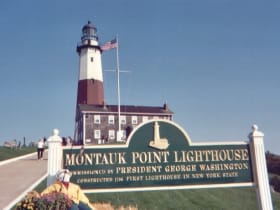
Montauk Point Lighthouse
18 miles away
New York's oldest lighthouse, authorized by George Washington and built in 1796 at the very tip of Long Island.