
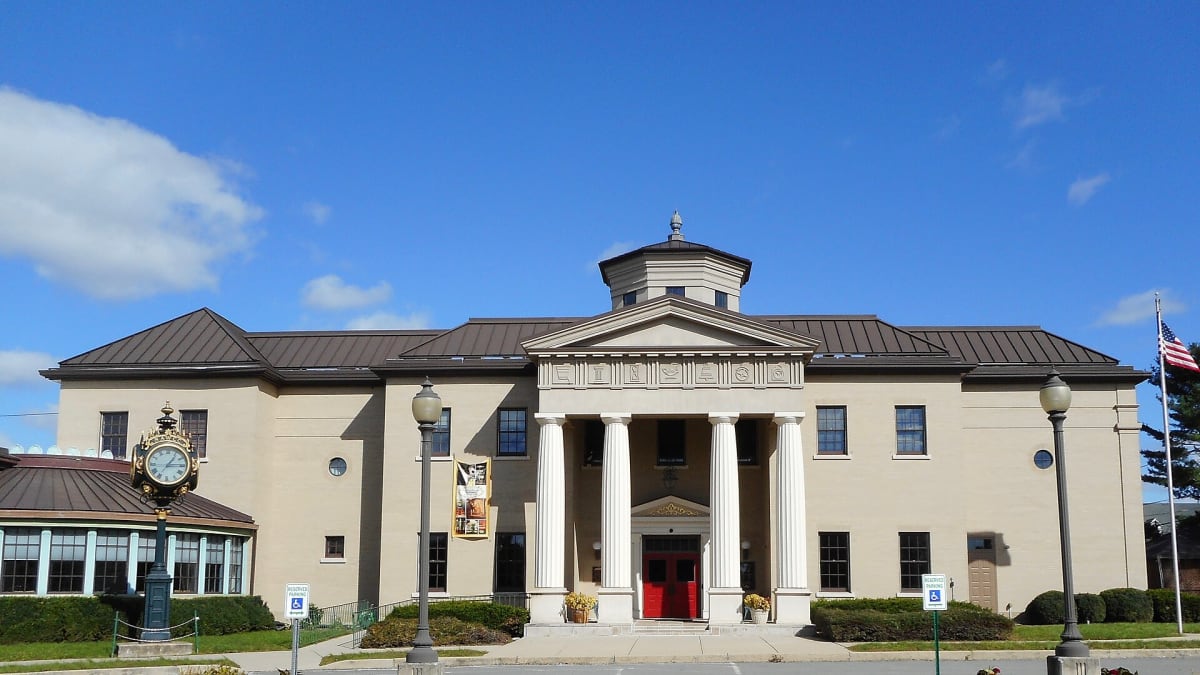
National Watch and Clock Museum
324 Walnut St, Columbia, PA
Columbia, PA
One of the largest collections of timepieces on earth, tracing how humankind measured time from the shadow of a sundial to the hum of an atomic clock.
The National Watch and Clock Museum in Columbia holds one of the largest and most complete collections of timepieces anywhere in the world, tens of thousands of objects that together tell the story of how people have measured time. It runs from the earliest sundials and water clocks through elaborate tower clocks, pocket watches, and wristwatches, all the way to the quartz and atomic precision of the modern age.
Founded by the national association of clock and watch collectors headquartered here, the museum is both a treasure house and a history lesson. Walk its galleries and you follow humanity's long effort to pin down the passing hour, a story of art, invention, and craftsmanship, capped by grand monumental clocks that still chime and perform for visitors.
What Travelers Love
- Thousands of timepieces, from ancient sundials to towering ornate clocks
- Watching a grand monumental clock chime and put on its animated show
- Tracing the whole human story of measuring time in one long, absorbing walk
- Discovering a world-class collection in a quiet, easy-to-visit small town
Worth Knowing
- The collection is large and detailed, so allow more time than a small museum might suggest
- It is fully indoors, making it an excellent rainy-day or hot-day stop
- The featured monumental clock performs on a set schedule, worth timing your visit around
- Columbia and nearby Lancaster offer plenty of dining and Pennsylvania Dutch sights to round out a day
Learn about National Watch and Clock Museum
Keeping time through the ages
The museum is arranged as a journey through the history of timekeeping. It begins with the oldest ways people marked time, the shadow cast by a sundial, the steady drip of a water clock, the burning of a marked candle, and moves forward through the great leap of mechanical clocks in medieval Europe, driven by weights and gears.
From there the galleries trace the refinement of the craft, the pendulum that made clocks far more accurate, the spring-driven watch that put time in a pocket, the fine American factory watches that ran the railroads on schedule, and at last the quartz and atomic clocks that measure time more precisely than any human sense can follow. It is a sweep of thousands of years told through the objects themselves.
Treasures of the collection
Among the museum's highlights are monumental clocks, towering, ornate machines that do far more than tell time. The most famous of these performs on schedule for visitors, its figures moving and its chimes sounding in an elaborate animated display that draws a crowd, a reminder that a great clock was once a piece of public wonder and theater.
Elsewhere the galleries hold cases of exquisite pocket watches, delicate ladies' watches, novelty and automaton clocks, and precision instruments, along with the tools of the clockmaker's trade. The collection is deep enough to satisfy a serious horologist and vivid enough to delight a casual visitor who simply loves beautiful, clever machines.
A town on the Susquehanna
Columbia grew up on the east bank of the Susquehanna River, an important early crossing and river-trade town at the edge of Lancaster County. Its riverfront and old brick streets carry the memory of an era when the river and the bridges across it were vital arteries of commerce. The wider region was part of the ancestral homeland of the Susquehannock people, for whom the river is named, and whose descendant nations continue elsewhere today.
The town also has a place in the story of the Underground Railroad, as a river crossing where freedom seekers found help from a community of free Black residents and Quaker sympathizers on the road north. That history, treated with care in the region's museums, adds depth to a visit beyond the timepieces alone.
Season by season
Because the museum is entirely indoors, it makes a rewarding visit in any season and is a natural choice on a rainy or bitterly cold day when outdoor plans fall through. The clocks perform and the galleries welcome visitors year round.
Spring and fall are especially pleasant for pairing the museum with time along the Susquehanna, whether walking the riverfront, biking a nearby rail trail, or driving out among the farms of Lancaster County. Summer brings the fullest tourist season across Pennsylvania Dutch country, and the colder months make the warm, absorbing galleries all the more inviting.
Closest Boutels
The closest Boutel™ stays, so you can turn this stop into an overnight. Each is a place we chose through independent editorial review, never a paid placement.
Travelers Rest Motel
Honorable Mention3701 Old Philadelphia Pike, Intercourse, PA
21 miles away|Learn More ›
Details
Columbia, PA
Frequently asked questions
What is the National Watch and Clock Museum?
The National Watch and Clock Museum, in Columbia, Pennsylvania, is the largest museum devoted to timepieces and horology in North America. Its vast collection spans thousands of clocks, watches, and timekeeping artifacts from across the centuries and around the world, tracing the fascinating story of how humans have measured time. From ancient methods to intricate antique clocks and cutting-edge watches, it offers a surprisingly captivating look at an object we all take for granted.
What can you see at the National Watch and Clock Museum?
You can explore galleries filled with antique and unusual clocks and watches, tower clocks, and interactive exhibits on the science and history of timekeeping. A showstopper is a spectacular monumental musical clock featuring automated moving figures, which puts on a memorable performance. Timing your visit to hear the many clocks chime adds to the charm. The sheer variety and craftsmanship on display make it far more engaging than visitors often expect.
When is the best time to visit the National Watch and Clock Museum?
As a fully indoor museum, it is enjoyable year-round and makes an excellent rainy-day or cold-weather choice. Checking current hours before you go is wise, and it is worth noting when the monumental clock performs or when the many clocks chime, since those moments are highlights. A visit typically takes an hour or two, making it easy to fit into a day exploring the Lancaster County area.
Who will enjoy the National Watch and Clock Museum?
History buffs, collectors, and anyone with a curiosity about mechanics, science, or craftsmanship will find it fascinating, and even casual visitors are often surprised by how interesting the story of timekeeping turns out to be. The elaborate clocks and the musical monumental clock appeal to families and children as well. It is a distinctive, niche museum that rewards curiosity, offering something genuinely different from the region's other attractions.
What is near the National Watch and Clock Museum?
The museum is located in Columbia, along the Susquehanna River in Lancaster County, within easy reach of the region's many attractions, including the Amish country, the Strasburg Rail Road, and the charming towns of Lititz and Lancaster. That places it in the heart of Pennsylvania Dutch country, so the timepiece museum makes an easy and enriching stop on a broader itinerary through the history, food, and farms of Lancaster County.
Nearby
Julius Sturgis Pretzel Bakery
14 miles away
America ate its first commercial pretzels from this building. The Julius Sturgis Pretzel Bakery opened in Lititz in 1861 as the countrys first commercial pretzel bakery, and it still runs as a hands-o...
Mount Gretna and Governor Dick Tower
15 miles away
Between the farm valleys, the wooded ridge of South Mountain hides a couple of quiet surprises.

Strasburg Rail Road
18 miles away
A real steam train ride wins over almost any kid, and this is the countrys oldest railroad, running since 1832.

Hersheys Chocolate World
19 miles away
The heart of chocolate town, and the main ride is free. Hersheys Chocolate World, at the gate of Hersheypark, runs a gentle indoor tour that carries you past singing animated cows and cocoa beans thro...
Ephrata Cloister
20 miles away
Tucked into a modern town, this looks like a fragment of medieval Europe dropped into Pennsylvania.