
National Museum of Wildlife Art
2820 Rungius Rd
Jackson, WY
A stone castle of a museum tucked into a hillside above the elk herds, holding five thousand years of animals in art, from cave-age carvings to O'Keeffe and Warhol.
Most people come to Jackson Hole for the mountains and the wildlife, and the National Museum of Wildlife Art gives you both at once: a serious art museum that also happens to overlook one of the great winter wildlife gatherings in the country. It began small, as a storefront gallery on Jackson's Town Square in 1987, grew fast as its collection swelled, and in 2008 was named by act of Congress the National Museum of Wildlife Art of the United States, the only museum in the country to carry that title.
Inside are more than five thousand works tracing how humans have pictured wild animals, from carvings some four and a half thousand years old to paintings by John James Audubon, Georgia O'Keeffe, and Andy Warhol. At its heart is the largest public collection anywhere of Carl Rungius, the German-born painter widely called the first true career wildlife artist in North America. It is a museum about animals, set down in the middle of real animal country.
What Travelers Love
- A building of rough Idaho quartzite that looks like a natural rock outcrop, or a small Scottish castle, growing out of the hillside
- An outdoor sculpture trail with dozens of life-size bronze animals set against the mountains and the elk refuge
- The famous Carl Rungius gallery and works by names you know, from Audubon to Georgia O'Keeffe and Andy Warhol
- Big windows that frame the real elk herds on the refuge below, so the art and the living animals sit side by side
Worth Knowing
- The museum charges admission and keeps regular gallery hours, so check its schedule before you plan a visit
- The outdoor sculpture trail is a short, mostly gentle loop and is a highlight in its own right, so leave time for it
- It sits on a bluff a couple of miles north of town on the way to Grand Teton, an easy stop coming or going
- Winter is when the elk fill the refuge below, so a cold, clear day can pair the galleries with a wildlife spectacle
Learn about National Museum of Wildlife Art
A castle of stone above the elk
The building itself is worth the drive. Designed to look less like a museum than like a piece of the mountain, it is built of rough reddish Idaho quartzite and set low into the flank of East Gros Ventre Butte, so from a distance it reads as a natural outcrop or the ruin of an old fortress. The architects drew the idea from the ruins of Slains Castle on the coast of Scotland, and the fifty-thousand-square-foot result feels like it grew out of the ground rather than being dropped onto it.
The reason for the site is the view. The museum stands on a bluff looking out over the National Elk Refuge, the vast valley floor where thousands of elk winter each year. Galleries are hung so that big windows frame the real refuge beyond the paintings, and on a winter afternoon you can study a Rungius canvas of elk in the snow and then turn to the glass and watch the living herd doing exactly the same thing below you.
Five thousand years of animals in art
The collection is far broader than the Western landscapes you might expect. It reaches back roughly four and a half thousand years to ancient carved animals and runs forward to modern and contemporary work, so the story it tells is the whole long human habit of picturing wild creatures. Along the way it gathers famous names: John James Audubon's birds, Georgia O'Keeffe, Andy Warhol's endangered-species prints, and a deep bench of the great animal painters of the last two centuries.
Its centerpiece is Carl Rungius. Rungius, born in Germany and drawn to the American West at the turn of the twentieth century, is generally regarded as the first person on the continent to make a full career solely of painting wild game, and this museum holds more of his work than any other public collection. A dedicated Rungius gallery lets you follow a single master's eye for elk, moose, and mountain sheep across a lifetime, which is a rare thing to be able to do.
The sculpture trail
Do not leave without walking the outdoor sculpture trail, which for many visitors is the best part. A short footpath, roughly three-quarters of a mile, loops out from the museum across the open hillside and is studded with dozens of bronze animals at life size and larger: moose, bison, elk, bighorn sheep, and more, arranged by a noted landscape architect so that each one meets you against the backdrop of the Gros Ventre Range and the refuge.
It turns the usual museum experience inside out. Instead of animals framed on a wall, you walk among them in the open air, in the same light and weather as the real herds nearby, with the mountains behind. A sheltered little amphitheater near the entrance hosts summer programs, and the whole trail is an easy, rewarding stroll that even restless kids tend to enjoy.
Visiting the museum
The museum sits a couple of miles north of the town of Jackson on the road toward Grand Teton National Park, which makes it an easy stop coming or going from the parks. It keeps regular gallery hours and charges admission, so check ahead, and give yourself a good couple of hours to take in both the galleries and the sculpture trail without rushing.
Time your visit to the season if you can. Summer brings the fullest slate of programs and the sculpture trail at its greenest, but winter has its own magic here, when the elk refuge below fills with animals and the galleries and the glass tell the same story at once. Either way it is a genuinely national-caliber museum in an unexpected place, the kind of stop that quietly turns out to be a highlight of a Jackson Hole trip.
Closest Boutels
The closest Boutel™ stays, so you can turn this stop into an overnight. Each is a place we chose through independent editorial review, never a paid placement.
Details
Jackson, WY
Frequently asked questions
What is the National Museum of Wildlife Art?
The National Museum of Wildlife Art, near the town of Jackson in northwestern Wyoming, is a premier art museum dedicated to fine art depicting wildlife and nature. Set in a striking stone building overlooking the National Elk Refuge, with sweeping views of the valley where elk winter, the museum houses an outstanding collection of wildlife art spanning from ancient times to contemporary works, by renowned artists including masters of the genre. Along with its galleries, it features an outdoor sculpture trail with wildlife sculptures set in the landscape. Combining exceptional art, a spectacular setting, and a connection to the wildlife of the region, the National Museum of Wildlife Art offers a superb cultural experience near Jackson, Wyoming.
What can you see at the National Museum of Wildlife Art?
You can view an outstanding collection of wildlife and nature art spanning centuries, from historical works to contemporary pieces by renowned artists, explore galleries devoted to different themes and periods, walk the outdoor sculpture trail featuring wildlife sculptures set against the backdrop of the valley and the National Elk Refuge, take in the sweeping views, and enjoy rotating exhibitions and programs. The combination of art and the natural setting is wonderful, especially with elk visible on the refuge below in winter. With its exceptional wildlife art, sculpture trail, and spectacular setting, the National Museum of Wildlife Art offers a superb cultural and scenic experience near Jackson, Wyoming.
When is the best time to visit the National Museum of Wildlife Art?
As an indoor museum, it is enjoyable year-round and a great option in any weather, with the added draw in winter of seeing the elk gathered on the National Elk Refuge below the museum, making winter especially memorable for combining art with wildlife views. Summer offers pleasant weather for the outdoor sculpture trail. Weekdays tend to be less crowded. Checking current hours and exhibitions before you go is wise. For the combination of art and elk viewing, winter is special, while the museum and its sculpture trail are rewarding year-round at the National Museum of Wildlife Art near Jackson, Wyoming.
Is the National Museum of Wildlife Art good for families?
Yes, the National Museum of Wildlife Art is a good family destination, with engaging wildlife art that appeals to children's love of animals, an outdoor sculpture trail where kids can explore life-size wildlife sculptures in the landscape, family programs and activities, and the exciting connection to the real elk and wildlife of the surrounding region. The combination of art, sculptures, and nature makes it accessible and interesting for children. With its animal-themed art, sculpture trail, and family offerings, the National Museum of Wildlife Art offers an enriching and enjoyable outing for families near Jackson, Wyoming.
What is near the National Museum of Wildlife Art?
The National Museum of Wildlife Art is near the town of Jackson in northwestern Wyoming, overlooking the National Elk Refuge, near the Jackson Hole area, Grand Teton National Park to the north, and within reach of Yellowstone National Park and the Jackson Hole ski resorts. That makes the National Museum of Wildlife Art a superb cultural stop to combine with the National Elk Refuge, Jackson, Grand Teton National Park, and the other attractions of northwestern Wyoming on a visit to the state.
Nearby
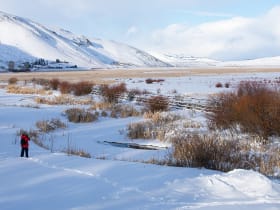
National Elk Refuge
1.9 miles away
Nearly 25,000 acres on the edge of Jackson where thousands of elk winter beneath the Tetons, one of the great wildlife sights of the West.
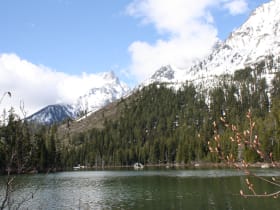
Grand Teton National Park
9.7 miles away
Jagged peaks rising straight from the valley floor, mirrored in the string of lakes at their base.
Chapel of the Transfiguration
10 miles away
This tiny log chapel near Moose has been holding services since 1925, and it hides a piece of theater most visitors never expect.

Bridger-Teton National Forest
15 miles away
Granite Creek in the Bridger-Teton National Forest south of Jackson runs through a canyon with a natural hot spring pool at the end of a 1-mile trail.
Jenny Lake, Grand Teton National Park
17 miles away
Jenny Lake sits at the base of the Teton Range and is the most visited lake in Grand Teton National Park.

Yellowstone National Park
65 miles away
The world's first national park, sitting atop a supervolcano of geysers, hot springs, and vast wildlife herds.