

Bridger-Teton National Forest
Jackson Ranger District
Jackson, WY
One of the largest national forests in the country, wrapping Jackson Hole in wilderness, hot springs, and headwaters.
The Bridger-Teton is one of the largest national forests in the country, more than three million acres of mountains, rivers, and wilderness wrapped around Jackson Hole. It holds the headwaters of rivers that flow to both the Pacific and the Gulf, and its high country ranks among the wildest land left in the Lower 48.
For all its scale, it is remarkably reachable. From the town of Jackson you can drive up a river canyon, walk into a wilderness, or soak in a hot spring in the space of an afternoon. It is the wild backyard of the Tetons, quieter than the parks it borders and every bit as beautiful.
What Travelers Love
- Soaking in the backcountry pool at Granite Hot Springs
- Some of the wildest, least-crowded high country in the Lower 48
- Scenic drives up the Hoback and Gros Ventre river canyons
- World-class hiking, fishing, and wildlife watching just outside Jackson
Worth Knowing
- This is grizzly and black bear country, so carry bear spray and store food properly
- High passes and backcountry roads hold snow well into summer, so check conditions
- The Granite Creek road to the hot springs is unpaved and closes seasonally
- Weather turns fast at elevation, so pack layers even on warm days
Learn about Bridger-Teton National Forest
Granite Hot Springs
Up the Granite Creek road off the Hoback Canyon sits Granite Hot Springs, a rock-lined pool built into the forest in the 1930s by the Civilian Conservation Corps. Hot mineral water fills the pool against a backdrop of peaks, and the setting, deep in the woods at the end of a gravel road, is half the pleasure.
Nearby, Granite Falls tumbles over a ledge in the creek, and the whole side canyon makes a fine day. In summer the road is open to cars, and in winter the pool becomes a reward at the end of a snowmobile or dogsled trip through the snow.
Wilderness on every side
The forest holds a remarkable amount of designated wilderness. The Gros Ventre Wilderness rises east of Jackson Hole, the Teton Wilderness reaches north toward Yellowstone across some of the remotest country in the region, and the Bridger Wilderness climbs the west slope of the Wind River Range to glacier-carved peaks and hundreds of alpine lakes.
Together they shelter grizzly and black bears, wolves, elk, moose, bighorn sheep, and pronghorn, and form a crucial piece of the Greater Yellowstone Ecosystem, one of the last nearly intact temperate ecosystems on Earth. Trails lead from roadside into country where you can walk for days.
River canyons and the valley
Two scenic river canyons open the forest to anyone with a car. The Hoback River carves a green gorge southeast of Jackson along the highway, and the Gros Ventre River leads east past the great Gros Ventre Slide, a mountainside that let go in 1925 and dammed the river into Lower Slide Lake.
This is the ancestral homeland of the Eastern Shoshone and other nations, who summered in the high valleys and hunted the herds that still move through the forest. The mountain-man rendezvous of the fur-trade era were held in these same valleys, near where the town of Jackson grew up.
Visiting
The town of Jackson is the hub, with a Forest Service district office for maps, permits, and current conditions. From there, paved and gravel roads climb into the Hoback, the Gros Ventre, and toward the wilderness trailheads, and the national parks lie a short drive north.
Summer and early fall are the seasons for high-country hiking and the hot springs road; winter turns the forest into a backcountry-ski and snowmobile playground. Whatever the season, come ready for bears, weather, and the fact that help can be far away.
Closest Boutels
The closest Boutel™ stays, so you can turn this stop into an overnight. Each is a place we chose through independent editorial review, never a paid placement.
Details
Jackson, WY
Frequently asked questions
What is the Bridger-Teton National Forest?
The Bridger-Teton National Forest, in western Wyoming, is one of the largest national forests in the country, encompassing vast and spectacular wilderness surrounding Jackson Hole and stretching across the Teton, Gros Ventre, and Wind River ranges. This immense forest protects towering peaks, alpine lakes, rivers, meadows, and some of the wildest country in the lower forty-eight states, including major wilderness areas. It offers a wealth of outdoor recreation, from hiking, backpacking, and camping to fishing, wildlife viewing, and winter sports, along with scenic drives and dramatic mountain scenery. With its enormous wilderness, peaks, and abundant recreation, the Bridger-Teton National Forest offers magnificent outdoor adventure in western Wyoming.
What can you do at the Bridger-Teton National Forest?
You can hike and backpack countless trails through mountains, forests, and wilderness, camp, fish in rivers and alpine lakes, watch for abundant wildlife including elk, moose, bears, and more, ride horseback, enjoy scenic drives, and in winter go skiing, snowmobiling, and snowshoeing. The forest surrounds Jackson Hole and includes major wilderness areas offering deep backcountry adventure, as well as more accessible recreation. Its vastness means endless exploration. With its immense wilderness, peaks, lakes, trails, and year-round recreation, the Bridger-Teton National Forest offers magnificent and varied outdoor adventure in western Wyoming.
What should I know before visiting the Bridger-Teton National Forest?
The forest includes vast, remote wilderness and high mountain terrain, so if venturing into the backcountry, come prepared with proper gear, supplies, navigation tools, and knowledge, and be aware that cell coverage is limited and help can be far away. This is grizzly bear country, so carry bear spray, know how to use it, and store food properly. Mountain weather changes fast, so bring layers, and be prepared for the high elevation. Some roads and areas are seasonal. Being well-prepared, bear-aware, and mindful of the remote, high-country conditions ensures a safe visit to the Bridger-Teton National Forest.
When is the best time to visit the Bridger-Teton National Forest?
Summer through early fall is ideal for hiking, backpacking, camping, and fishing, when the high country is snow-free and accessible and the weather is mildest, with fall bringing golden aspens and the elk rut, while winter offers skiing, snowmobiling, and snowshoeing. The high mountain areas are accessible mainly in the warmer months. For summer recreation and backpacking, aim for July through September, and for winter sports, visit in the snowy months. The forest's vast recreation makes it rewarding across seasons depending on your activity in the Bridger-Teton National Forest of western Wyoming.
What is near the Bridger-Teton National Forest?
The Bridger-Teton National Forest is in western Wyoming, surrounding Jackson Hole and the town of Jackson, adjacent to Grand Teton and near Yellowstone national parks, encompassing parts of the Wind River and Gros Ventre ranges, and within reach of the towns of Pinedale, Dubois, and the region's attractions. That makes the Bridger-Teton National Forest a magnificent wilderness to combine with Grand Teton and Yellowstone national parks, Jackson, and the other attractions of western Wyoming on a visit to the state.
Nearby
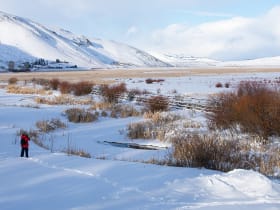
National Elk Refuge
14 miles away
Nearly 25,000 acres on the edge of Jackson where thousands of elk winter beneath the Tetons, one of the great wildlife sights of the West.
National Museum of Wildlife Art
15 miles away
The congressionally named National Museum of Wildlife Art sits on a bluff about 2.5 miles north of Jackson, on the road toward Grand Teton.
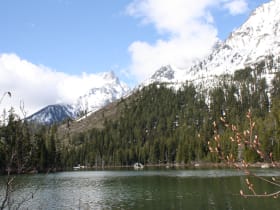
Grand Teton National Park
20 miles away
Jagged peaks rising straight from the valley floor, mirrored in the string of lakes at their base.
Chapel of the Transfiguration
20 miles away
This tiny log chapel near Moose has been holding services since 1925, and it hides a piece of theater most visitors never expect.