

National Elk Refuge
532 N Cache St
Jackson, WY
Nearly 25,000 acres on the doorstep of Jackson where one of the largest elk herds on earth spends the winter, best seen by horse-drawn sleigh.
The National Elk Refuge is one of the great wildlife spectacles of the American West, a nearly 25,000-acre stretch of valley floor on the very edge of Jackson where thousands of elk come down out of the mountains to spend the winter. On a cold, clear day the sight is unforgettable: a brown-gold sea of elk spread across the snow, the Teton Range rising white behind them, all of it within sight of a town's edge.
Elk have wintered in Jackson Hole for centuries, but by the early 1900s settlers, fences, and hard winters were starving them by the thousands. In 1912 the federal government set this land aside as a refuge to give the herd a place to survive the cold months, and it has protected them ever since. Today it anchors one of the last fully intact ecosystems in the Lower 48, shared by eagles, bison, swans, and wolves as well as elk.
What Travelers Love
- Thousands of elk wintering on the valley floor, an astonishing sight against the snow and the Tetons
- Horse-drawn sleigh rides that carry you right in among the herd in winter
- Bald eagles, coyotes, trumpeter swans, bison, and sometimes wolves sharing the range
- Wide open valley views with the jagged Teton skyline as a constant backdrop
Worth Knowing
- The elk gather here in winter, roughly from late fall through early spring, and disperse to the high country the rest of the year
- Sleigh rides run in the cold months from a visitor center in town, so dress in warm layers and expect open-air seating
- In summer the refuge is quiet of elk but good for birds, pronghorn, and a scenic auto route along its edge
- This is wild country, so keep your distance from all animals and never approach or feed them
Learn about National Elk Refuge
Why the refuge exists
For as long as anyone can remember, elk have migrated down from the high country of the Yellowstone and Teton region to winter on the lower, gentler floor of Jackson Hole, where the snow is shallower and forage easier to reach. That ancient pattern collided with people in the late 1800s and early 1900s, as homesteads, cattle, farms, and fences spread across the valley and cut off the routes and feeding grounds the elk had always used.
The results were grim. Severe winters, shrinking habitat, and reduced forage led to the starvation of thousands of elk in the valley. In response, the United States set aside this land in 1912 as the National Elk Refuge, a place where the herd could ride out the winter, and the refuge has grown to nearly 25,000 acres of protected valley floor that keeps one of the largest elk herds on earth alive through the cold season.
Sleigh rides among the herd
The most famous way to experience the refuge is by horse-drawn sleigh in winter. The tradition goes back well over a century: as early as the late 1800s, people living in Jackson Hole hitched up sleighs to drive out and watch the gathered elk, and the outings grew so popular that in 1965 the refuge began offering public sleigh ride tours. They still run from roughly mid-December into early April.
On a ride, a guide leads you out onto the snow-covered range and often within twenty or thirty feet of the elk, close enough to hear them and watch bulls and cows move across the valley. Along the way the guide explains why the herd has wintered here for so long and how the refuge cares for it. Because the sleighs are a familiar, non-threatening presence, the elk stay calm and let visitors get remarkably close.
More than elk
The refuge is far more than a single species. Wintering elk draw predators and scavengers, so a sleigh ride or a slow drive along its edge often turns up bald eagles perched in the cottonwoods, coyotes trotting the snow, and now and then a fox or a wolf. Trumpeter swans, some of the largest waterfowl in North America, winter on the refuge's open water, and bison and other animals share the range.
In the warmer months the elk scatter back to the high country and the refuge quiets, but it stays alive with pronghorn, birds, and sweeping valley views. A scenic road runs along one side, giving travelers a chance to take in the landscape year round. Together with neighboring Grand Teton National Park and the national forests around it, the refuge forms part of one of the last complete wild ecosystems left in the Lower 48.
Visiting the National Elk Refuge
The refuge begins right at the northern edge of the town of Jackson, so it is easy to fold into a Jackson Hole trip. Winter sleigh rides depart from a visitor center in town, where you can also learn the story of the herd and the valley before heading out, so dress in warm layers and be ready for open-air seating in the cold.
The best show is in winter, when the elk are massed on the valley floor, but the refuge rewards a visit any time of year for its birds, wildlife, and Teton views. As with all wild places, keep your distance from every animal, never feed or approach them, and let the sleigh or your vehicle be your blind. It is a rare chance to watch a genuine wild migration up close, on the doorstep of one of the West's most beautiful towns.
Closest Boutels
The closest Boutel™ stays, so you can turn this stop into an overnight. Each is a place we chose through independent editorial review, never a paid placement.
Details
Jackson, WY
Frequently asked questions
What is the National Elk Refuge?
The National Elk Refuge, near the town of Jackson in northwestern Wyoming, is a large wildlife refuge established to protect one of the largest elk herds in North America, which winters here in the valley of Jackson Hole. Each winter, thousands of elk migrate down from the high country to the refuge's lower elevations to feed, creating a spectacular gathering that draws visitors, who can view the elk and, famously, take horse-drawn sleigh rides among the herd. The refuge also hosts other wildlife, including bison, bighorn sheep, and birds. With its wintering elk herd, sleigh rides, and wildlife, the National Elk Refuge offers a remarkable wildlife-viewing experience near Jackson, Wyoming.
Can you take a sleigh ride at the National Elk Refuge?
Yes, one of the most popular and memorable experiences at the National Elk Refuge is a horse-drawn sleigh ride out among the wintering elk herd, offered during the winter season when thousands of elk gather on the refuge. The sleigh rides bring visitors close to the elk for wonderful viewing and photography in a magical snowy setting. The rides typically operate from around mid-December through early spring, depending on the elk and snow, and tickets are often available at the nearby visitor center. Checking the current sleigh ride season, availability, and how to book before you go helps you plan this special winter experience.
What can you do at the National Elk Refuge?
In winter, you can view the thousands of elk that gather on the refuge and take a horse-drawn sleigh ride among the herd for close viewing, while year-round you can watch for other wildlife including bison, bighorn sheep, trumpeter swans, and other birds, drive or walk to viewpoints, and visit the nearby visitor center. The winter elk gathering and sleigh rides are the signature experience. Bringing binoculars enhances wildlife viewing. With its spectacular wintering elk herd, sleigh rides, and other wildlife, the National Elk Refuge offers a remarkable wildlife-viewing destination near Jackson in northwestern Wyoming.
When is the best time to visit the National Elk Refuge?
Winter, roughly from December through early spring, is the prime time to see the spectacular gathering of thousands of elk on the refuge and to take the horse-drawn sleigh rides among the herd, making it the marquee season. In other seasons the elk are dispersed in the high country, though other wildlife can still be seen. For the famous elk spectacle and sleigh rides, plan a winter visit, checking the current sleigh ride season and conditions, while spring and fall offer other wildlife viewing at the National Elk Refuge near Jackson, Wyoming.
What is near the National Elk Refuge?
The National Elk Refuge is near the town of Jackson in northwestern Wyoming, adjacent to the Jackson Hole area, near the National Museum of Wildlife Art overlooking the refuge, Grand Teton National Park to the north, and within reach of Yellowstone National Park and the Jackson Hole ski resorts. That makes the National Elk Refuge a remarkable wildlife stop to combine with the National Museum of Wildlife Art, Jackson, Grand Teton National Park, and the other attractions of northwestern Wyoming on a visit to the state.
Nearby
National Museum of Wildlife Art
1.9 miles away
The congressionally named National Museum of Wildlife Art sits on a bluff about 2.5 miles north of Jackson, on the road toward Grand Teton.
Grand Teton National Park
11 miles away
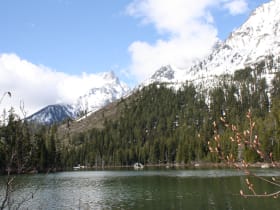
Jagged peaks rising straight from the valley floor, mirrored in the string of lakes at their base.
Chapel of the Transfiguration
12 miles away
This tiny log chapel near Moose has been holding services since 1925, and it hides a piece of theater most visitors never expect.

Bridger-Teton National Forest
14 miles away
Granite Creek in the Bridger-Teton National Forest south of Jackson runs through a canyon with a natural hot spring pool at the end of a 1-mile trail.
Jenny Lake, Grand Teton National Park
18 miles away
Jenny Lake sits at the base of the Teton Range and is the most visited lake in Grand Teton National Park.

Yellowstone National Park
67 miles away
The world's first national park, sitting atop a supervolcano of geysers, hot springs, and vast wildlife herds.