
Mystery Cave
County Rd 118, Spring Valley, MN
Spring Valley, MN
Minnesota's longest cave winds for miles beneath the bluff country, a cool limestone world of formations and still blue pools that stays the same temperature year-round.
Mystery Cave is the longest cave in Minnesota, a limestone maze that winds for miles beneath the bluff country of the state's southeastern corner. Formed as slightly acidic groundwater dissolved passages through ancient limestone, the cave opens into a hidden world of branching corridors, high chambers, delicate formations, and still pools of astonishingly clear blue water. It lies within Forestville Mystery Cave State Park, near the small town of Spring Valley, and is toured with a guide who leads visitors down into the cool dark.
One of the cave's quiet marvels is its temperature. Deep underground it stays the same cool temperature all year, so on a scorching August afternoon the cave is a chilly refuge, and in winter it is warmer than the frozen world above. The Driftless country around it, spared the flattening of the glaciers, is riddled with sinkholes, springs, and caves like this one, a landscape shaped from below by water working slowly through stone.
What Travelers Love
- Touring the longest cave in Minnesota, a maze of passages and chambers
- The still, clear blue pools deep in the cave
- The steady, cool cave temperature, a relief on a hot summer day
- Pairing the cave with the restored Historic Forestville village nearby
Worth Knowing
- The cave is toured with a guide, so times and access vary by season; plan around the guided-tour schedule
- The cave stays cool year-round, so bring a light jacket even on a hot day
- Paths inside are paved on the main tour but can be damp, so wear closed shoes with grip
- To protect bats from white-nose syndrome, follow any gear and clothing rules the park posts
Learn about Mystery Cave
The longest cave in Minnesota
Mystery Cave stretches for many miles of mapped passages, making it by far the longest cave in the state. It formed over a very long span of time as groundwater, made mildly acidic by soaking through soil, seeped into cracks in the limestone bedrock and slowly dissolved them into passages and rooms. The result is a branching underground labyrinth on several levels, discovered in the 1930s and later developed for guided tours.
Inside, visitors move through corridors and chambers decorated with the slow work of dripping water: flowstone, stalactites, and other formations built up drop by drop over thousands of years. Guides explain how the cave formed and point out its features, and part of the wonder is simply the scale and quiet of a world hidden entirely beneath the fields and bluffs above.
Blue pools and cave formations
Among the cave's most striking sights are its pools, still sheets of water so clear and mineral-rich that they glow a deep blue-green in the lamplight. Fed by the same groundwater that carved the cave, these pools sit motionless in the dark, mirroring the ceiling and the formations above them. They are a favorite stop on the tour and a reminder that the cave is still a living, water-shaped place.
The formations that decorate Mystery Cave, the flowstone draperies and slender straws hanging from the ceiling, grow with almost unimaginable slowness as dissolved minerals harden out of dripping water. Because they are so fragile and so old, visitors are asked not to touch them; the oils from a single hand can stop a formation's growth. The cave is a museum built by water over millennia, and it is kept that way for those who come after.
The Driftless bluff country
Mystery Cave sits in the Driftless Area, the pocket of the Upper Midwest that the last glaciers largely missed. Instead of being scraped flat and buried in glacial debris, this country kept its rugged shape, and its limestone bedrock has been carved from below into sinkholes, springs, disappearing streams, and caves. Mystery Cave is the grandest of the region's caves, but the whole landscape is honeycombed and spring-fed.
This is the homeland of the Dakota people, whose name for the land, Mni Sota Makoce, gives Minnesota its name, and whose presence in this river-and-bluff country reaches back generations. Above ground the park protects a landscape of wooded valleys and clear trout streams, and it also holds Historic Forestville, a restored nineteenth-century village that tells the story of the settlers who followed. Cave and village together make the park a rich stop in southeastern Minnesota.
Wildlife, bats, and the seasons
Caves are important homes for bats, and Mystery Cave shelters bats that use it for hibernation and roosting. These animals are vital to the region's ecology, eating vast numbers of insects, and they have been threatened by white-nose syndrome, a disease spread partly on visitors' gear, so the park may ask guests to follow clothing and equipment rules to protect them. Above ground the park's woods and streams hold white-tailed deer, wild turkeys, trout, and a range of Driftless-country birds.
Because the cave holds a steady cool temperature year-round, it is a welcome escape in the heat of summer and a milder world than the frozen surface in winter. The surrounding park is at its greenest in spring and summer, ablaze with color in fall, and quiet under snow in winter. Guided cave tours run on a seasonal schedule, so the warm months offer the most access, but the cave itself never really changes, holding its cool, dark constancy through every season.
Closest Boutels
The closest Boutel™ stays, so you can turn this stop into an overnight. Each is a place we chose through independent editorial review, never a paid placement.
Black Hawk Motel & Suites
Honorable Mention720 Race St, Wisconsin Dells, WI
124 miles away|Learn More ›
Details
Spring Valley, MN
Frequently asked questions
What is Mystery Cave?
Mystery Cave, in Forestville Mystery Cave State Park in southeastern Minnesota, is the longest cave in the state, a fascinating underground world of winding passages, formations, and clear underground pools. On guided tours, visitors explore the cave's passages to see stalactites, stalagmites, delicate formations, and still, blue pools, learning about the geology that created this hidden world beneath the driftless bluff country. The cave stays a cool, constant temperature year-round. Paired with Historic Forestville in the same park, it offers a memorable underground adventure. With its long passages, formations, and guided tours, Mystery Cave offers a fascinating destination in southeastern Minnesota.
What can you see at Mystery Cave?
On a guided tour you can walk through the cave's winding passages to see stalactites, stalagmites, flowstone, delicate formations, and clear, still underground pools, learning about the cave's geology and how it formed over thousands of years. Different tours may range from easy paved routes to more adventurous options. The formations and the tranquil underground pools are highlights. The cool, quiet underground world is a memorable experience. With its long passages, beautiful formations, and guided tours, Mystery Cave offers a fascinating underground experience in southeastern Minnesota.
What should I know before visiting Mystery Cave?
The cave stays cool year-round, around the upper forties, so bring a jacket even in summer, and wear sturdy, non-slip shoes, as the paths can be damp and uneven. Tours are guided and typically seasonal, so checking current tour times and reserving is wise, and some tours are more strenuous than others. The passages can be low or tight in places on adventure tours. Dressing warmly and wearing good shoes, and choosing a tour suited to your ability, ensure an enjoyable visit to Mystery Cave in southeastern Minnesota.
When is the best time to visit Mystery Cave?
Mystery Cave tours are typically offered seasonally, generally from late spring through fall, so those are the times to visit, with summer the peak season, while the cave stays cool underground year-round, making it an especially refreshing escape on a hot summer day. Because tours are guided and can fill up, checking the current schedule and reserving ahead is wise. Pairing a cave tour with Historic Forestville in the same park works well. For the tour and the best surface weather, aim for late spring through fall at Mystery Cave in southeastern Minnesota.
What is near Mystery Cave?
Mystery Cave is in Forestville Mystery Cave State Park in southeastern Minnesota, right near Historic Forestville, within reach of the Root River State Trail and Lanesboro, Great River Bluffs and the Apple Blossom Drive, and the Mississippi River bluff towns. That makes Mystery Cave a fascinating stop to combine with Historic Forestville, the Root River State Trail, and the other attractions of southeastern Minnesota's bluff country on a visit to the state.
Nearby
Historic Forestville
2.3 miles away
Historic Forestville: inside Forestville/Mystery Cave State Park, south of Spring Valley off MN-16 in the driftless southeast.
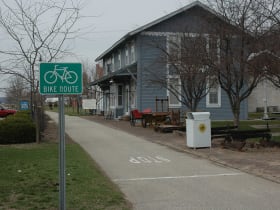
Root River State Trail
15 miles away
Root River State Trail: running about 42 miles through the driftless bluff country, with Lanesboro near its middle.
Dunning's Spring
32 miles away
Decorah sits in Iowa's Driftless corner, and Dunning's Spring is the quickest way to feel it.