
Monterey Bay Aquarium
886 Cannery Row
Monterey, CA
An aquarium built in a dead sardine cannery that grew a three-story living kelp forest and helped bring the whole bay back to life.
The Monterey Bay Aquarium sits on the exact spot where the largest sardine cannery on Cannery Row once stood, and that is the whole point of it. When the aquarium opened in 1984, it was one of the first anywhere to build its exhibits around the actual ecosystem outside its windows rather than a collection of curiosities from around the world.
Its signature exhibit, a towering living kelp forest, had never been done at that scale, because no one had figured out how to keep giant kelp alive indoors until the aquarium's founders solved it. The result changed what an aquarium could be, and helped turn a bay that industry had nearly wrecked into one of the great marine sanctuaries on the planet.
What Travelers Love
- The Kelp Forest, a three-story tank of living giant kelp swaying in a real surge, unlike anything elsewhere
- Watching rescued sea otters, playful and endlessly watchable, at feeding and training times
- The open-ocean gallery, a vast window of tuna, sea turtles, and drifting jellies
- The touch pools and the sense that everything here connects to the real bay just outside the windows
Worth Knowing
- It is one of the most popular attractions on the coast, so buy timed tickets ahead and arrive early
- Feeding times and diver talks are the highlights; check the daily schedule when you arrive
- The building sits right on the water, so pair a visit with a walk along Cannery Row and the bay
- Exhibits change, and the aquarium is a working ocean-research and rescue institution, so what is on view can vary
Learn about Monterey Bay Aquarium
From cannery to aquarium
In the early twentieth century Monterey was the sardine capital of the world, and Cannery Row roared with canneries processing the silvery fish by the ton. The writer John Steinbeck immortalized the row and its characters in his novels, and his close friend Ed Ricketts, the marine biologist behind the character Doc, ran a small biological lab here, studying the tidepools with a care that was decades ahead of his time.
Then, in the 1940s and 1950s, the sardines vanished, overfished into collapse, and the canneries fell silent and derelict. The aquarium was built in the shell of the old Hovden Cannery, keeping some of its industrial bones, a deliberate reminder of what happens when a fishery is taken for granted. Ricketts's tidepool ethic runs straight through the place.
The living kelp forest
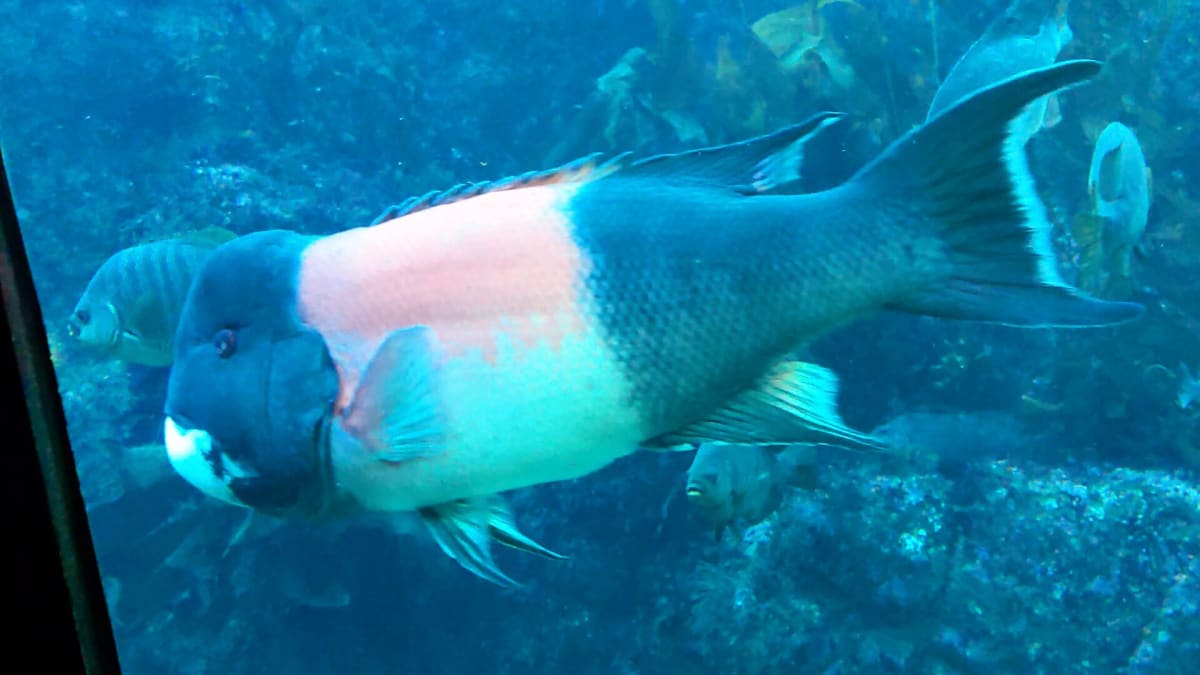
Giant kelp is one of the fastest-growing organisms on earth, rising toward the light in a real forest of the sea, and it forms the backbone of Monterey Bay's marine life. Recreating it indoors meant giving the kelp what it needs, moving water and clean sunlight, so the aquarium built a tall tank open to the sky and added a surge machine to keep the water rocking the way the ocean does.
The result is a three-story wall of living kelp, fish weaving through the fronds, that visitors can watch from top to bottom. It was a first, and it made the case that the animals of the bay were far more compelling in their own working ecosystem than isolated in a box.
Sea otters and the rescue mission
Southern sea otters were hunted almost to extinction in the fur trade and clung on in a tiny population off the Big Sur coast. The aquarium runs a long-standing program to rescue stranded and orphaned otter pups, and in a clever twist, it uses resident female otters as surrogate mothers to raise orphans, teaching them to be wild so they can be released back to the bay.
Sea otters are a keystone species: by eating sea urchins, they keep the urchins from mowing down the kelp forest, so protecting otters protects the whole ecosystem. The otters on view here are the charismatic face of that science, and many have their own rescue stories.
The bay just outside
Monterey Bay is unusually rich because a deep submarine canyon, one of the largest on the continent, comes almost to shore, funneling cold, nutrient-heavy water up from the depths. That upwelling feeds everything from tiny plankton to blue whales, and the whole bay is now protected as the Monterey Bay National Marine Sanctuary.
The aquarium's open-sea gallery, with its enormous window onto schooling tuna, sea turtles, and hypnotic drifting jellies, is a glimpse of that deep offshore world. Step outside afterward and the same water is right there, otters rafting in the kelp and sea lions barking from the rocks, the exhibit and the real thing separated by a pane of glass.
Closest Boutels
The closest Boutel™ stays, so you can turn this stop into an overnight. Each is a place we chose through independent editorial review, never a paid placement.
Carmel Country Inn
BoutelDolores Street at 3rd Avenue, Carmel-by-the-Sea, CA
4 miles away|Learn More ›
Details
Monterey, CA
Frequently asked questions
What is the Monterey Bay Aquarium?
The Monterey Bay Aquarium, on historic Cannery Row in Monterey, California, is one of the finest aquariums in the world, renowned for its stunning exhibits showcasing the rich marine life of Monterey Bay and beyond. Built on the site of a former sardine cannery, it dazzles visitors with a towering kelp forest exhibit, playful sea otters, mesmerizing jellyfish, sharks, and an immersive open-ocean tank. A leader in ocean conservation and education, the aquarium offers an unforgettable, beautiful, and inspiring window into the wonders of the sea for visitors of all ages.
What can you see at the Monterey Bay Aquarium?
Highlights include the soaring, multi-story Kelp Forest exhibit teeming with fish, the beloved sea otters, the ethereal jellyfish galleries, the vast Open Sea tank with tuna, sharks, and sometimes sea turtles, and touch pools where you can gently feel sea stars and other creatures. Exhibits also feature penguins, seahorses, and local bay life, with feedings and programs throughout the day. The combination of world-class exhibits, living kelp forest, and charismatic animals makes for a captivating and educational visit celebrating the ocean.
Do you need to buy tickets in advance for the Monterey Bay Aquarium?
Because the aquarium is extremely popular, buying tickets in advance, often for a timed entry, is strongly recommended to guarantee admission and avoid lines, especially on weekends, holidays, and during summer, when it can sell out. Reserving your tickets online ahead of your visit is the best way to ensure smooth entry. Checking the current ticketing and any timed-entry requirements before you go helps you plan, and arriving earlier in the day generally means smaller crowds inside the exhibits.
When is the best time to visit the Monterey Bay Aquarium?
As an indoor attraction, the aquarium is enjoyable year-round and a great choice in any weather, though it is busiest on weekends, holidays, and in summer, so visiting on a weekday or arriving right at opening means smaller crowds and a more relaxed experience. Checking the schedule of feedings and programs when you arrive helps you catch those highlights. Allow at least a few hours to see everything. For the quietest visit, a weekday morning outside the peak summer season is ideal.
What is near the Monterey Bay Aquarium?
The aquarium anchors historic Cannery Row in Monterey, near the row's shops and restaurants, the scenic waterfront and recreation trail, and the charming towns of Pacific Grove and Carmel-by-the-Sea nearby, with the famous 17-Mile Drive and the Big Sur coast to the south. That makes the Monterey Bay Aquarium a centerpiece to combine with Cannery Row, the Monterey Peninsula's beautiful coastline and towns, and the stunning drive down to Big Sur on a Central Coast California getaway.
Nearby

Carmel Beach
4.6 miles away
A mile of sugar-white granite sand and wind-bent Monterey cypress at the foot of Carmel-by-the-Sea, free to all and one of the friendliest dog beaches in California.

Point Lobos State Natural Reserve
7.4 miles away
Often called the crown jewel of California's state parks, Point Lobos is a wild headland of wind-bent Monterey cypress, turquoise coves, and abundant sea life just south of Carmel.
Garrapata State Park
10 miles away
Garrapata has no big sign and no entrance kiosk, just numbered gates and gravel pullouts along a two mile stretch of Highway 1 about seven miles south of Carmel. That is why most people miss it.

Bixby Creek Bridge Viewpoint
17 miles away
Bixby Creek Bridge is a 714-foot concrete open-spandrel arch bridge completed in 1932, built as part of the original Highway 1 coastal road project.

Pinnacles National Park
43 miles away
Volcanic spires and talus caves, one of the best places to watch California condors soar.