
Missouri River overlook at Chamberlain
101 Airport Rd, Chamberlain, SD
Chamberlain, SD
Cross the state on the interstate and the land suddenly falls away to the wide blue Missouri, the moment the plains turn into the West.
For anyone crossing South Dakota, the Missouri River overlook at Chamberlain is the moment the trip changes. The interstate rolls east across flat farm country, then at Chamberlain the land opens and drops away, and the wide blue Missouri appears far below, curving through bluffs and bottomland. It is the unofficial line where the eastern prairies end and the drier, rolling West begins, and generations of travelers have pulled over here simply to take it in.
The view has drawn people for far longer than there has been a highway. This is where the Corps of Discovery camped and climbed the bluffs in 1804, and it is where the great Dignity statue now stands, a fifty-foot figure of a Native woman that honors the Dakota and Lakota peoples of the Missouri. Together the river, the bluffs, and the statue make this one of the most memorable stops on the northern plains.
What Travelers Love
- The sudden, wide-open view as the plains drop to the blue Missouri
- Standing at the overlook where Lewis and Clark once camped and climbed the bluffs
- The nearby Dignity of Earth and Sky statue rising above the river
- Big skies and long light over the water at sunrise and sunset
Worth Knowing
- This is the traditional halfway mark for anyone driving across the state, a natural place to stop and stretch
- The bluffs are open and windy, with little shade; bring water and a jacket
- The Dignity statue stands at a nearby rest area and is a short drive from the overlook
- Morning and evening light is best for photographs of the river valley
Learn about Missouri River overlook at Chamberlain
The river of the Oceti Sakowin
The Missouri here runs through the heart of the homeland of the Oceti Sakowin, the Great Sioux Nation, the Dakota, Nakota, and Lakota peoples whose lives have long been bound to this river. It was a road, a border, a source of water and game, and a spiritual presence, and the bluffs above Chamberlain look out over country that has been lived in and cared for across countless generations.
That living presence is honored at the overlook by Dignity of Earth and Sky, a monumental stainless-steel statue of a Native woman receiving a star quilt, unveiled in 2016 as a gift to the people of the state. Facing the river with her quilt spreading behind her, she is meant to represent the courage and culture of the Dakota and Lakota nations, and she has become a beloved landmark for travelers and tribal citizens alike.
Where the plains meet the river
The Missouri cuts South Dakota almost in two, and the divide is more than a line on a map. East of the river the land is flatter, wetter, and farmed; west of it the country rolls up into drier ranch land and, eventually, the Badlands and Black Hills. Chamberlain sits right at that hinge, which is part of why the view here feels like a threshold.
The great glaciers of the ice ages helped set that divide, grinding down the eastern half of the state while leaving the western half untouched, and the Missouri found its course roughly along the seam. Standing on the bluff, you are looking at the meeting of two very different landscapes, and the river that separates them.
Lewis and Clark and the bluff top
The Corps of Discovery passed this way in the autumn of 1804 on their journey up the Missouri, camping in the area and climbing the surrounding hills to survey the country ahead. Their journals record the game, the grass, and the sweep of the land, much of which a visitor can still recognize from the overlook today.
The Akta Lakota Museum in Chamberlain and interpretive stops along the river deepen the story, telling both the expedition's account and the far longer Dakota and Lakota history of the valley. The overlook itself asks little of a visitor beyond stopping and looking, but it rewards anyone who does with one of the great views on the plains.
The overlook through the year
Summer brings warm days, long light, and the fullest flow of travelers stopping to take in the view, with the river bright blue below and the bluffs baked gold. It is the busiest and easiest time to visit.
Fall paints the cottonwoods along the river yellow and cools the wind, a fine, quiet season on the bluffs. Winter is stark and often bitterly cold, the river partly iced and the country stripped bare, but the view is no less grand. Spring returns the green to the bottomland and brings migrating birds up the river corridor.
Closest Boutels
The closest Boutel™ stays, so you can turn this stop into an overnight. Each is a place we chose through independent editorial review, never a paid placement.
Details
Chamberlain, SD
Frequently asked questions
What is the Missouri River overlook at Chamberlain?
The Missouri River overlook at Chamberlain, in central South Dakota along the interstate, is a beautiful scenic overlook of the mighty Missouri River, and the site of the striking Dignity statue, a beloved stop on a cross-state drive. Perched above the wide Missouri River valley, the overlook offers sweeping views of the river and rolling prairie, along with a rest area and the Lewis and Clark interpretive information marking the expedition's journey along the river. The magnificent Dignity of Earth and Sky sculpture, honoring Native women, stands here overlooking the river. Its views and the Dignity statue make it a memorable stop. A scenic and meaningful overlook, it delights visitors. With its river views, the overlook offers a compelling destination in South Dakota.
What can you see at the Missouri River overlook at Chamberlain?
You can take in sweeping views of the wide Missouri River and the surrounding prairie, see the magnificent Dignity of Earth and Sky sculpture honoring Native women, learn about the Lewis and Clark expedition's journey along the river through interpretive information, and enjoy the rest area. The river views, the Dignity statue, and the Lewis and Clark history are the draws, making it a memorable and meaningful stop. The Dignity sculpture and the river panorama are highlights. With its views and the statue, the overlook offers a rewarding experience in South Dakota.
When is the best time to visit the Missouri River overlook at Chamberlain?
The overlook can be enjoyed year-round as an accessible stop along the interstate, with the mild months of spring through fall the most pleasant for taking in the views and the Dignity statue, and clear days best for the river panorama. Because it is a convenient outdoor stop, comfortable weather makes it most enjoyable. For the most pleasant visit and best views, aim for the mild months at the Missouri River overlook at Chamberlain in South Dakota.
What is the Dignity statue at the Missouri River overlook?
The Dignity statue at the Missouri River overlook is a magnificent large sculpture, called Dignity of Earth and Sky, depicting a Native woman in traditional dress holding a star quilt, created to honor the Lakota and Dakota peoples and the women of the Sioux nations. Standing overlooking the Missouri River, the striking statue is a moving tribute to Native heritage and a beloved landmark. It gives the overlook special meaning and beauty. Appreciating the Dignity statue enriches a visit to the Missouri River overlook at Chamberlain in South Dakota.
What is near the Missouri River overlook at Chamberlain?
The Missouri River overlook at Chamberlain is in central South Dakota along the interstate, within reach of the Dignity of Earth and Sky statue at the same site, the Missouri River country, and the routes between the Black Hills to the west and eastern South Dakota to the east. That makes the overlook a compelling stop to combine with the Dignity statue and the drive across central South Dakota on a visit to the state.
Nearby
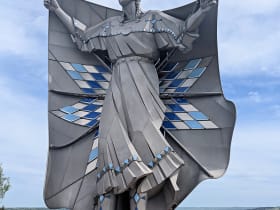
Dignity of Earth and Sky
1.9 miles away
Dignity of Earth and Sky: on the bluff at the I-90 rest area just east of the Missouri River near Chamberlain. Free, always open, with parking, restrooms, and a short walk to the sculpture.
South Dakota Cultural Heritage Center
63 miles away
South Dakota Cultural Heritage Center: 900 Governors Dr, Pierre. Admission charged, children often free or reduced. Best for ages 6 and up.
South Dakota State Capitol
63 miles away
South Dakota State Capitol: 500 E Capitol Ave, Pierre. Free to visit, with self-guided and staffed tours on weekdays.