
South Dakota State Capitol
500 E Capitol Ave, Pierre, SD
Pierre, SD
A grand marble statehouse of stained glass and hand-laid mosaic floors, rising above the Missouri River in the country's second-smallest capital city.
For a state as young and as sparsely settled as South Dakota was in 1910, the Capitol in Pierre is a remarkably grand building. Rising above the Missouri River, it is a domed statehouse of marble, stained glass, and mosaic, modeled loosely on the Montana capitol and built to announce that this new state on the plains meant to endure.
Inside, marble staircases climb past stained-glass windows to a soaring rotunda, and the floors are laid in terrazzo, tiny stone and glass tiles set by hand into intricate patterns. Outside, landscaped grounds slope down toward a reflecting pond and a spring-fed lake. It is a working statehouse you can walk through freely, one of the least crowded and most rewarding capitols in the country.
What Travelers Love
- The marble staircases, stained-glass windows, and soaring rotunda inside
- The terrazzo floors laid by Italian artisans, each said to have left a signature tile
- Landscaped grounds with a reflecting pond, monuments, and a spring-fed lake nearby
- A working statehouse you can wander freely, without the crowds of larger capitals
Worth Knowing
- The building is open for self-guided and, at times, guided tours, and remains a working seat of government
- The reflecting pond and grounds are worth a walk in their own right, especially in warm months
- The nearby Capitol Lake is fed by an artesian spring and stays open in winter, drawing waterfowl
- Pierre is central and a long drive from the state's corners, so plan an overnight
Learn about South Dakota State Capitol
Building a statehouse on the plains
South Dakota became a state in 1889, and after years of debate Pierre was confirmed as the permanent capital in 1904, chosen in part for its central location on the Missouri River. Construction of the Capitol began soon after, and the building was completed and dedicated in 1910, rising on the east bank of the river.
The design drew closely on the Montana State Capitol, a common practice of the era that let a young state build handsomely without starting from scratch. The result was a domed, Classical Revival statehouse of imported and local stone, ambitious for its time and place, a statement of permanence for a state still finding its footing on the Northern Plains, land that is the homeland of the Oceti Sakowin.
The terrazzo and the artisans
The Capitol's most beloved feature is underfoot. Its floors are laid in terrazzo, thousands of small pieces of stone and glass set by hand into swirling patterns and borders, the work of skilled Italian artisans brought in for the job. Tradition holds that each artisan set a single blue stone somewhere in the floor as a personal signature, and visitors still hunt for them.
Above the floors, the interior rises through marble columns and staircases to stained-glass windows and a grand central rotunda beneath the dome. The craftsmanship throughout, in stone, glass, plaster, and mosaic, reflects an era when public buildings were meant to inspire, and it has been carefully restored over the decades to keep that spirit alive.
The grounds and Capitol Lake
The Capitol's grounds are part of the experience. Landscaped lawns and gardens slope toward a reflecting pond, and the surrounding grounds hold monuments and memorials, including a moving Flaming Fountain and veterans' tributes near the water.
Just below the Capitol lies Capitol Lake, fed by a warm artesian spring drilled long ago. The spring keeps part of the lake open through the coldest winters, and the open water draws waterfowl, especially geese and ducks, that gather here by the thousands in the cold months, a striking sight against the snow with the statehouse rising behind.
Visiting the Capitol
The Capitol is open to visitors year-round, for self-guided walks through its public spaces and, at times, guided tours that explain its art and history. It remains a working seat of government, so the legislative chambers and halls are alive with the business of the state.
Summer and fall bring the mildest weather for walking the grounds and the riverfront, while winter offers the memorable sight of waterfowl on the spring-fed lake and the marble interior as a warm refuge. Paired with the Cultural Heritage Center just up the hill, the Capitol anchors a satisfying day in South Dakota's small, central capital.
Closest Boutels
The closest Boutel™ stays, so you can turn this stop into an overnight. Each is a place we chose through independent editorial review, never a paid placement.
Details
Pierre, SD
Frequently asked questions
What is the South Dakota State Capitol?
The South Dakota State Capitol, in Pierre, is the state's beautiful and historic capitol building, an elegant early twentieth-century structure renowned for its grand architecture and lovely grounds beside a scenic lake. The handsome capitol, crowned by a dome, houses the offices of state government and features a grand interior with marble, murals, mosaics, stained glass, and historic art, along with beautifully landscaped grounds and a lake with a flame monument. Visitors can tour its stately halls and admire its craftsmanship. A grand and historic landmark, it delights architecture and history lovers. With its architecture, the South Dakota State Capitol offers a compelling destination in South Dakota.
What can you see at the South Dakota State Capitol?
You can admire the grand dome and elegant architecture, tour the stately interior with its marble, murals, mosaics, stained glass, and historic art, see the legislative chambers, and enjoy the beautifully landscaped grounds and the lake with its flame monument. The impressive architecture, the ornate interior, the historic art, and the lovely grounds are the draws, offering a rich blend of history and beauty. The grand interior and the grounds are highlights. With its architecture, the capitol offers a rewarding visit in Pierre, South Dakota.
Can you tour the South Dakota State Capitol?
Yes, the South Dakota State Capitol welcomes visitors and has offered guided and self-guided tours of its grand halls, chambers, and historic art, generally on weekdays when government offices are open. Because it is a working seat of government, access and tour availability can depend on the day and current operations, so checking current visiting information before you go is wise. Confirming current tour details ahead ensures a rewarding visit to the South Dakota State Capitol in South Dakota.
When is the best time to visit the South Dakota State Capitol?
As an indoor landmark, the South Dakota State Capitol is enjoyable year-round in any weather, with weekdays generally the time when tours and the fullest access are available, and the mild months especially pleasant for also enjoying the grounds and lake. Because hours and tours can vary, checking the current schedule before you go is wise. Because it is indoors, the capitol makes a rewarding stop any time of year, with the mild months best for the grounds, in Pierre, South Dakota.
What is near the South Dakota State Capitol?
The South Dakota State Capitol is in Pierre in central South Dakota, within reach of the South Dakota Cultural Heritage Center, the Oahe Dam and Lake Oahe, the Missouri River, and the routes across central South Dakota. That makes the capitol a compelling stop to combine with the Cultural Heritage Center and the other attractions of Pierre on a visit to South Dakota.
Nearby
South Dakota Cultural Heritage Center
0.7 miles away
South Dakota Cultural Heritage Center: 900 Governors Dr, Pierre. Admission charged, children often free or reduced. Best for ages 6 and up.
Oahe Dam and Lake Oahe
6.5 miles away
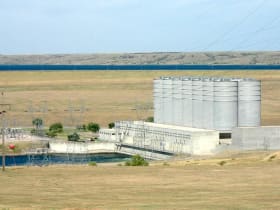
Oahe Dam and Lake Oahe: about 6 miles north of Pierre off SD-1804 and SD-1806. Free to visit. The visitor overlook gives a sense of the scale of the earthen dam and the reservoir behind it.
Pioneer Auto Show
38 miles away
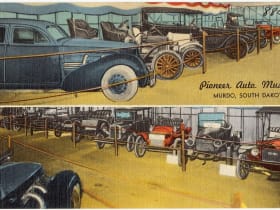
Pioneer Auto Show: on 5th Street in Murdo, just off I-90. Admission charged, and one ticket covers the whole rambling complex.