
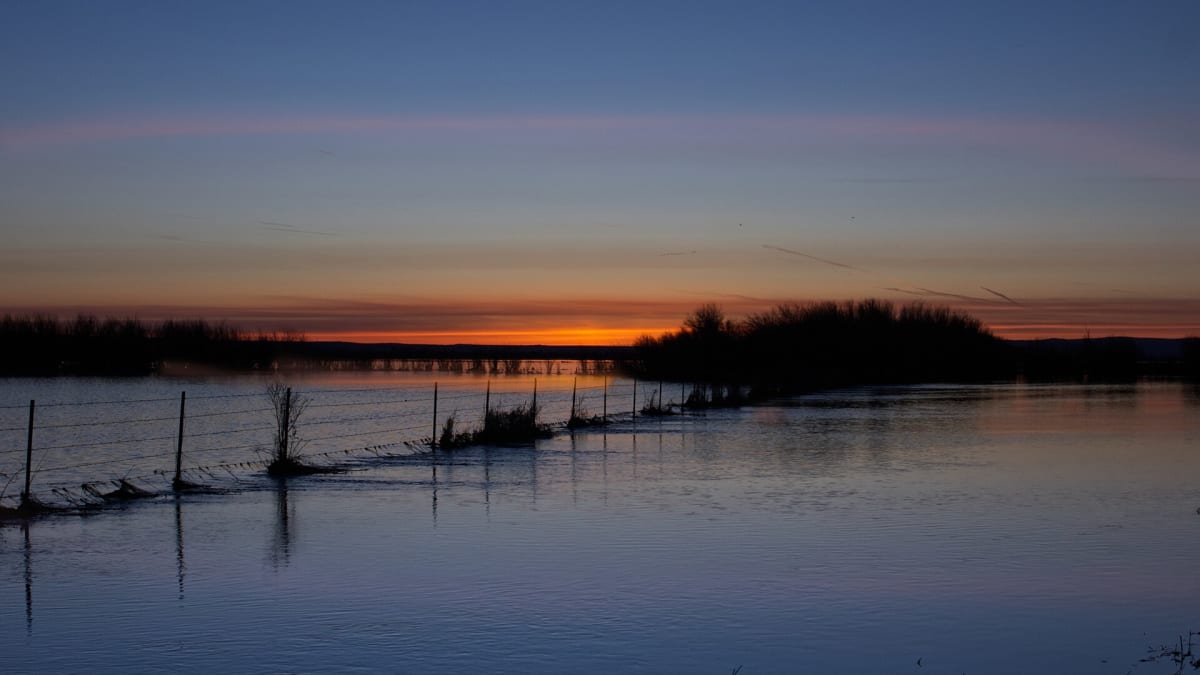
Malheur National Wildlife Refuge
Princeton
In the high desert of southeastern Oregon, where sagebrush runs to the horizon and the nearest town is a long drive off, a great shallow marsh spreads across the Harney Basin. Malheur National Wildlife Refuge is that marsh, an oasis on the Pacific Flyway where hundreds of thousands of migrating birds drop out of the sky each spring to rest and feed. More than 320 species have been recorded here, which makes this remote corner of the state one of the premier birding destinations in North America.
It is also one of the older refuges in the country, set aside by President Theodore Roosevelt in 1908 to stop the slaughter of its birds. The story of how that happened, and of the ranching empire that once ruled this valley, is as big as the landscape.
Learn about Malheur National Wildlife Refuge
The story of Malheur
This is the homeland of the Northern Paiute, whose Wadatika band lived across the Harney Basin, gathering fish and waterfowl and the seeds and roots of the marsh and the desert. Their descendants today are the Burns Paiute Tribe, based just north of the refuge.
At the turn of the twentieth century, the marsh birds were being shot by the thousands. Plume hunters killed egrets, herons, and grebes for their feathers, which fashion demanded for women’s hats. Two young wildlife photographers, William Finley and Herman Bohlman, documented both the birds and the destruction, and Finley carried his photographs to President Theodore Roosevelt. On August 18, 1908, Roosevelt set aside the lakes and marshes as a federal bird reserve. It has since grown to more than 187,000 acres.
Long before it was a refuge, this valley was cattle country. In the 1870s a young cattleman named Peter French built one of the largest ranches in the West here, the P Ranch, running thousands of head across the Blitzen Valley. He left his mark on the map. The little town of Frenchglen at the refuge’s south end still carries his name, and out on the desert stands his round barn, a great circular building where cowboys broke horses through the winter, now preserved as a state heritage site. French was shot and killed in a land dispute in 1897.
The land
The refuge sits in the Harney Basin, a bowl in the Great Basin high desert where the water has no outlet to the sea. Snowmelt from Steens Mountain, the great fault-block ridge that rises to the south, feeds the Donner und Blitzen River, which runs north through the Blitzen Valley into shallow Malheur Lake. The river carries a strange name: a cavalry officer crossing it in an 1864 thunderstorm called it Donner und Blitzen, German for thunder and lightning, and it stuck.
In wet years Malheur and neighboring Harney Lake spread far across the basin floor; in dry years they pull back to mudflats. The whole scene lies around 4,100 feet, ringed by sagebrush, rimrock, and the volcanic strangeness of nearby Diamond Craters. It is enormous, quiet, and a very long way from anywhere, which is exactly why the birds love it.
A migration like few others
Malheur is a green island in a sea of desert, and to a bird flying the Pacific Flyway it is a place to come down and rest. Spring is the great event, when snow geese, northern pintails, tundra and trumpeter swans, and clouds of other waterfowl pour through by the tens of thousands. Sandhill cranes bugle across the wet meadows and stay on to nest.
The variety is the whole point. Marsh and open water draw the waterfowl, the ibis, and the grebes; the wet meadows bring shorebirds and cranes; and the surrounding sagebrush and juniper hold desert birds and birds of prey. Golden eagles hunt the basin, and the refuge counts dozens of mammal species as well, from mule deer to pronghorn out on the flats.
Season by season
Spring is why birders make the long drive. From roughly March into May the migration peaks, the marsh is loud and full, and the desert briefly greens. It is the busiest and most rewarding season.
Summer settles into nesting, with young birds on the water and hot, bright, dry days across the basin. Early morning and evening are the times to be out.
Fall brings the southbound migration and cooler air, a quieter echo of spring, with waterfowl staging on the lakes and raptors moving through.
Winter is cold and still, the marsh often frozen and the crowds long gone. It is a season for wintering raptors, eagles among them, and for having the vast landscape almost entirely to yourself.
Closest Boutels
The closest Boutel™ stays, so you can turn this stop into an overnight. Each is a place we chose through independent editorial review, never a paid placement.
Frequently asked questions
When is the best time to visit Malheur for birds?
Spring is the show, roughly March through May, when hundreds of thousands of migrating birds pour through the refuge. Late March often peaks for waterfowl and sandhill cranes, while late April into May brings shorebirds and colorful songbirds. Fall migration is rewarding too, but for sheer numbers and courtship displays in fresh plumage, spring is unmatched.
What birds will I see at Malheur?
An extraordinary variety. The refuge records well over three hundred bird species, and in spring you may see sandhill cranes, tundra swans, snow and Ross's geese, and great rafts of ducks like pintail and cinnamon teal, along with raptors and owls. It hosts the largest population of sandhill cranes of any refuge in the West, and the massed flocks over the wet meadows are a genuine spectacle.
How do you explore Malheur, and where should I start?
The refuge is huge but easy to explore on your own, mostly by driving its roads and stopping at pullouts and viewpoints with binoculars. The refuge headquarters is the classic starting point, a legendary spot where the trees and water draw rare birds, owls, and migrants right in. From there, roads and lanes lead out across the meadows and wetlands to more viewing.
Is Malheur remote, and what should I bring?
Yes, it lies in a wide-open basin in southeastern Oregon, a long way from big towns, with the small town of Burns as the nearest hub. Bring binoculars or a spotting scope, a bird guide, water, snacks, and a full tank of gas, since services are limited. Cell coverage is spotty, and early mornings are usually the most active and beautiful time for birds.
Is Malheur good for people who are not serious birders?
Absolutely. Even casual visitors are struck by the sheer numbers of birds, the calls of the cranes, and the beauty of the wetlands set against the desert and distant Steens Mountain. It is a peaceful, wide-open place for a scenic drive and a picnic, and the wildlife often puts on a show whether or not you can name every species.
Nearby
Crystal Crane Hot Springs
17 miles away
A warm natural mineral pond in the eastern Oregon high desert, about 25 miles southeast of Burns on Highway 78.
Peter French Round Barn
24 miles away
Peter French was shot and killed on New Year's Day 1897 by a homesteader disputing his land claims, one of the more dramatic endings to the cattle wars era in Oregon.

Steens Mountain
46 miles away
A mile-high fault-block mountain rising alone from the southeast Oregon high desert, its gentle west slope climbing to a rim that drops nearly a mile to the Alvord Desert.