
Lost Dutchman State Park
1727 E Apache Trl, Apache Junction, AZ
Apache Junction, AZ
A stand of saguaro and desert trails at the very foot of the Superstition Mountains, named for a legendary lost gold mine that has drawn dreamers and searchers for generations.
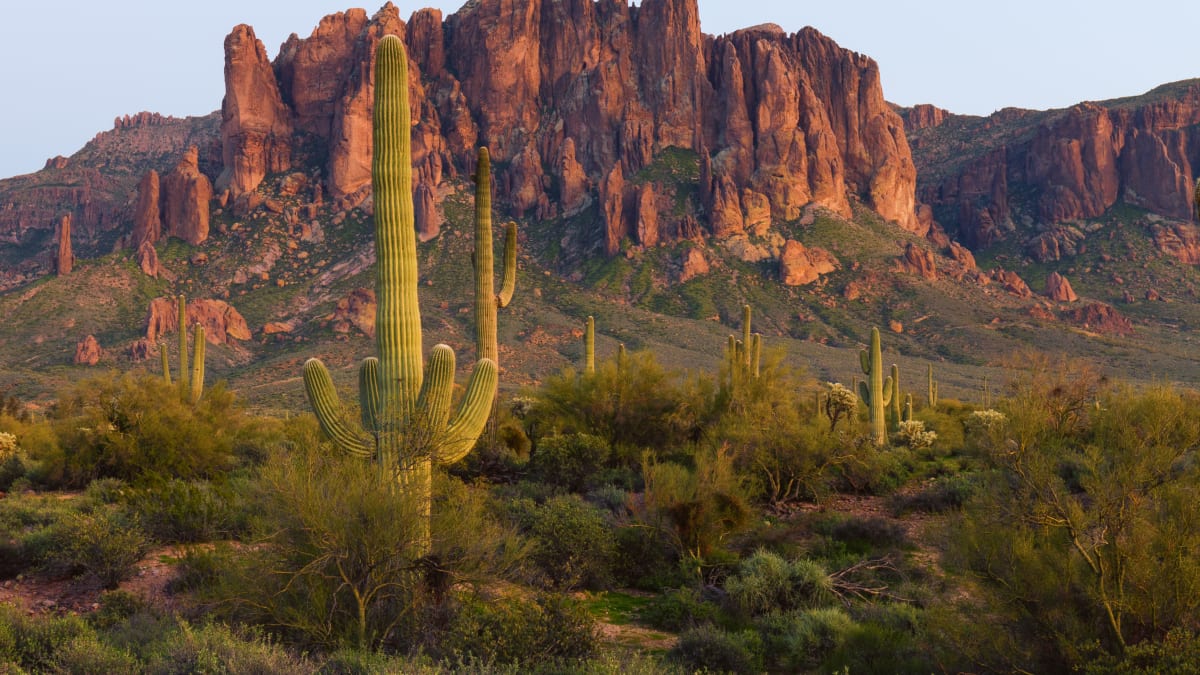
Lost Dutchman State Park lies at the foot of the Superstition Mountains, a jagged volcanic range that rises like a wall from the desert east of Phoenix. The park is a place of saguaro forests, desert washes, and trails that lead from easy loops on the flats up into the rugged folds of the mountains, with the great cliffs looming overhead the whole way.
Its name comes from one of the most famous legends of the American West, the Lost Dutchman's Gold Mine, said to be a fabulously rich vein hidden somewhere in the Superstitions. Generations of prospectors have searched for it, some never returning, and the tale gives the park and its mountains an air of mystery that lingers over every trail and every deep, shadowed canyon.
What Travelers Love
- The sheer wall of the Superstition Mountains rising right above the park
- Desert trails through saguaro cactus with big mountain views
- Spring wildflowers that can carpet the desert floor in a good year
- Camping under dark skies with the mountains lit gold at sunset
Worth Knowing
- Summer heat is intense, so hike early, carry lots of water, and rest in the midday shade
- Trails into the Superstition Wilderness can be steep and rugged, so know your route and limits
- Spring is peak season for wildflowers and crowds, so arrive early on weekends
- The desert has thorns, heat, and wildlife, so wear sturdy shoes and watch where you step
Learn about Lost Dutchman State Park
The legend of the Lost Dutchman
The park takes its name from a German immigrant, Jacob Waltz, remembered as the Dutchman, who was said in the late 1800s to have found and worked a spectacularly rich gold mine somewhere in the Superstition Mountains. He kept its location a secret to his death, and the vague clues he supposedly left behind sent countless treasure hunters into the range in search of it.
Over the years the legend grew, tangled up with tales of Spanish and Mexican miners, curses, and searchers who vanished into the mountains and were never found. Whether the mine ever existed is anyone's guess, and no one has ever produced it, but the story endures. It has drawn dreamers to these canyons for well over a century and given the Superstitions a reputation as one of the most storied and mysterious ranges in the West.
The Superstition Mountains
The mountains themselves are the product of ancient volcanic violence. Long ago this region blew apart in enormous eruptions, and the collapsed remains of those volcanoes hardened into the sheer cliffs, spires, and deep canyons that make up the range today. The result is some of the most rugged and dramatic desert terrain in Arizona, a maze of rock that has swallowed searchers and challenged hikers alike.
To the Apache and other Native peoples this has long been a place of power and caution, and the range still commands respect. From the park, the wall of the Superstitions dominates the eastern sky, glowing red and gold at sunset, while trails climb into the Superstition Wilderness beyond, a vast protected backcountry of hidden springs, hoodoos, and silence.
Desert trails and wildflowers
The park offers a range of trails, from gentle nature loops across the desert flats to steep, rocky paths that climb toward the base of the cliffs and into the wilderness beyond. Along the way the trail passes through classic Sonoran Desert: towering saguaros with their arms raised, spiny cholla and prickly pear, ironwood and palo verde, all set against the backdrop of the mountains.
In spring, especially after a wet winter, the desert can put on a show. Wildflowers spread across the flats in yellows, oranges, and purples, the cactus bloom, and the whole landscape briefly softens. It is the most beautiful and most popular time to visit, though the desert has its own quieter appeal in every season for those who come prepared.
Camping and the seasons
The park's campground puts visitors right at the base of the mountains, a fine place to watch the last light burn on the cliffs and the stars come out over the desert. Waking early to hike before the heat, and lingering at dusk when the desert comes alive, are the great pleasures of a stay here.
Season matters in this country. Fall through spring is the comfortable time, with mild days ideal for hiking and camping and the chance of spring flowers. Summer brings dangerous heat, so any hiking must be done at dawn with plenty of water, and midday is for shade and rest. The reward in any cooler season is a front-row seat to one of Arizona's most legendary landscapes.
Closest Boutels
The closest Boutel™ stays, so you can turn this stop into an overnight. Each is a place we chose through independent editorial review, never a paid placement.
Details
Apache Junction, AZ
Frequently asked questions
What is Lost Dutchman State Park?
Lost Dutchman State Park, near Apache Junction east of Phoenix, sits at the foot of the dramatic Superstition Mountains and is named for the legendary Lost Dutchman's Gold Mine, a fabled treasure said to be hidden somewhere in these peaks. The park offers excellent desert hiking, from easy nature loops to the strenuous climb toward the Flatiron, along with camping, spectacular saguaro-studded scenery, and brilliant spring wildflowers. With the rugged Superstitions as a backdrop, it is a beloved and scenic gateway to the desert wilderness just outside the Phoenix metro area.
What can you do at Lost Dutchman State Park?
You can hike a range of desert trails, from the gentle Native Plant and Discovery loops to the challenging Siphon Draw trail climbing toward the towering Flatiron formation, camp beneath the Superstition Mountains, enjoy stunning sunset and stargazing views, spot desert wildlife, and, in spring, marvel at colorful wildflower blooms. Ranger programs and picnic areas add to the appeal. The park's mix of easy and demanding trails amid gorgeous Sonoran Desert and mountain scenery makes it a rewarding destination for casual visitors and serious hikers alike.
What safety precautions should I take at Lost Dutchman State Park?
The desert heat is a serious hazard, so carry plenty of water, wear sun protection and sturdy shoes, and avoid strenuous hikes like Siphon Draw to the Flatiron during the hot midday hours in warm months, starting early instead. The upper Flatiron route is steep, rugged, and requires scrambling, causing frequent rescues, so know your limits and turn back if needed. Watch for rattlesnakes, stay on trails, and tell someone your plans, since the terrain is rugged and shade is scarce. Preparation keeps a desert visit safe.
When is the best time to visit Lost Dutchman State Park?
The cooler months from fall through spring are ideal for hiking and camping in comfort, with spring especially beautiful for wildflowers, while summer is very hot and best limited to early morning outings with ample water. Sunrise and sunset paint the Superstition Mountains in gorgeous color, making them prime times for photos and gentler hikes. The milder months offer the safest and most pleasant conditions, though the park's dramatic scenery is stunning year-round with proper heat precautions.
What is near Lost Dutchman State Park?
The park is near Apache Junction at the edge of the Superstition Wilderness, close to the start of the historic Apache Trail scenic drive, Canyon Lake, the tiny town of Tortilla Flat, and the Superstition Mountain Museum, with the greater Phoenix metro area and its attractions to the west. That makes Lost Dutchman State Park an easy and scenic base to combine with the Superstitions, the Apache Trail, and the many attractions of the Valley of the Sun on a visit to central Arizona.
Outside the Park

Apache Trail Scenic Drive
0.4 miles away
The Apache Trail (AZ-88) follows the route used to haul supplies during the Roosevelt Dam construction.
Superstition Wilderness, near Mesa
6.3 miles away
The Superstition Wilderness protects 160,000 acres of volcanic terrain east of Phoenix. The Lost Dutchman Mine is a legendary gold mine supposedly hidden here since the 1800s.
Tortilla Flat
6.8 miles away
Tortilla Flat is a historic stagecoach stop on the Apache Trail with a restaurant, saloon, and gift shop. The interior is decorated floor-to-ceiling with dollar bills signed by visitors.

Boyce Thompson Arboretum State Park
22 miles away
Boyce Thompson is Arizona's oldest and largest botanical garden, set in a desert canyon beneath the cliffs of Picketpost Mountain.