

Liliuokalani Gardens
Hilo, HI
A tranquil Japanese garden of arched bridges and stone lanterns on Hilo Bay, named for the last queen of the Hawaiian Kingdom.
Liliʻuokalani Gardens is a serene surprise on the shore of Hilo Bay: a formal Japanese garden of arched bridges, koi ponds, stone lanterns, and a pagoda, spread across a green peninsula in the tropics. Said to be one of the largest authentic Japanese gardens outside Japan, it was created in the early twentieth century to honor the many Japanese immigrants who came to work Hawaii's sugar plantations.
The garden carries the name of Queen Liliʻuokalani, the last reigning monarch of the Hawaiian Kingdom, giving this quiet place a weight beyond its beauty. Set against the backdrop of Hilo Bay, with Mauna Kea rising behind on a clear day, it is a place where Hawaiian and Japanese histories meet along the water.
What Travelers Love
- Arched bridges, koi ponds, stone lanterns, and a pagoda in a classic Japanese design
- A peaceful bayfront setting with views across Hilo Bay to Mauna Kea on clear days
- The free, easy strolling paths that make it a beloved local park
- The footbridge to little Coconut Island, Mokuola, just offshore
Worth Knowing
- Hilo is one of the wettest cities in the country, so expect showers and lush, damp greenery
- This is a treasured public park, so keep it quiet and tidy and stay off the fragile plantings
- Parking and paths are easy and flat, making it a gentle, accessible stop
- Mornings often bring the calmest light on the bay before clouds gather over the mountains
Learn about Liliuokalani Gardens
Named for the last queen
The garden honors Queen Liliʻuokalani, who reigned as the last monarch of the Hawaiian Kingdom before it was overthrown in 1893 by a group of businessmen backed by American interests. She is remembered as a defender of her people and their sovereignty, and as a gifted composer, the author of the beloved song Aloha ʻOe.
Liliʻuokalani had ties to the Hilo area and is said to have donated the land, and the garden bears her name in tribute. For many Native Hawaiians her story remains deeply meaningful, a reminder of a kingdom lost and a queen who stood for her nation.
To walk here is to move through two histories at once: a Japanese garden built by an immigrant community, on land tied to a Hawaiian queen. The combination is very much of Hilo, a town shaped by many peoples.
A Japanese garden in the tropics
The garden was laid out in the Edo style, with the classic elements of Japanese design: half-moon bridges arching over ponds, stone lanterns, a torii gate, a pagoda, and carefully placed rocks and water. It was built to honor the Japanese immigrants who came to Hawaii to labor on the sugar plantations and who became a lasting part of island life.
What makes it unusual is the setting. Instead of the maples and pines of Japan, this garden blends its traditional forms with tropical greenery and the constant presence of Hilo Bay, a fusion found almost nowhere else.
Its scale is notable too, often described as among the largest authentic Japanese gardens outside Japan. Yet it remains an unhurried neighborhood park, free to all, as much a place for local families as for visitors.
The bay and Coconut Island
The garden sits on the Waiākea peninsula right at the edge of Hilo Bay, and a short footbridge leads from it to Mokuola, better known as Coconut Island, a small islet in the bay. Mokuola means island of life or healing, and it was traditionally a place of refuge and healing in Hawaiian practice.
This bayfront location also carries a somber history. Hilo has been struck by devastating tsunamis, most catastrophically in 1946 and 1960, which killed many people and reshaped the waterfront. The open, park-like bayfront where the garden sits is partly a result of rebuilding after those disasters, with low-lying land kept as green space rather than housing.
On a clear day the view across the bay reaches all the way to snow-capped Mauna Kea, the tallest mountain in Hawaii, a sacred summit to Native Hawaiians, floating above the water beyond the garden's bridges.
Season by season
Hilo is famously rainy, among the wettest cities in the United States, and that abundant rain is what keeps the garden and the whole eastern side of the island so lush and green year round.
There is no true dry season, though summer tends to be a little brighter. Showers can pass through at any time, often clearing as quickly as they arrive.
Early mornings frequently offer the calmest water and clearest views across the bay, before clouds build against the great volcanoes inland, making that the loveliest time for a quiet stroll.
Closest Boutels
The closest Boutel™ stays, so you can turn this stop into an overnight. Each is a place we chose through independent editorial review, never a paid placement.
Frequently asked questions
What are the Liliuokalani Gardens?
The Liliuokalani Gardens, in Hilo on the Big Island of Hawaii, are a beautiful and serene Japanese-style garden along Hilo Bay, one of the largest such gardens outside Japan, named in honor of Queen Liliuokalani, the last reigning monarch of Hawaii. The lovely gardens feature ponds, arched bridges, stone lanterns, a teahouse, pagodas, and manicured landscapes in the Japanese style, honoring the Japanese heritage in Hawaii, all set along the scenic bay with views toward the ocean and mountains. Named for the beloved queen, the peaceful gardens are a treasured spot for reflection and beauty. A serene and beautiful garden, it delights visitors. With its beauty, the gardens offer a compelling destination in Hawaii.
Who was Queen Liliuokalani?
Queen Liliuokalani was the last reigning monarch of the Hawaiian Kingdom, a beloved queen who ruled before the monarchy was overthrown, a profound and painful event in Hawaiian history. She is remembered and honored by Native Hawaiians and others as a symbol of the Hawaiian nation and its sovereignty, and she was also a gifted composer. The gardens named in her honor reflect the esteem in which she is held. Approaching her memory with respect enriches a visit to the Liliuokalani Gardens in Hawaii.
What can you do at the Liliuokalani Gardens?
You can stroll the peaceful Japanese-style gardens along Hilo Bay, admire the ponds, arched bridges, stone lanterns, teahouse, and pagodas, enjoy the views toward the ocean and mountains, and find quiet spots for reflection in the serene setting. The beautiful gardens, the Japanese-style features, the bayside setting, and the peaceful atmosphere are the draws, making it a lovely and calming visit. The gardens and the bay views are highlights. With its beauty, the Liliuokalani Gardens offer a rewarding experience in Hilo, Hawaii.
When is the best time to visit the Liliuokalani Gardens?
The gardens can be enjoyed year-round, with the drier parts of the day more pleasant in the rainy Hilo area, and the morning light often lovely on the ponds and gardens, while the peaceful setting is beautiful in any calm weather. Because Hilo is often rainy, timing a visit for a drier window helps. For the most pleasant stroll, aim for a drier time at the Liliuokalani Gardens in Hawaii.
What is near the Liliuokalani Gardens?
The Liliuokalani Gardens are in Hilo on the Big Island of Hawaii, along Hilo Bay, within reach of downtown Hilo, Rainbow Falls, the Panaewa Rainforest Zoo, Mauna Kea, and the other attractions of the Hilo area. That makes the Liliuokalani Gardens a compelling stop to combine with Rainbow Falls and the other attractions of Hilo on a visit to Hawaii.
Nearby
Rainbow Falls
2.6 miles away
Just about the easiest big waterfall to reach with kids in Hawaii.
Panaewa Rainforest Zoo and Gardens
6.0 miles away
A relaxed, easy win for younger kids, and free. The Panaewa Rainforest Zoo just south of Hilo is small and walkable, set right in the rainforest, with a white Bengal tiger as its star along with sloth...
Lava Tree State Monument
20 miles away
This is one of the strangest short walks in Hawaii, and hardly anyone outside Puna knows it.
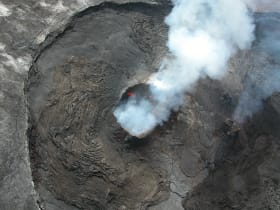
Hawaii Volcanoes National Park
26 miles away
Two of the world's most active volcanoes, Kilauea and Mauna Loa, still building the island of Hawaii.