

Lake Estes
1770 Big Thompson Ave, Estes Park
Estes Park, CO
A calm mountain reservoir ringed by an easy paved loop where the elk outnumber the joggers, right at the front door of Rocky Mountain National Park.
In a town famous for gasping-lungs trailheads and a national park full of alpine summits, Lake Estes is the gentle one. It is a flat, open reservoir on the eastern edge of Estes Park, wrapped by a level paved loop that families, older walkers, and cyclists can all enjoy, with the big Front Range peaks reflected in the water. After a hard day up in Rocky Mountain National Park, it is exactly the kind of easy, beautiful place people come back to.
It is also one of the most reliable wildlife spots in a town built on wildlife. Elk graze the lakeside meadows and cross the path so routinely that regulars stop noticing them, and deer, geese, ducks, and the occasional bald eagle round out the cast. The lake is entirely human-made, a piece of one of Colorado's great water projects, but decades on it has become a beloved slice of town life, and one of the friendliest introductions to the high country you can find.
What Travelers Love
- A flat, paved loop of roughly four miles that almost anyone can walk or bike, rare in this vertical corner of Colorado
- Near-daily elk right along the path and on the adjoining meadows, plus deer, waterfowl, and the occasional bald eagle
- Big reflected mountain views across the water, with the high peaks of Rocky Mountain National Park stacked to the west
- A marina for kayaks, paddleboards, and pontoon boats, and calm water for a low-key afternoon on the lake
Worth Knowing
- The lake is a reservoir formed by Olympus Dam and is also the town's drinking-water source, so it is managed for that first, and water levels can vary
- It sits above 7,500 feet, so the sun is strong, storms build fast on summer afternoons, and it can be cold and windy even in warm months
- Elk are wild and can be aggressive, especially during the fall rut and in spring calving season, so keep a good distance and never approach them
- Fishing follows Colorado state regulations and a license is required; the Big Thompson below the dam is a popular spot for trout
Learn about Lake Estes
A reservoir built to move water across the mountains
Lake Estes is not a natural lake but the centerpiece of a remarkable feat of engineering. It is part of the Colorado-Big Thompson Project, a vast mid-century system built to carry water from the wetter western slope of the Rockies, under the Continental Divide, to the dry, farm-rich plains on the eastern side. Olympus Dam, a roughly seventy-foot dam across the Big Thompson River, was completed in 1949 and backed the river up into the reservoir you see today.
The next year the Estes Power Plant began generating hydroelectricity on the lake's western shore, turning the falling water into power on its long journey east. So the calm surface where paddleboarders drift is a working part of a system that supplies water and electricity across a big stretch of northern Colorado, and doubles as the drinking-water source for Estes Park itself.
The loop trail and the everyday elk
The reason most visitors love Lake Estes is the trail around it, a paved loop of roughly four miles that circles the whole reservoir. It is nearly flat, an unusual thing in Estes Park, which makes it a favorite for families with strollers, cyclists, and anyone who wants mountain scenery without a climb. The loop crosses the Big Thompson, skirts a golf course and open meadows, and serves up wide reflected views of the peaks the whole way around.
It is also about as sure a wildlife walk as Colorado offers. Elk are so regular along the lakeside path and meadows that you are all but guaranteed to see them any time of day, and the herd draws crowds during the dramatic fall rut when the bulls bugle across the valley. Deer, coyotes, beaver, waterfowl, and bald eagles all use the lake too. They are wild animals, though, and elk can charge, so the rule is simple: give them plenty of room and never get between a cow and her calf.
On the water and at the gateway
For those who want to get out on the lake, the marina rents kayaks, canoes, paddleboards, paddle boats, and pontoon boats through the warm season, and the sheltered water is calm enough for beginners. Anglers fish the reservoir and, especially, the Big Thompson River below Olympus Dam, where cold tailwater keeps trout happy. Bring a Colorado license and dress for mountain weather that can swing from hot sun to a cold squall in an hour.
Above all, Lake Estes is a gateway. It sits at the eastern edge of town, minutes from the entrance to Rocky Mountain National Park, so it makes a perfect easy morning or evening bookend to a day of harder hiking up high. Watch the alpenglow catch the peaks across the water at sunset, with elk grazing the near shore, and you understand why a man-made reservoir became one of the best-loved spots in one of Colorado's best-loved towns.
Closest Boutels
The closest Boutel™ stays, so you can turn this stop into an overnight. Each is a place we chose through independent editorial review, never a paid placement.
Details
Estes Park, CO
Frequently asked questions
What is Lake Estes?
Lake Estes is a scenic reservoir in the charming mountain town of Estes Park, Colorado, the eastern gateway to Rocky Mountain National Park. Set amid the dramatic peaks of the Front Range, the lake offers beautiful mountain views, a popular paved trail encircling the water, fishing, boating, and a marina, along with frequent sightings of the elk that roam the Estes Park area. A lovely and accessible spot for recreation and taking in the scenery, Lake Estes is a beloved feature of the town, perfect for walking, biking, paddling, and enjoying the stunning surroundings of the Colorado Rockies.
What can you do at Lake Estes?
You can walk or bike the paved Lake Estes Trail that loops around the water for scenic mountain views, fish for trout and other species, rent boats, kayaks, or paddleboards at the marina, paddle or sail on the lake, picnic, watch for the elk that frequent the area, and enjoy birdwatching and photography. The easy, accessible trail and lakeside setting make it great for families. With its beautiful scenery, loop trail, boating, fishing, and wildlife, Lake Estes offers a relaxing and enjoyable outdoor experience in the heart of Estes Park, the gateway to Rocky Mountain National Park.
Can you see elk at Lake Estes?
Yes, the Estes Park area, including around Lake Estes, is famous for its elk, which frequently graze in the meadows, golf courses, and open areas near the lake and town, especially in the cooler months and during the dramatic fall rut when the bulls bugle. Seeing these large animals up close is a highlight of visiting Estes Park. However, they are wild animals, so keep a safe distance, never approach or feed them, and observe from afar, particularly during the fall rut when bulls can be aggressive. Respecting the elk keeps both you and the animals safe.
When is the best time to visit Lake Estes?
Late spring through fall offers the most pleasant weather for enjoying the trail, boating, and fishing, with summer ideal for water activities and fall bringing beautiful color and active elk during the rut, while winter is cold and can be snowy but scenic. The high elevation means cool temperatures and strong sun, so bring layers and sun protection. Mornings and evenings are lovely for wildlife and light. For the best combination of comfortable weather, recreation, and elk viewing, aim for late spring through fall, with fall especially rewarding for the elk and color.
What is near Lake Estes?
Lake Estes is in the town of Estes Park, the eastern gateway to Rocky Mountain National Park, near the town's shops, restaurants, and the historic Stanley Hotel, with the stunning trails, drives, and wildlife of Rocky Mountain National Park just to the west, and the Front Range within reach. That makes Lake Estes a scenic and relaxing stop to combine with Estes Park, Rocky Mountain National Park, and the mountain attractions of Colorado's Front Range on a visit to the state.
Nearby

Rocky Mountain National Park
3.6 miles away
Tundra, alpine lakes, and elk-filled meadows along Trail Ridge Road, the highest paved road in the country.
Alberta Falls
9.1 miles away
Alberta Falls is a popular, easily reached waterfall in Rocky Mountain National Park, where Glacier Creek tumbles about 30 feet through a rocky gorge.
Bear Lake
9.2 miles away
Bear Lake is the beloved hub of Rocky Mountain National Park, a small subalpine lake ringed by pines and towering peaks at about 9,500 feet.
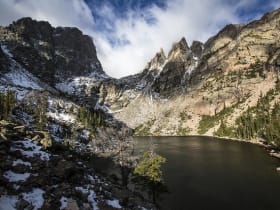
Emerald Lake
10 miles away
Emerald Lake is one of the classic day hikes in Rocky Mountain National Park, a moderate trail from Bear Lake that passes two other lovely lakes, Nymph and Dream, on its way to a stunning green-tinged...
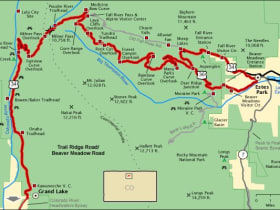
Trail Ridge Road
11 miles away
Trail Ridge Road is the highest continuous paved road in any US national park, climbing above 12,000 feet as it crosses the Continental Divide through Rocky Mountain National Park.

Mount Blue Sky Scenic Byway
44 miles away
Mount Blue Sky Scenic Byway is the highest paved road in North America, climbing from Idaho Springs to above 14,000 feet in about 28 miles.