
Kent Plantation House
3601 Bayou Rapides Rd, Alexandria, LA
Alexandria, LA
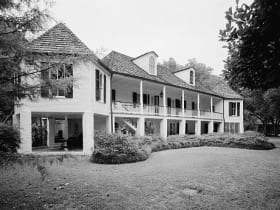
A French Creole home built before Louisiana was a state, raised on brick piers with wide galleries meant to catch the bayou breeze.
Kent Plantation House is one of the oldest standing structures in central Louisiana, a French Creole home built beside Bayou Rapides in the years around 1800, before Louisiana became a state. Raised on brick piers with deep galleries wrapping the front, it was designed for the heat and damp of the bayou country, with breezeways and shade doing the work that air conditioning does today.
Beyond the main house, the grounds preserve a cluster of outbuildings that show how such a place actually ran: a separate kitchen, slave cabins, a barn, a milk house, and an open-kettle sugar mill. Together they make Kent not a single grand mansion but a whole working landscape, and the site tells the stories of everyone who lived on it, including the enslaved men, women, and children whose labor sustained it.
What Travelers Love
- A genuine French Creole plantation house that predates Louisiana statehood
- Raised construction on brick piers with wide, breeze-catching galleries
- Outbuildings including a kitchen, cabins, a barn, and a working sugar mill on the grounds
- Costumed interpreters and demonstrations that bring the daily work of the place to life
Worth Knowing
- The house tells the full history of the site, including the lives of the enslaved people who lived and worked here
- It is a guided-tour site, so visits follow set tour times rather than open browsing
- The grounds include several outbuildings, so allow time to walk the property
- Central Louisiana summers are hot and humid, and the galleries are part of how the house stayed livable
Learn about Kent Plantation House
A house from before statehood
The land here was part of a Spanish colonial land grant, and the oldest part of the house was built around 1800, when this region was still passing between Spanish, French, and eventually American hands. Louisiana would not enter the Union until 1812, which makes Kent older than the state itself. The house takes its name from a later owner and has been carefully preserved rather than modernized away.
This is the country of the Caddo and other peoples who lived along the Red River long before European settlement. The French and Spanish colonial presence brought the Creole building traditions seen in the house, a blend of French, Caribbean, and local practice suited to a hot, wet climate. The result is a home that reads very differently from the columned Greek Revival mansions built decades later downriver.
How a Creole house was built to breathe
Kent is a textbook French Creole raised cottage. It sits high on brick piers to lift the living floor above flood and damp, with wide galleries front and back that shade the walls and create cool outdoor rooms. Doors and windows line up so that breezes can pass straight through, and the steep hipped roof sheds the heavy rains of the region.
The walls use bousillage, a traditional infill of mud, moss, and animal hair packed between timber framing, a technique brought from France and adapted to Louisiana materials. Every element, from the pier height to the gallery depth, was a practical answer to the climate, and together they explain how families lived through central Louisiana summers long before mechanical cooling.
The people of the plantation
Like every plantation of its era, Kent was a place of forced labor. Enslaved African and African American people cleared the land, tended the crops, ran the kitchen, and worked the sugar mill, and the preserved cabins and work buildings on the grounds are where much of that daily life happened. The site presents this history directly rather than romanticizing the past.
The outbuildings tell the story of the whole household economy. The separate kitchen kept cooking fires away from the main house, the sugar mill boiled cane juice down in open kettles, and the barn and milk house supported the farm. Costumed interpreters and seasonal demonstrations, including open-kettle sugar making in the cooler months, bring these processes back to life so visitors can see how the work was actually done.
Visiting Kent and the Red River country
Kent is a guided-tour site, and a visit walks you through both the main house and the surrounding buildings, giving a fuller picture than a single mansion tour would. Allow time to move across the grounds, and if you can, come during one of the seasonal demonstration events when the site is most alive.
Alexandria sits at the geographic center of Louisiana, a useful hub for exploring in several directions. The Cane River Creole country and Natchitoches lie to the north, the Kisatchie National Forest spreads to the west, and the Red River threads through it all, tying Kent to a landscape shaped by three centuries of French, Spanish, African, and American history.
Closest Boutels
The closest Boutel™ stays, so you can turn this stop into an overnight. Each is a place we chose through independent editorial review, never a paid placement.
Details
Alexandria, LA
Frequently asked questions
What is the Kent Plantation House?
The Kent Plantation House, in Alexandria in central Louisiana, is a historic Creole-style plantation home believed to be one of the oldest standing structures in central Louisiana, preserved as a house museum along with the honest history of the enslaved people who lived and labored there. The house, dating from the era around the Louisiana Purchase, is a fine example of Creole plantation architecture, and the site includes outbuildings such as a kitchen, slave cabins, a sugar mill, and other structures, with interpretation of plantation life, including the enslaved people whose forced labor sustained it. Its age, architecture, and history make it a significant destination. A historic and significant plantation house, it educates visitors. With its history, the Kent Plantation House offers a compelling destination in Louisiana.
What can you see at the Kent Plantation House?
You can tour the historic Creole-style plantation house with its period furnishings, explore outbuildings including a kitchen, slave cabins, a sugar mill, and other structures, and learn about plantation life and the honest history of the enslaved people who lived and labored there. The historic house, the outbuildings, and the interpretation of the site's full history, including slavery, are the draws, offering a rich and thoughtful look at early Louisiana plantation life. The old Creole house and honest history are highlights. With its history, the Kent Plantation House offers a rewarding visit in Alexandria, Louisiana.
Does the Kent Plantation House address the history of slavery?
Yes, as a historic plantation site, the Kent Plantation House addresses the history of the enslaved people whose forced labor sustained the plantation, including preserved slave cabins and interpretation of their lives, presenting this difficult and essential history alongside the story of the house. Approaching this history with respect and openness honors the humanity of the enslaved people whose lives are part of the site's full story. The interpretation offers a fuller, more honest account. Understanding this history deepens a visit to the Kent Plantation House in Louisiana.
When is the best time to visit the Kent Plantation House?
The milder months of fall through spring are the most pleasant for touring the house and outdoor grounds and buildings in Louisiana's climate, avoiding the intense summer heat and humidity, though tours are offered in various seasons. Because hours and tours can vary, checking current information before you go is wise. For the most comfortable visit, aim for fall through spring at the Kent Plantation House in Louisiana.
What is near the Kent Plantation House?
The Kent Plantation House is in Alexandria in central Louisiana, within reach of the Alexandria Zoological Park, the Kisatchie National Forest, Natchitoches to the north, and the other attractions of central Louisiana. That makes the Kent Plantation House a compelling stop to combine with the Alexandria Zoological Park and the other attractions of central Louisiana on a visit to the state.
Nearby
Alexandria Zoological Park
1.9 miles away
The Alexandria Zoo is a comfortable size for families, seeable in an afternoon without wearing kids out, and it does one thing especially well: its Louisiana Habitat recreates a cypress swamp with all...

Kisatchie National Forest
33 miles away
Louisiana surprises people with its one national forest, and Kisatchie is nothing like the swamp most expect.
Melrose Plantation
35 miles away
This is a plantation story most people have never heard, and it upends expectations.