
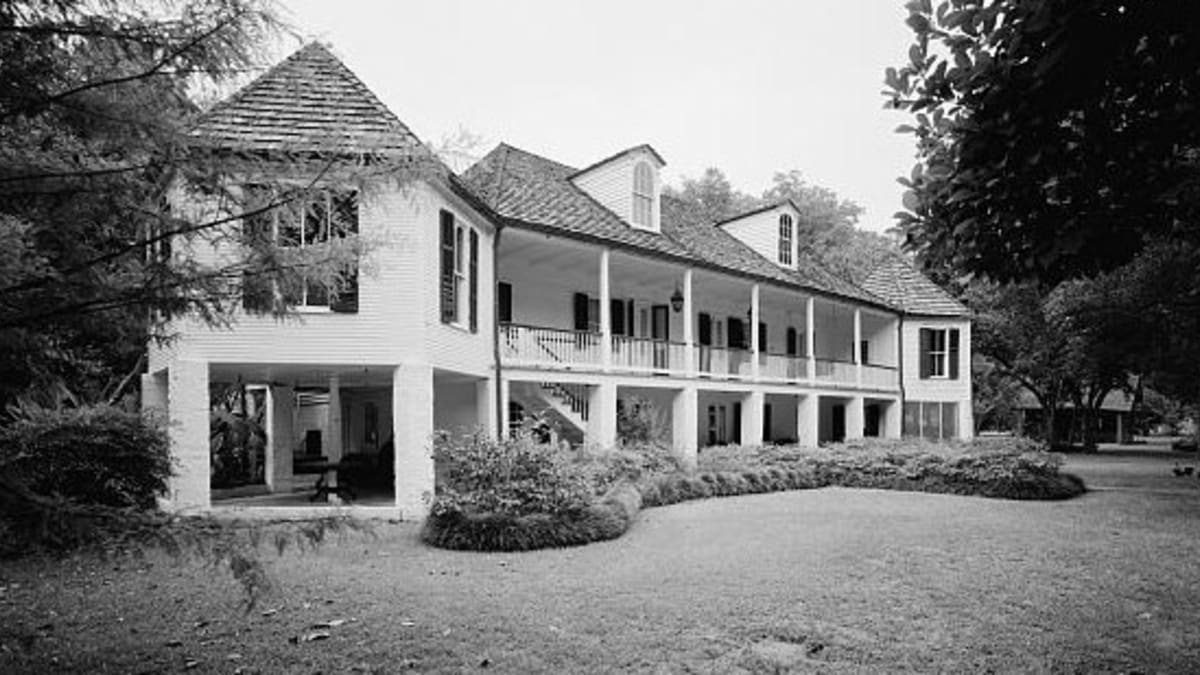
Melrose Plantation
3533 LA-119, Melrose, LA
Melrose, LA
A Creole plantation founded by a formerly enslaved woman and her descendants, later home to the celebrated folk painter Clementine Hunter.
Melrose Plantation is one of the most remarkable places in Louisiana because of who built it. It was founded by Marie Therese Coincoin, a woman born into slavery who gained her freedom in the eighteenth century, and by her descendants, a prominent family of free people of color known as the Creoles of the Cane River. They built a working plantation with its own distinctive Creole buildings, an extraordinary achievement in a slaveholding society.
In the twentieth century, Melrose became a gathering place for writers and artists, and it was here that the self-taught folk painter Clementine Hunter, who worked on the plantation, created hundreds of vivid paintings of Cane River life. Her murals inside the plantation's striking African House made Melrose famous in the art world, and today the site preserves both the deep Creole history and Hunter's celebrated work.
What Travelers Love
- The rare history of a plantation founded and built by free people of color
- The folk art murals of Clementine Hunter, who painted here on the walls of the African House
- Distinctive Creole outbuildings, including the striking mushroom-roofed African House
- A quiet, deeply layered stop in the Cane River Creole country
Worth Knowing
- Melrose is a guided-tour site, so visits follow set tour times
- The story includes both the achievements of the free Creole founders and the reality of enslaved labor here
- Photography rules for the artwork inside can vary, so ask on arrival
- It pairs well with Natchitoches and the Cane River Creole National Historical Park nearby
Learn about Melrose Plantation
Marie Therese Coincoin and the Cane River Creoles
Marie Therese Coincoin was born enslaved in the mid-1700s in the Natchitoches area. She eventually gained her freedom, acquired land along the Cane River, and with her children built up a substantial plantation. Her descendants formed the core of a distinctive community, the Creoles of color of the Cane River, French-speaking, Catholic, and landholding, who occupied an unusual middle ground in the rigid racial order of the antebellum South.
The full history is layered and not simple. This was a community of free people of color who had themselves known slavery, and who, in the plantation economy of the time, also held enslaved people. Melrose preserves that complicated truth, telling the story of the Creole founders and their achievements alongside the reality of the enslaved men and women whose labor the plantation depended on.
The buildings of Melrose
The grounds hold a collection of historic structures that reflect Cane River Creole building traditions. The most famous is the African House, an unusual building with a broad, overhanging mushroom-shaped roof unlike anything else in the region, its form often linked to African and Caribbean influences carried into the Creole culture of the river. Nearby stand the main house and other early buildings, including a small structure sometimes called Yucca House among the oldest on the site.
These raised, gallery-fronted, bousillage-walled buildings show the same climate-wise Creole design found across the region, adapted to the heat and damp of the Cane River bottom. Together they make Melrose an architectural record of a community that built its own world along the water, blending French, African, Caribbean, and local practice into something distinctly Louisianan.
Clementine Hunter and the art of Melrose
In the early twentieth century, Melrose became a haven for writers and artists under a later owner who welcomed creative guests. Among the people working on the plantation was Clementine Hunter, born in the late nineteenth century, who began to paint in middle age using leftover materials. With no formal training, she created hundreds of bright, direct paintings of the life she knew: cotton picking, washdays, weddings, funerals, church services, and Saturday nights along the Cane River.
Her masterwork is the set of murals she painted inside the African House, sweeping scenes of Cane River life that turned the humble building into a celebrated work of American folk art. Hunter became one of the most recognized self-taught painters in the country, and her presence is a large part of why Melrose is known far beyond Louisiana. Seeing her work where she made it, in the place she painted, gives the visit real depth.
Visiting Melrose and the Cane River
Melrose is a guided-tour site, and a visit walks you through both the history of the Creole founders and the story of Clementine Hunter, moving among the historic buildings on the grounds. Take time with the interpretation, which carries a good deal of weight, and ask about rules for photographing the artwork when you arrive.
The plantation is one stop in the broader Cane River Creole country, which includes the preserved plantations of the Cane River Creole National Historical Park and the old town of Natchitoches to the north. Together they tell one of the most distinctive regional stories in America, of French, African, and Creole communities woven along a single slow river.
Closest Boutels
The closest Boutel™ stays, so you can turn this stop into an overnight. Each is a place we chose through independent editorial review, never a paid placement.
Details
Melrose, LA
Frequently asked questions
What is Melrose Plantation?
Melrose Plantation, in the Cane River region near Natchitoches in northwestern Louisiana, is a historic and culturally significant plantation with a remarkable and complex history tied to Creole heritage, free people of color, enslaved people, and celebrated folk art. Melrose is notable for its association with the Cane River Creole culture and its founding connected to a formerly enslaved woman who became a free woman of color and a landowner, as well as its later role as a haven for artists and writers, and as the home where the renowned self-taught folk artist Clementine Hunter created her paintings. The site preserves historic buildings and tells a layered story of the Cane River people, including the enslaved. Its rich and complex history makes it a significant destination. A historic and culturally rich plantation, it educates and moves visitors. With its heritage, Melrose offers a compelling destination in Louisiana.
What is the history and significance of Melrose Plantation?
Melrose Plantation has a layered and significant history tied to the distinctive Cane River Creole culture, with its founding connected to a formerly enslaved woman who gained her freedom and became a landowner and matriarch, an extraordinary story among free people of color in the region, while the plantation's prosperity, like others, also depended on enslaved labor. Later, Melrose became a gathering place for artists and writers and the home where the celebrated self-taught folk artist Clementine Hunter painted her acclaimed works. This rich, complex history, including free people of color, the enslaved, and folk art, makes Melrose deeply significant. Understanding this history deepens a visit to Melrose Plantation in Louisiana.
Who was Clementine Hunter?
Clementine Hunter was a celebrated self-taught African American folk artist who lived and worked at Melrose Plantation, where she began painting later in life and created a large body of acclaimed work depicting the daily life, labor, and community of the Cane River region. Rising from field and domestic work to become one of the most renowned folk artists in the country, her vivid paintings are treasured, and her connection to Melrose is central to the plantation's cultural significance. Her story and art are highlights of the site. Learning about Clementine Hunter enriches a visit to Melrose Plantation in Louisiana.
What can you see at Melrose Plantation?
You can tour the historic plantation buildings, including distinctive structures tied to the Cane River Creole culture, learn about the plantation's layered history of free people of color, enslaved people, and the artists and writers who gathered there, and see the connection to the folk artist Clementine Hunter and her work. The historic buildings, the complex and honest history, the Cane River Creole heritage, and the Clementine Hunter connection are the draws, offering a rich and thoughtful experience. The layered history and the folk-art legacy are highlights. With its heritage, Melrose offers a rewarding visit in Louisiana.
What is near Melrose Plantation?
Melrose Plantation is in the Cane River region near Natchitoches in northwestern Louisiana, within reach of Natchitoches with its historic Front Street, the other Cane River Creole plantations and heritage sites, Los Adaes to the west, and the Kisatchie National Forest. That makes Melrose Plantation a compelling stop to combine with Cane River and Front Street and the other attractions of the Natchitoches area on a visit to Louisiana.
Nearby

Kisatchie National Forest
8.8 miles away
Louisiana surprises people with its one national forest, and Kisatchie is nothing like the swamp most expect.
Kaffie-Frederick General Mercantile
13 miles away
Step inside and you step back more than a century. Kaffie-Frederick on Front Street has been Natchitoches' general store since 1863, the oldest in Louisiana, and it still works the way it always has:...
Cane River Front Street
13 miles away
For a quick taste of the oldest town in the Louisiana Purchase, park and walk Front Street in Natchitoches.