
Jemez Historic Site
23 Riverside Dr, Jemez Springs, NM
Jemez Springs, NM
The ruined stone walls of a seventeenth-century mission church rise beside the ancestral village of the Jemez people, in a red-rock canyon along the Jemez River.
Jemez Historic Site preserves two layers of New Mexico's past in one small canyon. The first is Giusewa, an ancestral village of the Jemez people, whose stone-and-adobe rooms once stood in clusters along the Jemez River. The second is the church the Spanish built here in the early 1600s, San Jose de los Jemez, whose massive stone walls still rise two stories against the red cliffs.
The name Giusewa means place of the boiling waters, a reference to the hot springs that seep from the canyon nearby. The Jemez people, who call themselves Hemish, have lived in this region for centuries and still live at Jemez Pueblo a short distance downriver, so the site is not a lost ruin but a place their descendants continue to hold close.
What Travelers Love
- Standing inside the roofless stone walls of the old mission church, still rising two stories tall
- The interpretive trail that winds through the ancestral village of Giusewa
- Red sandstone cliffs and cottonwoods along the Jemez River just outside the site
- A quiet, uncrowded place that rewards slow walking and reading the story panels
Worth Knowing
- This is the ancestral homeland of the Jemez people, who still live at Jemez Pueblo nearby; treat the ruins and the ground with respect and stay on the marked trail
- The site has an indoor museum as well as the outdoor ruins, worth pairing on your visit
- Summer afternoons can bring sudden mountain thunderstorms, so watch the sky and carry water
- Combine it with a drive up the Jemez Mountain Trail, one of New Mexico's scenic byways, which passes the site
Learn about Jemez Historic Site
The Jemez people and the village of Giusewa
The Jemez people, the Hemish, are one of the nineteen Pueblos of New Mexico and the only community that still speaks the Towa language. Long ago their ancestors built a network of villages across the mesas and canyons of the Jemez Mountains, and Giusewa was one of the larger settlements, its multistory rooms of stone and mud rising along the river where the hot springs rose from the ground.
When the Spanish arrived, they concentrated on this village and, in the early 1620s, oversaw the building of a great mission church beside it. The Jemez people worked the stone into the walls, but the mission also brought hardship, disease, and the suppression of their own ceremonies. In 1680 the Pueblo Revolt drove the Spanish out of New Mexico for a time, and the mission was abandoned. Today the Jemez continue to live at their pueblo downriver and remain the caretakers of this ancestral place.
The mission church of San Jose de los Jemez
The centerpiece of the site is the roofless shell of San Jose de los Jemez, one of the more unusual mission churches in the Southwest. Its walls were built extraordinarily thick, some measured in feet rather than inches, and an octagonal bell tower once stood at one corner, a form rarely seen in the region's colonial churches.
Excavations in the twentieth century uncovered traces of painted plaster inside the church, decorated with designs that blended Spanish and Pueblo motifs. Standing within the tall stone walls today, open to the sky, you can sense both the ambition of the builders and the weight of what the mission era cost the people who raised the stones.
The canyon, the river, and the hot springs
Jemez Historic Site sits in a dramatic setting, a red-rock canyon where the Jemez River runs cold and clear beneath sandstone cliffs banded in cream and rust. Cottonwoods and willows line the water, and the mesas above are dark with ponderosa pine, a meeting of high desert and mountain forest.
The boiling waters that gave Giusewa its name still rise nearby. Geothermal springs seep through the canyon, and the village of Jemez Springs just downriver takes its name from them. The whole corridor is volcanic country, the remains of a vast ancient eruption that formed the surrounding Jemez Mountains and left the ground warm.
Visiting and the seasons
The site pairs an outdoor trail through the ruins with an indoor museum that tells the story of the Jemez people and the mission. Walking the loop takes only a short while, but it rewards a slow pace, with story panels and quiet corners where the scale of the church walls sinks in against the cliffs behind them.
Spring and fall are the most comfortable times to visit, with mild days and golden cottonwoods along the river in October. Summer brings warm afternoons and the chance of sudden mountain thunderstorms, while winter can dust the red rock with snow and leave the canyon still and cold. Any season, the light on the sandstone in the late afternoon is worth timing your visit for.
Closest Boutels
The closest Boutel™ stays, so you can turn this stop into an overnight. Each is a place we chose through independent editorial review, never a paid placement.
Pinon Court by La Fonda
Honorable Mention201 Montezuma Avenue, Santa Fe, NM
42 miles away|Learn More ›
Details
Jemez Springs, NM
Frequently asked questions
What is the Jemez Historic Site?
The Jemez Historic Site, in the village of Jemez Springs in the beautiful Jemez Mountains of northern New Mexico, preserves the evocative ruins of a five-hundred-year-old ancestral Jemez village, known as Giusewa, and the massive stone walls of the San Jose de los Jemez mission church built by the Spanish in the early seventeenth century. Set in a scenic red-rock canyon, the site tells the story of the ancestral Jemez people and the often difficult era of Spanish colonization and missionization. With its atmospheric ruins, dramatic setting, and rich, layered history, the Jemez Historic Site offers a fascinating and reflective glimpse into the ancient and colonial past of northern New Mexico.
What can you see at the Jemez Historic Site?
You can walk the trail through the ruins of the ancestral Jemez village of Giusewa and the towering stone walls of the historic San Jose de los Jemez mission church, see the remains of the massive bell tower, explore the visitor center with its exhibits on the ancestral Jemez people and the Spanish colonial era, and take in the beautiful red-rock canyon setting. Interpretive signs, including perspectives from the Jemez people, tell the layered history. With its atmospheric ruins, museum, and stunning scenery, the Jemez Historic Site offers an engaging and moving look at the ancient and colonial history of the region.
Is the Jemez Historic Site connected to the Jemez Pueblo today?
Yes, the site preserves the ancestral village of Giusewa, one of the historic homes of the ancestors of the people of the present-day Jemez Pueblo, or Walatowa, who still live in the region and maintain a deep connection to the site. The interpretation at the museum and site includes the perspectives and voices of the Jemez people, telling the story from their point of view, including the difficult history of Spanish colonization. This living connection makes the site sacred and significant to the Jemez community, so visitors are asked to treat the ruins and grounds with respect.
When is the best time to visit the Jemez Historic Site?
Spring through fall offers the most pleasant weather for exploring the outdoor ruins and trail, with spring and fall especially comfortable, while summer can be warm, so morning visits are best, and winter is cold with possible snow. The red-rock canyon setting is beautiful in the clear light of the milder seasons. Checking current hours before you go is wise, and a visit is fairly short, making it easy to combine with the Jemez Springs area's hot springs and scenery. For the best weather, aim for spring or fall at the Jemez Historic Site.
What is near the Jemez Historic Site?
The Jemez Historic Site is in Jemez Springs in the Jemez Mountains of northern New Mexico, near the area's hot springs, the beautiful Jemez Mountain scenery and red rocks, the Valles Caldera National Preserve, and within reach of Bandelier National Monument and the city of Santa Fe. That makes the Jemez Historic Site a fascinating cultural stop to combine with the Jemez Springs hot springs, Valles Caldera, Bandelier, and the attractions of northern New Mexico on a visit to the state.
Nearby
Jemez Mountains Hot Springs
0.2 miles away
The Jemez hot springs are the kind of amenity that New Mexico residents treat as a given and visitors never find.

Valles Caldera National Preserve
12 miles away
Valles Caldera is a giant grassy bowl left behind by an ancient volcano, high in the Jemez Mountains near Jemez Springs, New Mexico.
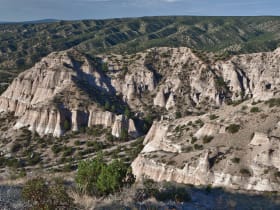
Kasha-Katuwe Tent Rocks National Monument
18 miles away
The cones formed from volcanic ash and pumice laid down by eruptions in the Jemez volcanic field over six million years ago, then eroded into tapering tents wherever a hard cap rock protected the soft...